Howling back

At this time of year, I try to spend the last hour of daylight where I begin my mornings: sitting in a big armchair in the library, watching the wildlife gather. Usually there are deer and turkeys, sometimes possums, always squirrels, and I find their antics endlessly interesting. I light a fire, and sometimes pour myself a glass of port. The play of light on the snow is beautiful whatever the weather.

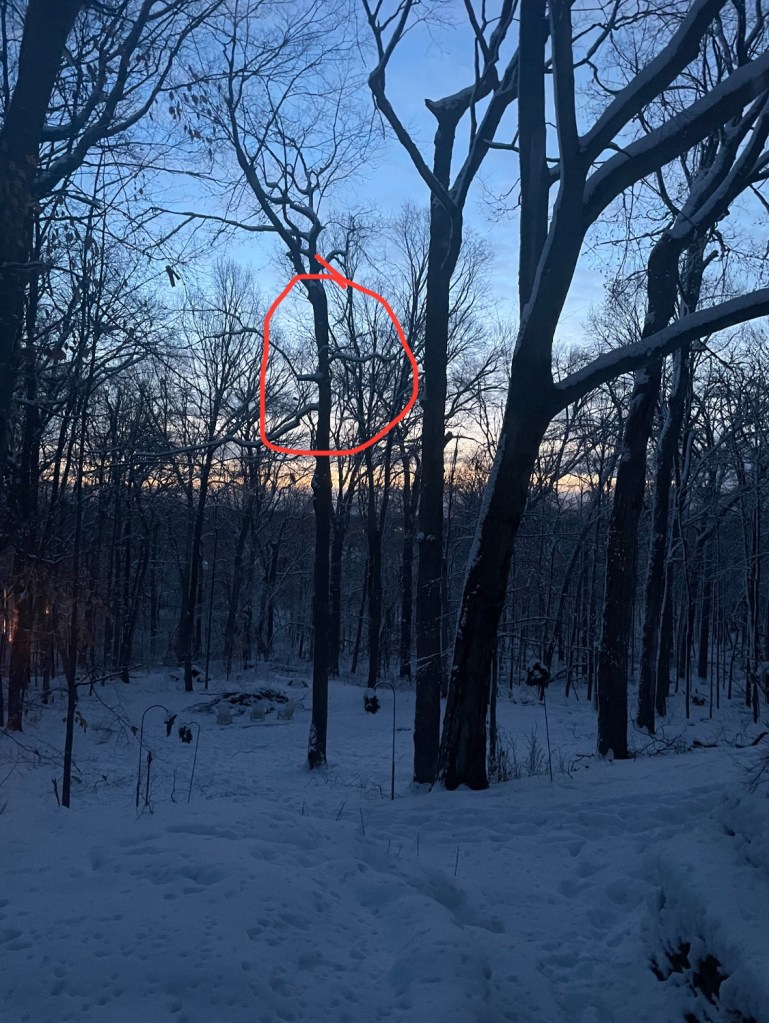
But last night I was a little late, and it was nearly dark when I came to stand at the window and peer out. The turkeys were already roosting, and there were no deer. But there was a small shadowy form moving down by the bonfire pile. Eli saw it at the same time: coyote.

It’s been quite a while since we have seen or heard coyotes, and I have come to the conclusion that someone was secretly killing them. We used to have a neighbor—a former Navy Seal—who would stand on his porch and pick them off with a rifle after they attacked his dogs. But I have to confess, I do not hate coyotes. They are too much like dogs for me to feel any real animus toward them. Mostly, I feel compassion for these intelligent creatures who must survive in a world where they are so hated. But I have to be realistic: they are a real threat to our dogs, and to our neighbors’ dogs, one of whom is quite elderly and vulnerable. And if I caught any of them trying to harm Auggie or Eli, my reaction would not be benign. You might think big German Shepherds would not be in danger, but a few years ago there were news reports that a pack of coyotes in our neighborhood chased two Malinois—who are far more ferocious than a GSD—right up to their back door.

So, following the advice of the experts, I went out to scare it off. The hill is steep and snow covered, so I stood at the top of the hill and did what any self-respecting opera singer would do. I projected. “You! Get out! You get out of here! You!” I could hear my voice resonating through the woods, and could only guess what our elusive neighbors to the north—the ones in the new house who wave from their Teslas but whom we have never met—must think. The coyote startled, stared, and ran off into the woods. I felt sorry for it, but I went inside laughing under my breath, wondering whether my husband’s audience on national tv had heard.

About five minutes later the coyote was back. I scared it off again, but it was harder this time, and I knew I was teaching it not to be afraid of me.

After dinner I looked out and there was the long-tailed black shadow, lying in the snow to eat, just as Auggie lies with his bowl on the kitchen floor. My husband had an insanely early interview and had already gone to bed in the guest room, so it was up to me. I stood at the windows watching. It was a fairly plump coyote, which didn’t really match the way it was eating, and I wonder whether it was a pregnant female. Coyote pups are born in February, and here we are in the last week of January.

I had been texting our neighbors to the south, and we considered what to do. He offered to bring his gun to scare it off. (Most definitely not to shoot it.) Shooting off guns in the night these days can be fairly disquieting to anyone who doesn’t know what’s going on, and I had misgivings. But we really can’t have a coyote hanging around to eat, and later bringing her pups. So, they came, tromping through the woods in big boots, and I met them outside, while Auggie and Eli watched suspiciously from the comfort of the house.

Reluctant to shoot, we yelled to scare her off again, and this time she ran deep into the woods. We watched until we couldn’t see her blue eyes sparkling in the light of the flashlights. And then we heard four tiny pips, not full howls. “Maybe we should howl back as a territorial thing,” someone suggested. It’s not flattering, but the howling seemed like a job for me. So, I pipped back, mimicking what we had heard, and then I let out a long fluctuating yodel, modeled on the kind Moses used to give. We waited in silence. I howled again. Auggie and Eli barked ferociously, and in the distance we could hear the neighbors’ dogs barking inside their house. This went on for a minute or two. It was kind of fun.

I learned later that my husband was upstairs in the guest room laughing. He knows me too well.

After a long silence, we stood on the hill, watching and talking over the options, and finally said good night without a shot fired. I went inside to pour a glass of wine and put on my pajamas. As I went into the library to turn off the lights, I looked out into the woods.

There was the coyote, lying on her tummy in the dark, ravenously eating birdseed.

I let her be. Hungry creatures touch my heart.

Nevertheless, it’s time to recharge the paintball cartridges. They are harmless, but they hurt. It’s not good for anyone when coyotes are fearless around humans. Least of all for the coyotes.
My brother’s keeper

We’re in the teeth of winter now. The actual temperature is -5F but the wind chill is -15F to -25F, which means the wind sweeps away your body heat at a rapid clip, and flesh freezes in mere minutes. In this bitter cold both animals and humans are suffering. Although we got our power back, not everyone did, and outside in this dangerous weather, there are people working hard to protect the rest of us, restoring power and operating community shelters.

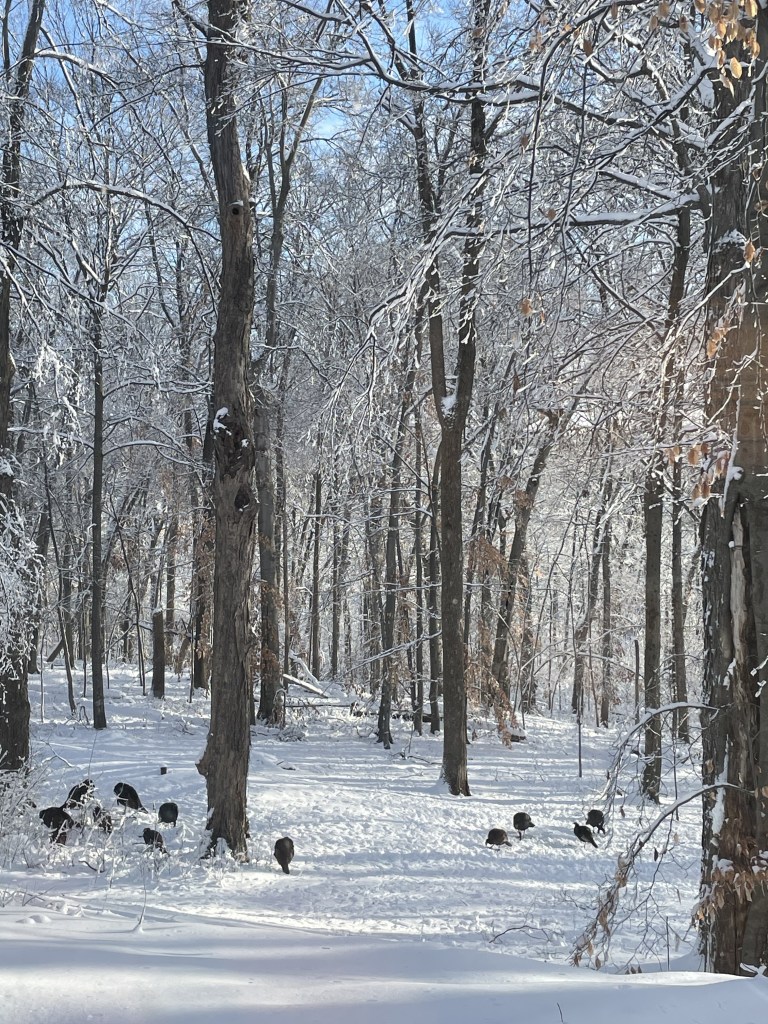
I’m watching the turkeys this morning from my warm, comfortable vantage point on top of the hill, looking down into the woods. We have a flock1 of nineteen this year, somewhat smaller than usual, but always fascinating.

After the deer had finished their morning graze, the turkeys came down from their roosts and spread themselves among the three spots where we have put out seed. As I watched, I saw my one-footed friend—who has been with us for several years now—sit down by himself in the snow, fifteen feet removed from the rest of the flock as they fed. He knew he could not compete with the rough and tumble of the flock’s drive for food. My heart broke for him, because even though the others do seem to look out for him generally, the nature of turkeys seems querulous and wholly intent on individual survival. I told myself he would be able to eat when the rest had finished, but wished I could go out to give him his own little stash. He looked cold and lonely.

As I watched, one of the other turkeys broke off from the flock and walked over to him, nudging him gently. He got up, and together they walked to the pile of seeds, and, shielded by his friend, the injured turkey joined the others and began to feed. For the remainder of breakfast time, the limpy guy ate with all the others.

If I hadn’t seen it myself, I wouldn’t have believed it.

The turkeys are still here, and have been joined by squirrels, junkos, and chickadees. I know from long observation that today, instead of marching off on their usual trek, the turkeys will stay close by, puffing up their down coats, and sitting on logs somewhere out of the wind, preferably under bushes or brush piles. And they will all have eaten enough to fuel their bodies against the cold.

So, who wants to discuss how animals don’t practice altruism?

  1. For domestic turkeys the correct term for a group is rafter. I have been informed, however, that wild turkeys are in flocks. Don’t ask me. ↩︎

Belonging

Yesterday was a spring day of transient weather, but during an episode of sunshine (and between chastising Eli for chasing the neighbor’s dog) I took photos of the wild flowers blooming: blood root, violets, bluebells, and trout lilies. Later before bed, I opened up the photos from one year ago, to see if there were any fun reminiscences of 14 month old Eli’s puppy antics, and there were photos of the same flowers, exactly on time, blooming one year ago. When we had a snow storm a week or so ago, I opened my photos to find the storms of years past. Same patterns, to the day. 

My mornings are usually the same. I wake in the dark, pour myself coffee, and wander into either my office or our cozy library to write. My writing is usually more productive in my office, but my ability to observe the morning rituals of the woods is better in the library, and this is where I usually end up. As the dogs settle into their customary places, I drink coffee and write. I like seeing how the tilt of the earth changes the location of the sunrise behind the trees, and I gauge the time of year by its place along the long horizon visible from the ridge where our house sits. With the leaves not yet out, the sparkle of the lake down the hill forces me to move my chair so I can see, but in a week or so, the lake will have disappeared behind the foliage. 

I can see the turkeys flying down from their roosts, the deer browsing, the plump raccoons waddling up their trees to bed. On a sullen morning like this, there is no burst of sunlight, only a gradual undarkening. On sunny days, the mists rise from the valley in a haze of purple. For the dogs, the scenes of life outside the windows are riveting, too. I like watching the rhythms of life, the interplay of the different creatures who wander in and out of one another’s paths, and the sameness of it—with only small variations to account for the seasons—is reassuring.

At this time of year, in a ritual I now understand, the turkeys are dividing themselves from the large winter flock into smaller family groups. The males parade up and down before the females in full regalia—spectacularly beautiful and with great pomp—making a mechanical thrumming sound like enormous insects—I think by vibrating a set of feathers that skim the ground like a 19th century train’s cow catcher. The females scurry back and forth, cackling, in some kind of hierarchical battle with one another. In the end, it is unclear to me who choses whom, but there will be five or six adults in each final group, and they will pair off to start families. Every morning there will be fewer and fewer remaining from the main flock, until they have melted into the woods for summer. We won’t see much of them again until fall, when they come together again. Finding a nesting hen is extremely difficult, but they nest on the ground, and stay in place from the moment the eggs are laid until they hatch, with no apparent help from the males—although I suspect they keep watch nearby in military readiness to fend off attackers. Turkeys are fierce. 

The deer, who do their pairing in the late fall, are already heavily pregnant and browsing hungrily, as are the raccoons, whose cumbersome travels up and down very tall trees make me hold my breath in suspense. I recall one spring watching the antics of a raccoon family, as five or six babies, chirring excitedly, popped out from the hole in their hollow tree, while their mother frantically clung to the tree with her back legs and used her front paws to stuff them back in like someone trying to close a drawer filled with too many socks. No sooner would she get one in, than two or three more siblings would pop out from another hole further down and swarm the tree trunk. They would fall with quite terrifying thumps to the ground, and call wildly for their mother. Then, while she made a laborious trip down to take them by the scruff of the neck to carry back up, more would fall like hail from the den above, while the sound of their frightened and excited calls came from above and below. She would try to carry two at a time: bringing one up a few feet, leaving it to cling to the trunk, returning to the ground to retrieve another, like a relay, while the first one promptly fell past her head with another resonant thunk. The cycle of babies was unceasing as they continued popping out, swarming, and falling with more thunks as is if they were in a cartoon. Mama’s increasingly desperate attempts to gather them up and stuff them back in were as futile as they were comically pathetic. This went on for more than an hour, and I can only imagine how tiring it is to be a mother raccoon. It’s remarkable how much noise a baby raccoon can make when it falls, and even more remarkable that they seem utterly unfazed—which is more than I can say for their mother. 

It pleases me to understand these patterns, perhaps because it makes me feel a part of the cycles of the earth. Later, less charming cycles will begin: the annual infestation of deer flies who torment dogs and humans equally with wicked bites, the mosquitoes, the unceasing battle against invasive garlic mustard and buckthorn plants, and one peculiar festival we have come to refer to as “personal fly season”, when a walk down the driveway invariably includes one—and no more—fly to accompany each individual, buzzing and landing on our heads. They don’t bite, but their relentlessness is exasperating, buzzing with a particular emphasis on entangling themselves in hair and crawling on ears. A hat is essential, and preferably a handheld electronic bug zapper, which sizzles satisfactorily when it encounters the enemy. Success makes no difference, since a new assistant ineluctably appears to take the place of its fried colleague.

It is usually at this moment that summer in the woods ceases to charm, and we gather everybody together and decamp to the lake. There, we will inevitably find a different cohort of creatures with their own summer patterns, and we will begin our own. It is a modest place, a rickety cottage with only the water as an amenity, but that is amenity enough. There will be the pleasures of a quiet summer morning on the dock, drinking coffee with a blanket tucked around our toes, of wet dogs and floating, of visits from friends and family, of cocktails at sunset. 

There are also the millions of wet towels to drag home to wash, dishes and pans to wash in the tannic water, muddy feet from wet dogs, and the back and forth of various necessities from one household to the other. It’s joyful at the beginning, but by fall I will be tired of the discomfort and upheaval, and ready to settle in at home again. Even as I anticipate the joys of summer, I am already excited at the prospect of the beauties of fall, and its own patterns of renewal.

When we return to the woods, the deer, unmolested by barking dogs, will have browsed the hostas and lilies to the ground, the raccoon babies will have grown and wandered off on their own, the turkeys will be returning to gather their clans together for the winter. And the sun, whose slow track across the horizon will have continued unobserved by me, will be rising far to the south as the days continue to shorten. 

My city friends wonder how I can live without the museums, theater, restaurants, and vibrancy of the city. But I wonder how anyone could live without this vibrant scene of the earth, the animals, and their own dramas.

I have lived in the city and felt my soul shriveling among the pressures of a life removed from nature. Here, I breathe, and my soul drifts out among those of the animals and trees, their calls and their battles, and I know I belong, too. 

As I write, the horizon brightens, and I hear the last sleepy calls of the great horned owls conversing with one another. The dogs sit up, alert to the presence of the deer in the dark, the turkeys thrum and cackle, the sun hits the water of the lake, and I settle into myself, content, and glad to be alive. 

They Sing

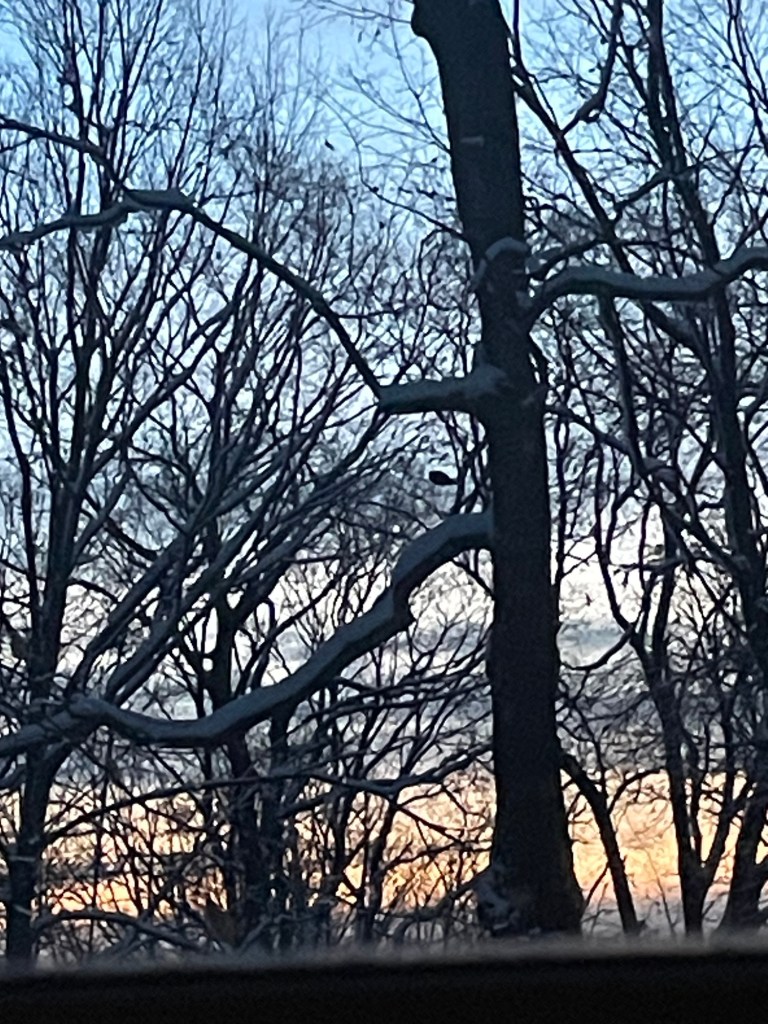
Every morning in the dark, my prayer comes in silence. Or rather, it comes in my silence amid the conversations of others: of the hundreds—possibly thousands of geese calling at sunrise; the turkeys having another of their frequent family squabbles; the robins in their distinctive sweet monotony; the sparrows and the chickadees, each with their own language of singing; the owls calling their last sleepy good nights; and the raccoon silently ambling across the open lawn and slowly up the tree trunk to bed.
The soft sleeping breath of dog one; the impatiently waiting breath of dog two; and the intense watchfulness of the puppy who sits at the window to see, hear, and smell the lives of others, these are the sounds of my prayer. This morning noise is the sound of life, of the world.

The traffic sounds that rise from the valley will come soon, too, but not yet. For now there are just these other lives among us, busily, and with unknown degrees of self-awareness, going about the hard work of living. If they worry—and I think the garter snake who encountered us yesterday in the orchard was damned worried—they don’t sit around and wallow in it. They don’t have time for self pity. They have to eat, and get where they have to be, and find a mate, and feed their young, and elude homicidal neighbors. Every decision they make is life or death. It’s a lot. It is, frankly, more than I have to worry about, and probably more important. But they start each morning by raising their voices.

I don’t know that it’s cheer. Who can say? But it is life affirming. It’s a statement of presence, of vitality, perhaps of territory, perhaps of love.
Life is hard, and may be over before the sun sets.
But still, they sing.

(But still they sing.)

Signs of Hope

I was watching a small drama this morning at dawn. The polar vortex has moved on, the -22 temperatures have risen more than forty degrees, and the vicious winds, creating a wind chill factor of 40 or 50 below zero, have died. I have been worried about the wild animals, knowing that this weather kills many birds, and probably mammals, too. I have not seen a single squirrel in a week, and this is highly irregular. The turkeys, normally restless and predictable in their daily patterns, have not followed their usual path, but stayed beneath the trees where they roost, puffed into enormous balls of feather, clustered together like giant mushrooms.


I put out seed, and fruit, and all kinds of nuts, suet balls with nuts and meal worms, and big chunks of suet in fat strips from the butcher, which I have to shoo the dogs from. The fat has drawn crows, whom I rarely see up close, and that makes me happy. We have springs on our property so we don’t have to worry about a water supply, but still, this is a hard season for creatures. Many times over the past week I thought of the animals, curled up in balls trying to keep warm in their trees or burrows, and I felt helpless pity.

This morning, though, as I was watching the sunrise, I noticed a black mass against the side of tree deep in the woods. Suspicious, I watched until I saw it move. It was a raccoon, returning home from its nighttime ramble. And then I saw a second raccoon, climbing up the same trunk in a congenial fashion. So this is how they survive the cold. I was enchanted. A pair! There will be babies! 

As I watched their clumsy, though expert climb, I was cheered by the thought of their snuggling together in the winter weather. And then I peered more closely. Not two. Three raccoons. Clearly joining forces to keep one another warm. Were they siblings? In this woods, probably. They were all fat, but not as big as some I’ve seen, possibly yearlings. They each perched on a separate branch, far more precariously than any turkey. Turkeys, after all, can fly. And although there was one spectacular slip and fall, the raccoons all managed to stay on the tree without falling fifty feet to the ground. 

I wonder whether this arrangement is long-term or merely expedient, but the sight of this little pack, or family, or club, cheered me and distracted me.  I watched, my coffee growing cold, as they settled in uncomfortable-looking poses on their separate too-small branches, until they each made their way back to the trunk where they had their nest, and disappeared, presumably until night falls again, when they can resume their sociable adventurings.

All is well.

Winter Morning

It’s dawn. There’s new snow on the ground and a fire in the fireplace. I sit in bed with my coffee and watch the turkeys come down from their roosts. If you didn’t know better, you would think there were tall, blue gray mountains to the east, but it is water vapor rising from Lake Michigan, a sign of bitter cold.
The turkeys have come down and are having a kerfuffle, but the dogs only lift their heads. Turkeys seem to do a lot of bullying.
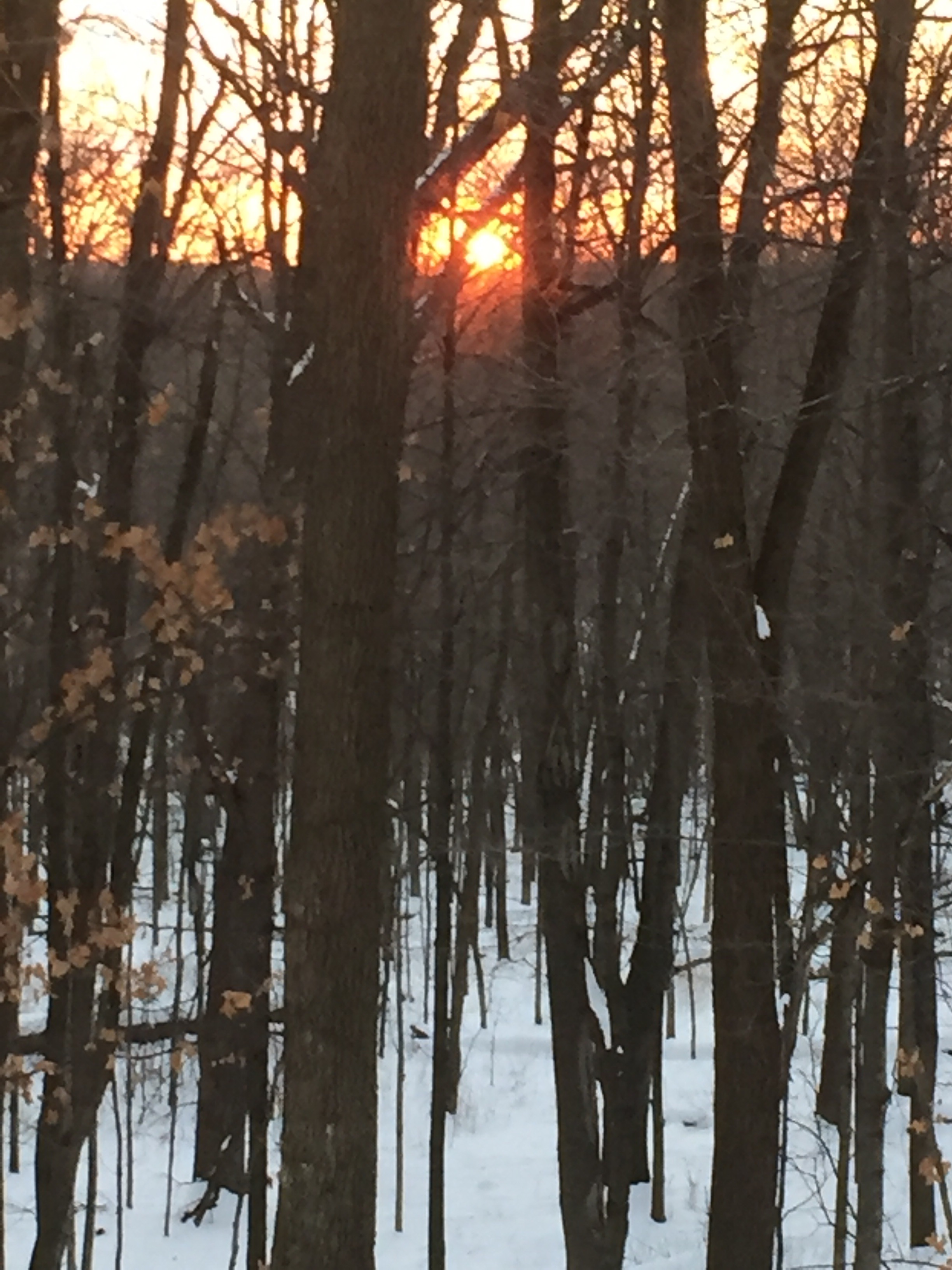
I should bestir myself, but it is too beautiful, too calm, too temporary to walk away. The earth’s turning will change the light, and the soft rose and lavender of the woods will begin to catch brilliant orange edges along the trunks of the snow rimmed trees. The sun is so far south that I can’t see its rise from the bed, only the shafts of orange and pink, as they color even the backs of the dogs. A small troop of deer pick their way through the snow to the open water of the spring. The young dog perks up, prepared to bark, but for once he takes his cue from his elders.img_2976
Now the tops of the enormous clouds are white. I imagine the columns of vapor that must be towering over the shoreline. I used to be in the city by now, amid the skyscrapers near the lake, watching those plumes of eerie mist, fully alert, anxious, dressed in Armani, and regretting having to go inside to my office. But now I’m here. Watching, sleepy, considering tearing myself away for another coffee, listening to the soft breathing of contented dogs.
I am grateful.

Maybe Icarus was a Turkey

We live at Turkey Central. It started out small a few years ago, when we would occasionally hear turkey calls in the spring. But now there are turkeys–about forty of them–who roost in our trees every night, and their comings and goings are part of the rhythm of our days. At dawn and at dusk, you can look up into the tops of the trees and see these unwieldy, bulbous creatures, precariously perched on the tiniest of branches, fifty feet above the floor of the woods. I have no idea how they manage to stay there, but so far, I have seen no evidence of them falling. They make quite a lot of noise, too, which I rather enjoy.

For those pedants among you, I draw your attention to the fact that wild turkeys constitute a flock. Domestic turkeys constitute a rafter, or a gang.

I don’t know.

One of my great pleasures in life is to watch the turkeys at dusk, flying, one by one, up to their nighttime berths. They gobble as they make a running start,  with a long rumble like a B-52 at take-off, and then, unexpectedly, they take to the air, and with a great flapping, land on a perfectly unsuitable branch, bobbling back and forth, as they establish their balance. This takes some time, and it is most enjoyable to watch with a cocktail in hand. Preferably bourbon, but I am not always particular.

We frequently attempt to bore our guests with it, but everyone who witnesses it seems as riveted as we are.

Last year, we had one turkey who broke the routine. Instead of using the little hill in the woods for his take-off, he would courageously mount the big hill to our house, where dogs do dwell. He would get almost to the top, near the patio, and then he would turn and run down the hill, his wings flapping, using the hill for acceleration on take-off. My husband commented on it one night in amazement, and after that the turkey came–this one bird, alone–every night.

I came to think of this bird as an innovator; a cultural leader, possibly breaking the Darwinian bonds of avian technology. I looked for him, I admired him, and I was delighted by him. Then came turkey season. I don’t hunt, so I don’t know what the rules are about where you can shoot, or when, or how. But I can say that the number of turkeys was considerably diminished. As winter came on, there were only about a dozen left. And our innovator was gone. The flock that remained continued its old habits, without variety or novelty.

In my heart, I know what probably happened. But I like to think of him, laboriously climbing the perilous hill, alone, undaunted, his vision of glory before him, as he turned and began the run to take-off, lifting up exultantly from the earth, closer and closer to the sun, on his way to immortality.

It’s spring again, and we have more turkeys than ever. But not the innovator. The flock has lost some of its magic for me.

He was a turkey. And I think of him every day.