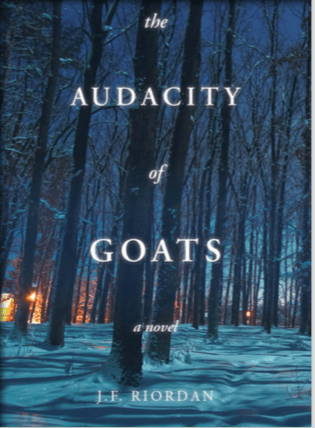
Sneak Preview of The Audacity of Goats

TAOG COVER

Lars Olafsen had been Chairman of the Town of Washington for going on twenty years, and a member of the town board for five years before that. He was a dutiful man, and a public servant in the old fashioned sense. He had earned the respect of his constituents through his fairness, his honesty, and his innate, steady, Scandinavian calm.

But Lars was beginning to feel the wear of so many years at the beck and call of his fellow islanders, and had begun to yearn for a reprieve. His children and grandchildren lived downstate in Milwaukee, and his wife was continually urging that they spend more time there. And Lars, though he was only in his early seventies, was beginning to feel his energy wane, and his enthusiasm for the job with it.

The major consideration, however, was one he would never admit to anyone, not even to his wife. Although his feelings were complicated, secretly Lars still glowed with a feeling of heady triumph after his out-maneuvering of Stella DesRosiers last spring in her mean-spirited attempt to drive her neighbor, Ms. Fiona Campbell, out of town.  He had stooped to political blackmail, no doubt about it, and he had suffered many moments of doubt about what he’d done. Had it been a violation of the public trust that disqualified him for continuing in office, or a valiant stroke for the public good? Lars had struggled with this question, but he always returned to the conclusion that it had been no more than Stella deserved, and an act of natural justice. Stella had been bullying her fellow citizens for years without any repercussions other than her unpopularity. And while he continued to wonder whether it was wrong to feel proud of it, his career, Lars felt sure, could reach no greater achievement. “Might as well go out on a high note,” he thought.

And so, one Wednesday night at Nelson’s Hall, when a quorum of his regular circle was in attendance, Lars Olafsen announced his retirement. He was immediately surrounded by a jovial, back-slapping throng, and shots were thrust into his hand in rapid succession.

“Lars,” said Paul Miller, his childhood friend, “you can’t retire. We’re too young.”

“You’ve been an asset to us, Lars,” said another old friend.

“You run a tight ship, Lars. Those meetings will take twice as long without you.”

But the real concern was the one voiced by Jake, who had a reputation for cutting to the heart of every discussion. “You can’t leave. There’s nobody who’ll take your place.”

This was true, as everyone at Nelson’s well knew. Being Chairman was a thankless job, and few people wanted to be bothered with it. There was a slew of paperwork and arrogant State officials to be dealt with, not to mention the unceasing need to wrangle volunteers for committees and other public work, and the inevitable squabbles—both petty and potentially fatal. No, particularly in these days of escalating state bureaucracy, you’d have to be a fool to want the job. And the Island was remarkably short of fools, unless, of course, you counted that new woman, Fiona Campbell.

Fiona would have been shocked to know her reputation. Her intelligence, wit, street savvy, and seriousness of purpose were not things shown to good advantage in a small town. Add into the mix her city polish and lack of practical knowledge of rural life—and the evil rumors that Stella DesRosiers had very particularly and intentionally spread—and an average observer might have an impression of a flighty young woman who wore impractical shoes, was oblivious to the first principles of survival and sensible living, and whose morals were, well, not what one would hope.

Fiona was, in fact, far from being a fool, but this didn’t stop the locals from thinking her one. Many of them—particularly the men—had come to feel a mixture of pity and admiration for her, a circumstance that Stella’s rumors had unwittingly created, and one which frequently worked in Fiona’s favor. In this instance, however, Fiona was exactly as oblivious as her neighbors thought, and it may have been just as well. She went about her business utterly unaware of her many critics, observers, and secret admirers.


Like what you’ve read so far? You can pre-order at your favorite bookstore!

Star-crossed Love

IMG_5144

I had to stop at a store yesterday to return something, a task I detest, but which you might think was among my very favorite activities, given how often I find myself doing it.

The clerk and I started chatting, and one thing leading to another, I mentioned my two dogs in the car. “What kind of dogs?” she asked. I gave my standard answer: Pete, an Indiana Spotted Dog (Pete is a rescue from a kill shelter in Indiana, and of indeterminate breed, but with a speckled coat that looks like granite), and Moses, a German Shepherd.

Her attention was instantly riveted by the words “German Shepherd.”

“I had a German Shepherd,” she said. “But I had to put him down.” I felt a wave of sympathy. The shortness of dogs’ lives is a looming loss for those of us who love them, and the thought of it can shatter me if I linger on it.

She knew what I have learned: that there is something different about German Shepherd Dogs, no matter what other kinds of dogs you have had or how much you have loved them. I told her what the vet told me when Moses was a tiny puppy: “Nothing and no one on earth will ever love you as much as a German Shepherd will.”

Her eyes filled with tears, and mine did, too. She told me how true that was, and how smart her dog had been, and what a clever jailbreak artist he was. She told me that even when his hip dysplasia had made it impossible for him to walk she had cared for him until his pain became too much.

She seemed so sad. When I suggested that somewhere in the world there was a dog who desperately needed someone like her to love him she shook her head. No. She could never endure that loss again. It was too much.

The store was busy, and people were waiting for her attention, but I wished I could have taken her out for a cup of coffee, and brought her over to meet Moses and Pete, waiting patiently, if a bit odoriferously, in the car.

I have writing to do, and I have to go to Washington for work tomorrow, and I don’t know how I’m going to get everything done before I leave the house at 5:30 in the morning.

But Moses and Pete and I are going for a ramble. Life is all about priorities.

Coming soon: The Audacity of Goats

TAOG COVER

Dear Readers:

Are you still there? I apologize for the long silence, but I was getting my life in order so we can put book two to bed and start work on book three.

Book two in the North of the Tension Line series, The Audacity of Goats, will be released by Beaufort Books on April 29, 2016. It is available now for pre-order at your favorite bookseller.

Watch for some sneak previews coming soon.

Working now on final proofs, and then it’s on to Book Three.

I promise to be a better correspondent.


Upcoming Appearances

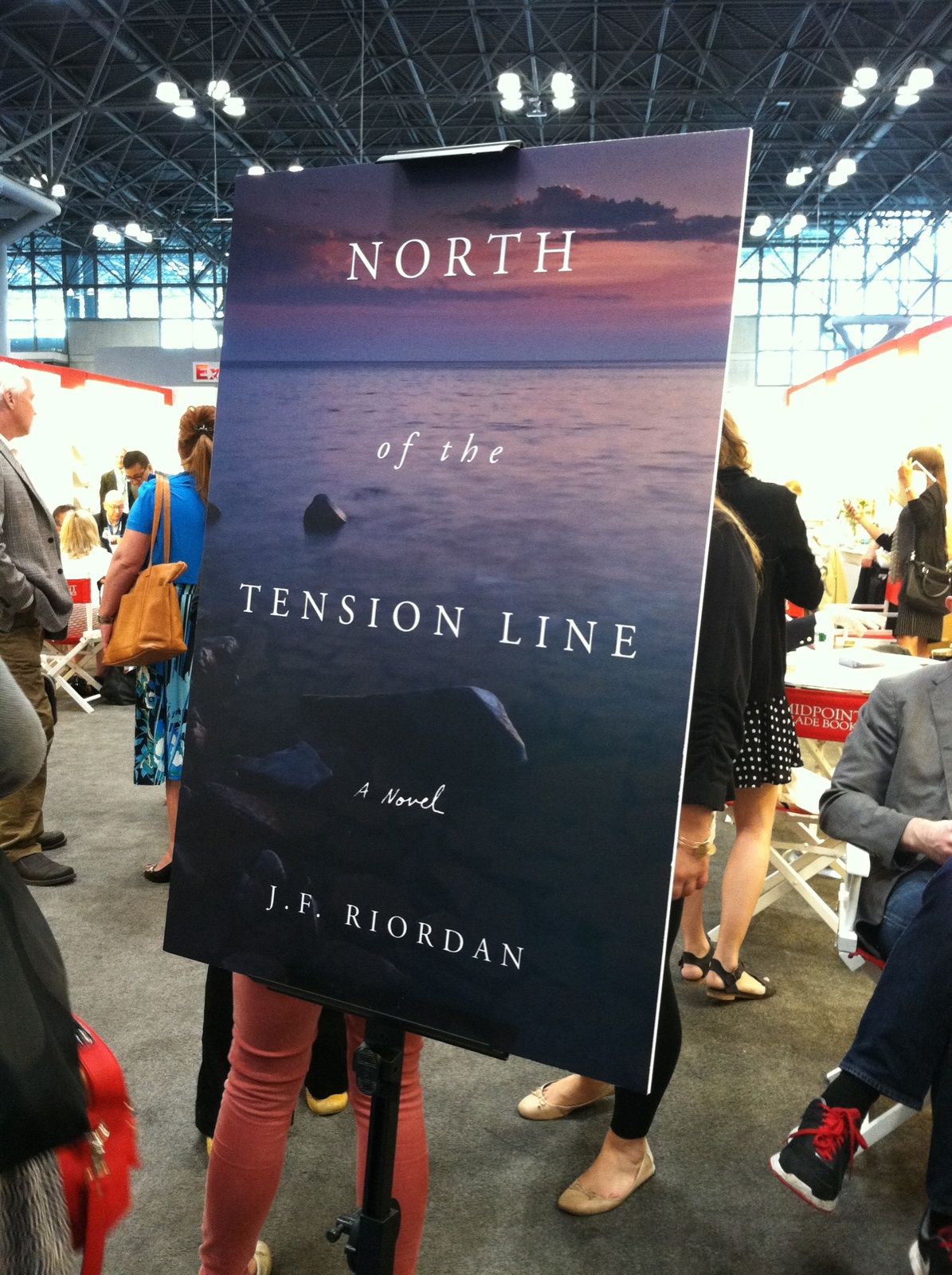
North of the Tension Line is coming home to Door County next weekend.

Peninsula Bookman

Novel poster

September 26

10 am to 5 pm

The Peninsula Bookman–next door to the Oilerie

4083 Hwy 42, Fish Creek, WI 54212

And then back to Lake Country:

Hartland Public Library

October 7

7 pm.

Hartland Public Library 110 East Park Ave.  Hartland, WI 53029

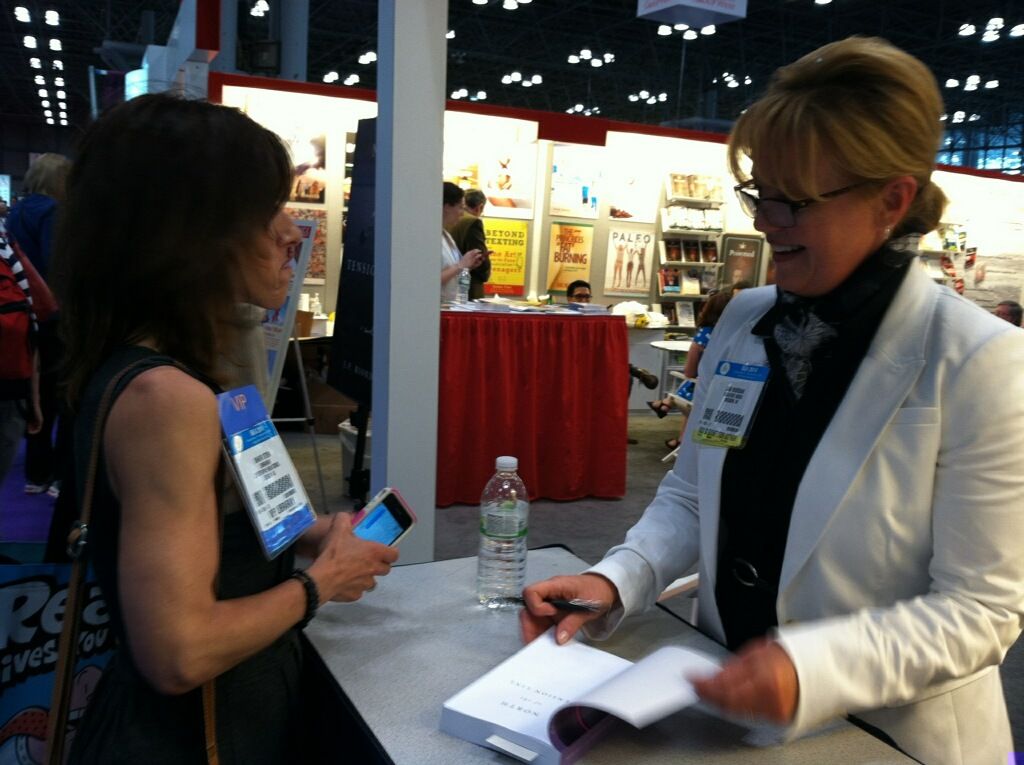
I would love to meet you and sign your book. Stop by and say hello!

It’s Finished! Publication date: April 2016

Yesterday the manuscript for the sequel to North of the Tension Line was delivered to my editor at Beaufort Books in New York. Although this is just the beginning of the process of making a book, we have a schedule and a publication date.

For my faithful blog readers–both of you–I apologize for being invisible and pledge to be a more regular correspondent. At least until the next proofs are due.

North of the Tension Line Reviewed in National Review

Screen Shot 2015-04-12 at 5.09.41 PM

It’s behind the paywall, but here is the text of the review found in the April 20 edition of National Review.


Women’s Lives

by ROBERT P. GEORGE
April 20, 2015, Issue

North of the Tension Line, by J. F. Riordan (Beaufort, 478 pp., $24.95)

My initial impression of this book was: I’ve walked into the novelistic equivalent of a chick flick. What am I doing here — by myself? I go to these only in my wife’s company and at her behest.

Other male readers are likely to have the same first reaction. North of the Tension Line is a novel by a woman about women. Is it for women? Well, I wouldn’t say it’s not for women — but my judgment in the end is that it’s also for men, perhaps even primarily for men. A gifted female writer — one with a nearly Austenian gift for observing human nature and describing the quirks and foibles of the entire cast of characters one finds in the human drama — has produced a novel that reveals some things to us guys about how women’s minds and hearts work.

Women themselves, of course, already know these things. They can read North of the Tension Line for entertainment. Men should read it for instruction.

Fiona and Elisabeth, our heroines, are intelligent, attractive thirtysomething single women — and best friends. They have interests and professions — satisfying but not high-powered — and are far from preoccupied by the need to find Mr. Right. They are open to his walking into their lives and hopeful that someday he will: Finding him would be a good thing — indeed, a very good thing — and they’re not making the perfect the enemy of the good by holding out for the Ultimate Mr. Right when Mr. Right Enough will do. But neither are they pining away, or pursuing their avocational and professional interests as mere distractions while they wait. They have lives — lives worth living, lives in which non-romantic friends, jobs, passions, goals, and challenges of various sorts occupy them meaningfully and worthily.

Yet J. F. Riordan’s point is not the old feminist canard about a woman’s needing a man like a fish needs a bicycle. Quite the contrary. Fiona and Elisabeth are, like most women, sensible. Their hearts yearn for a special bond with one of those creatures on the other side of the mysterious line dividing the sexes, and their minds tell them that such a bond is worth the sacrifices — including some degree of loss of independence — required to establish and sustain that bond. They are not boy-crazy, nor are they imagining a knight in shining armor who will come astride a white charger to sweep them off their feet. What they want is a decent, honorable man, a man who is comfortable in his own skin and who is willing to be a man — a fellow whose gentle strength would complement their own strong gentleness.

There is nothing more familiar to readers and viewers these days than the story of a woman who manages to be caught up in an unhealthy relationship with every man in her life. She has, or had, an unhealthy relationship with her father; an unhealthy relationship with her first boyfriend, then her second, then third, and so forth; she has unhealthy non-romantic relationships with her guy friends, her boss, her dentist, her pastor, her plumber. She has an unhealthy relationship with her husband — one that doesn’t improve when he becomes her ex-husband. By the time her son is a teenager, she has an unhealthy relationship with him, too. Is the problem with her — or with them? In the standard plot, she begins by blaming herself.

But, of course, enlightenment eventually comes when she realizes that the fault is not with her at all, but indeed with them — and even more fundamentally with the institutional sexism and sexist (and, of course, heterosexist) culture that is ultimately what is driving both their bad attitudes and behavior and her initial impulse to blame herself. Pretty soon she is “off men” and living happily ever after in a lesbian commune in central Massachusetts.

What’s refreshing about Riordan’s novel is that her protagonists have healthy relationships with men. And it isn’t because Fiona and Elisabeth — or the guys with whom they have romantic and non-romantic friendships — are perfect. They’re not. In fact, North of the Tension Line is a sort of study in how imperfect but fundamentally decent women and imperfect but fundamentally honorable men can relate to each other (whether their relationships are romantic or not) in constructive ways, and find satisfaction and contentment in their relationships. In fact, part of her message is that the project of navigating the mysteries involved in relating to people of the opposite sex can — and where our relationships are healthy almost certainly will — challenge us and change us in ways that make us better men and women than we were: a little less imperfect. Relating to each other across the mysterious divide takes effort, but it’s worth it. The payoff is genuine. There must be something to the idea that men and women are made for each other — that by entering each other’s lives they supply a lack and have a lack supplied.

What about the relationships between women and other women and men and other men? Perhaps part of the reason Riordan’s characters can relate in healthy ways to those of the opposite sex is that they have deep, constructive friendships with people of their own sex. The friendship between Fiona and Elisabeth is front and center, and a beautiful friendship it is. The two women delight in each other’s company and each appreciates and cares deeply for the other. They are cognizant of each other’s imperfections, but each is no less aware of her own deficiencies. And each is grateful to the other for the gift of her friendship. They are fast friends, loyal friends. Yet neither woman jealously worries that the entry of a man into the other’s life will weaken the lovely bond between them. On the contrary, they are pulling for each other on the boyfriend front — precisely because they appreciate that there is something good, something uniquely fulfilling, that even the deepest friendship between two women (or, I daresay, two men) cannot provide.

Most of the guys in the book are good guys, and their friendships with other guys are good friendships. J. F. Riordan finds countless ways — usually suitably subtle ways — to call attention to the deep bonds of affection good men can form with each other. Of course men, being men, don’t talk about their feelings much, but rather express them in actions — including in actions toward women or for their sakes. Because of the setting Riordan has chosen for her study, most of the men in the novel — at least those we get to know best — are skilled workers. They build things, or fix things, or do things (like run a ferry from the mainland to an island). They are not intellectuals. Indeed, most are a bit less intellectual than the women. But they are not less intelligent, nor are they less thoughtful. What they are, God bless them, is old-fashioned, even chivalrous. They respect the womenfolk, and even look up to them in various ways; but their instinct is to help them and protect them because . . . well, because that’s what good men do.

You may, gentle reader, be worried that North of the Tension Line has no villains, mean dogs, or ghosts. But fear not: There is an excellent villain — a woman, by the way — a scary mean dog, and an exemplary ghost. To avoid spoiling things for you, I’ll say no more about them than to report that Riordan’s verbal artistry is up to the challenging task of handling villains, mean dogs, and ghosts — which is saying something when reviewing a writer’s first novel.

Mr. George is the McCormick Professor of Jurisprudence and the director of the James Madison Program in American Ideals and Institutions at Princeton University.

Read more at: https://www.nationalreview.com/nrd/articles/416347/womens-lives

Special Giveaway: North of the Tension Line

Tension_Line_rd4

It’s cold out. There’s not much to do, so why not enter a contest to win a free autographed copy of North of the Tension Line?

Submit a comment to this post explaining why you should receive a copy. Wide readership and/or a willingness to be a shameless shill are highly recommended.

Winner solely determined by the author’s whim. All decisions are final.