Support Your Local Author

I have two full days with nothing on my calendar, and a substantial but unfinished manuscript, which means it’s time to read through the new book on paper. Every once in a while I need to step back from writing and read what I have so far as an actual book. That way I can see the plot line and get a sense of how the story flows. There’s always a lot of literal cutting and pasting, which I often prefer to do the old fashioned way. One dog nose, phone call, or other interruption and it’s too easy for computer cuts to disappear into the ether.

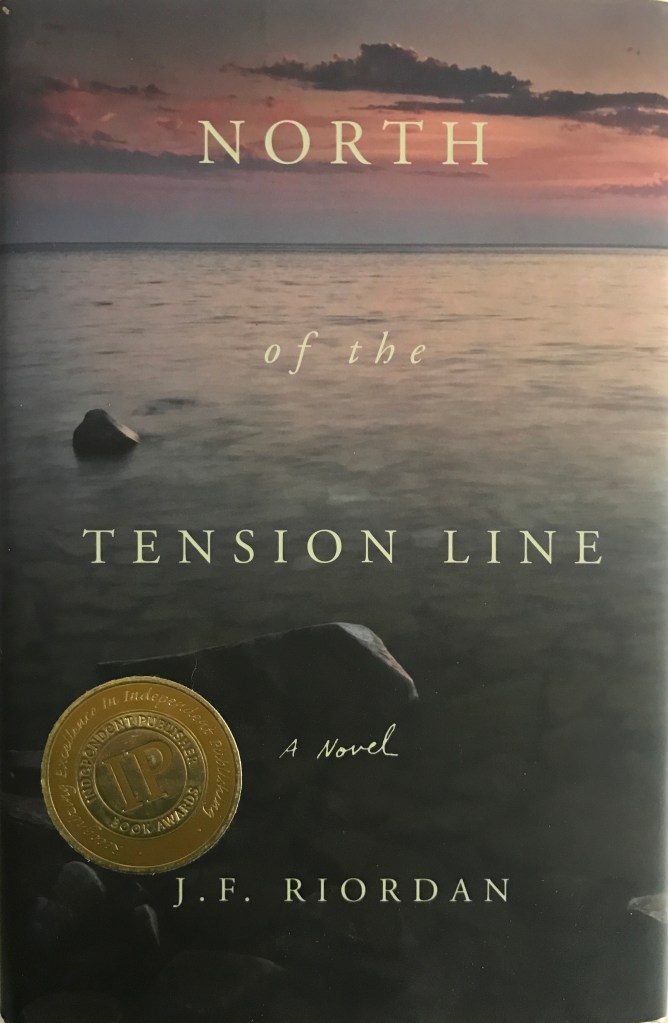
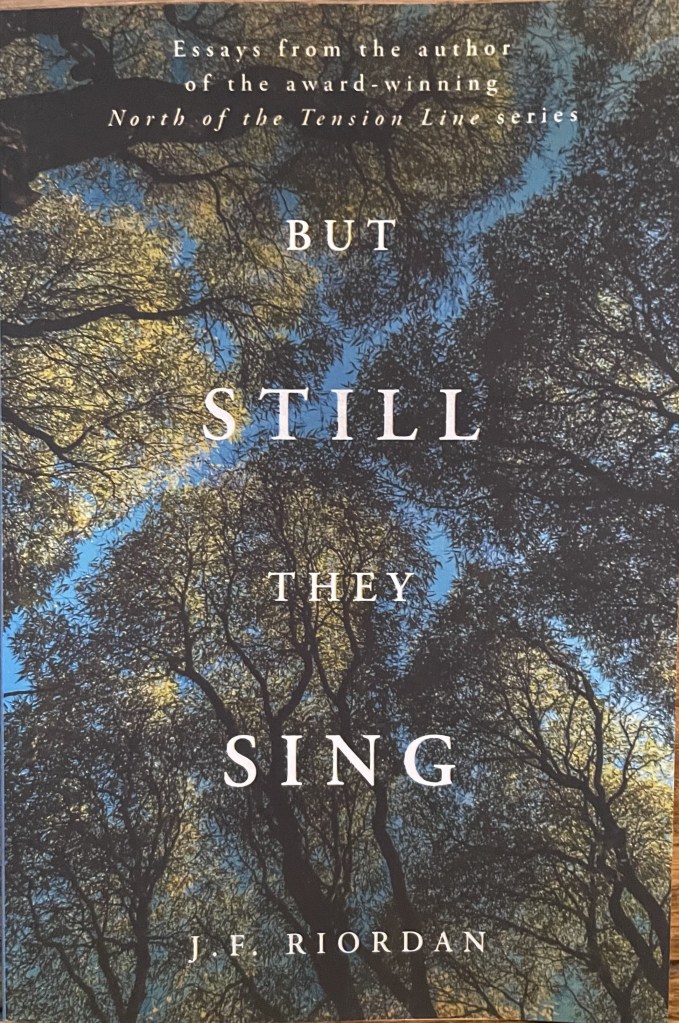
So, while I attend to my work, I thought it might be a good time to remind you that you can catch up on my series by purchasing the first four novels now, or, should you prefer, pick up a little children’s book, My Dog Pete (available exclusively at the link) to add to someone’s Easter basket. It’s on Kindle, too.

You don’t have to buy my novels or essays from the guys in Seattle. Let’s face it: civilization needs local bookstores, and if we want them, we need to patronize them. Some of my favorite bookstores include Honest Dog Books, Books & Company, Boswell Book Company, and Politics and Prose. You can also order at Barnes & Noble, Target, or WalMart.

Or maybe you can find the time to follow me on Goodreads—where my numbers are pathetically few—or to leave a nice review wherever you buy books.

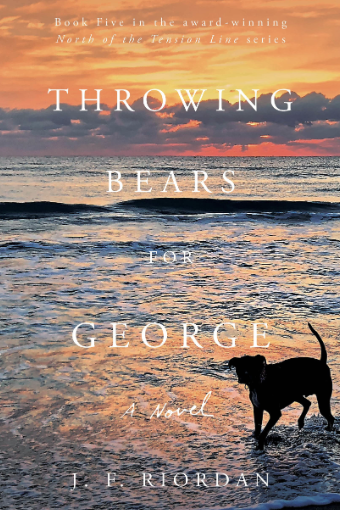
And, of course, you can also pre-order the one I’m working on now—the fifth in the series— if you haven’t already. You have, right?

Now available for pre-order wherever you buy your books.

If you have a favorite bookstore, leave a link in your comments, so others can find it.

Thank you!

Thinking makes it so

Who’s your audience? It’s a question asked of writers all the time. Agents want to know. Publishers want to know. Even book club readers want to know. Most writers know how to gauge our answers to meet our business needs. Of course, to be published, a book needs to meet customer demand. But, to be honest, most of the time that’s only a guess based on what has sold before, and demand can also be created by marketing teams and media campaigns.

So, while I am delighted to have my books published, I don’t think about any of that when I’m writing. I really only write for an audience of one: me.


I write the kinds of books I want to read, and to be honest, while I do read for information, I mostly read for comfort and companionship. When I had high-pressure, stressful day jobs, I didn’t want to come home to read high-pressure, stressful books. I taught in the inner city. I didn’t want to read about suffering, murder, crime, drug use, and lost opportunities. I lived with that every day. When I moved into an executive position, I still spent a great deal of time thinking about human misery and how to help alleviate it. Again, I was often in the inner city, visiting schools, homeless shelters, prisons, half-way houses, and addiction centers. I also had many uplifting experiences in the fine arts world, to be sure. But what hung with me was always the human traumas that went on before my eyes every day.

I don’t think I’m alone in that. Many people have intense, exhausting, high stress jobs. And some of them find catharsis in reading about intense things, perhaps because at the end of a well-written book, there can be a release of the built-up strains.

But that’s not for me. I want to go to a world where there is a group of characters who feel like friends I can hang out with. I want to look deeply at the small miracles of daily life. I want to feel enmeshed and revived by the creativity and joy of an ordinary day. And so, both in the novels I write, and in my books of essays, I linger on the hope, the joy, the beautiful and all the ways in which frustrations, unkindness, and misery can be diminished—although never eliminated—by the way we focus our attention.

And so, when I’m writing, my incentive is the pleasure I take in joining the worlds I’ve created. I write (mostly) about characters I want to be with, who live in a world I enjoy being in. Maybe that’s selfish. I don’t know.

But honestly, I don’t know any other way to write; I don’t think I could write a horror story if I had to. “Write what you know” is the old adage, and I really don’t think there’s any better advice. Luckily, based on my readers’ comments, the kinds of books I like are also liked by other people. And that’s a pretty good system, I think.

So now, if you’ll excuse me, it’s time to go hang out with some old friends.

Cheers.

***

Turkey in the Sky Addendum

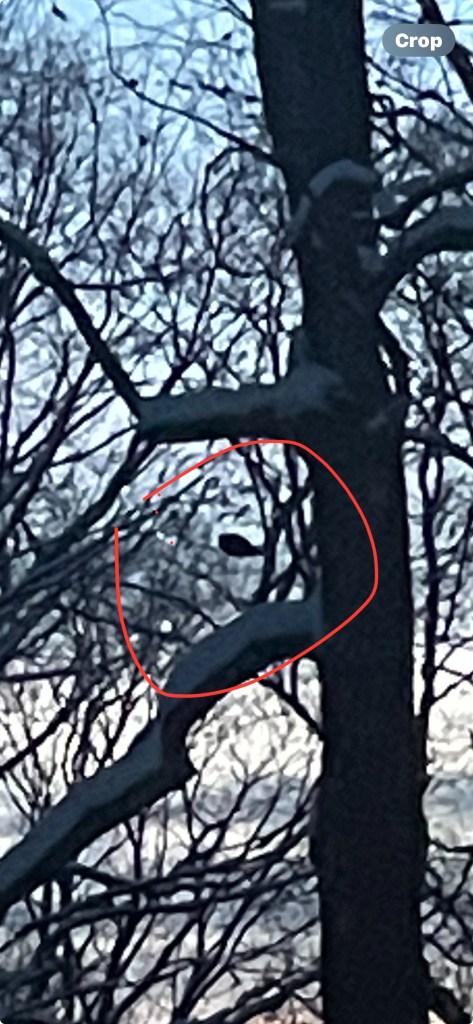
Many of you couldn’t find the turkey in the photos yesterday. That’s because I don’t have a good zoom lens. But here’s the best I can do.

Today’s Gratuitous Dog Photo

He’s snoring.

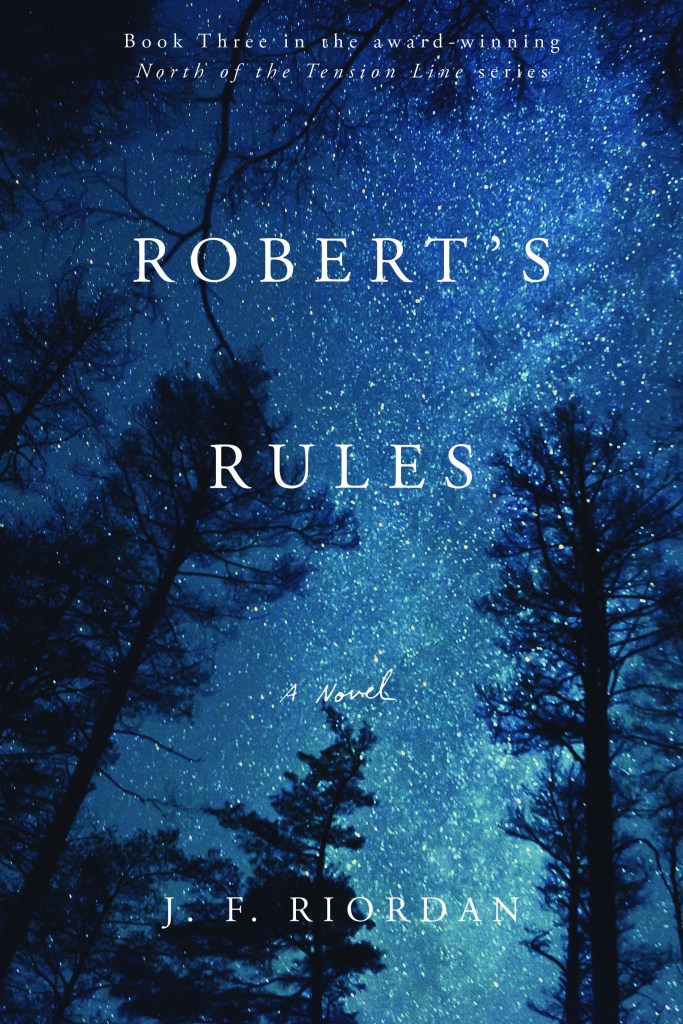
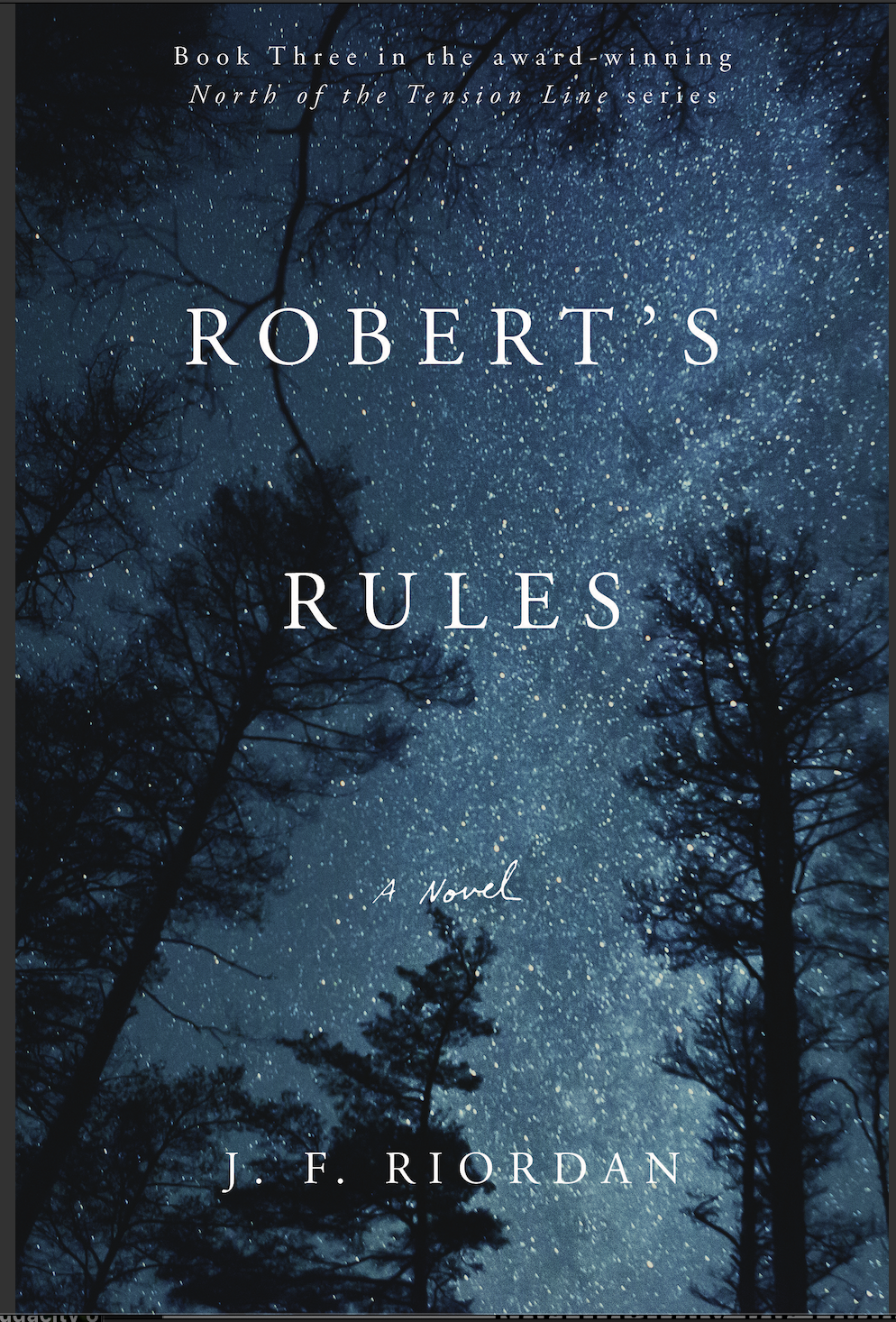
Robert’s Rules Featured on Wisconsin Public Radio’s Chapter A Day

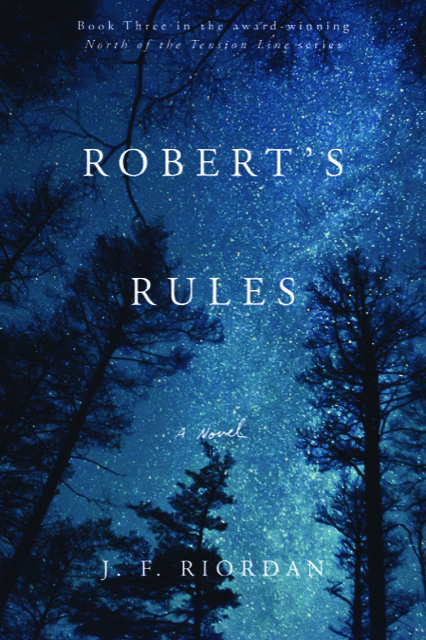
Robert’s Rules is Book Three in J.F.Riordan’s North of the Tension Line Series, and is the recent winner of a Gold Medal from the Independent Publisher’s Book Awards. It is this month’s selection for Wisconsin Public Radio’s popular Chapter a Day program.

You can tune in to WPR every day to hear one of twenty episodes at 12:30 pm and 11:00 pm. It’s also available for download on their site. 

It is beautifully read by one of WPR’s regular readers, Jim Fleming. Check it out!

ABOUT THE SERIES:

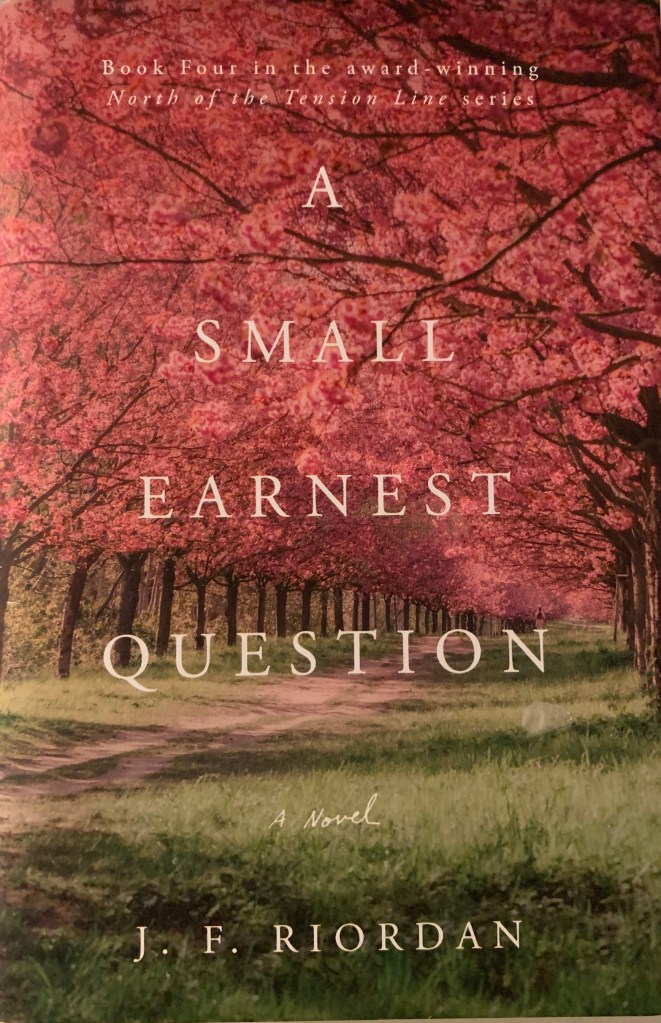
Wisconsin author J.F. Riordan has been called “a latter-day Jane Austen”. Her mesmerizing literary fiction makes the Great Lakes region one of the characters in this continuing series. The North of the Tension Linebooks (North of the Tension Line; The Audacity of Goats; and Robert’s Rules) represent a sensibility that is distinctively Midwestern, even though the small town politics and gossip will be universally familiar. Riordan celebrates the well-lived life of the ordinary man and woman with meticulously drawn characters and intriguing plots that magnify the beauty and mystery lingering near the surface of everyday life. Book Four in the series, A Small Earnest Question, is due out in 2020

J.F. Riordan’s Mesmerizing ‘Robert’s Rules’

Told in a beautifully crafted literary style, Robert’s Rules is an engaging story filled with deep insights about people and their environment. In the process, Riordan reveals the eccentric and oftentimes unexpected realities behind the bucolic images of modern small-town life.”

The Shepherd Express

Learning to Love Again

To the both of you who follow my blog: by now you are probably used to the reality that when I am writing a book, I don’t post many blogs. It’s a husbanding your resources thing.

Nevertheless, I interrupt this novel for a brief announcement:

We are in the queue again for a puppy. He has been born. He will be two weeks old tomorrow. We hope to pick him up and fly him home (on our laps) on May 6th. He is a cousin, of some sort, of Moses.

My husband insists that his name will be St. Augustine the Younger. He gets to pick, since I picked Moses, but I am still lobbying for St. George, the Dragon Slayer.

He will win.

So, watch this space for puppy pictures. Because my life needs a complication, albeit a delightful one.

Here is one of the puppies from the litter. Who knows? We may become friends.


Milwaukee Book Launch at Boswell Book Company

imrs.php

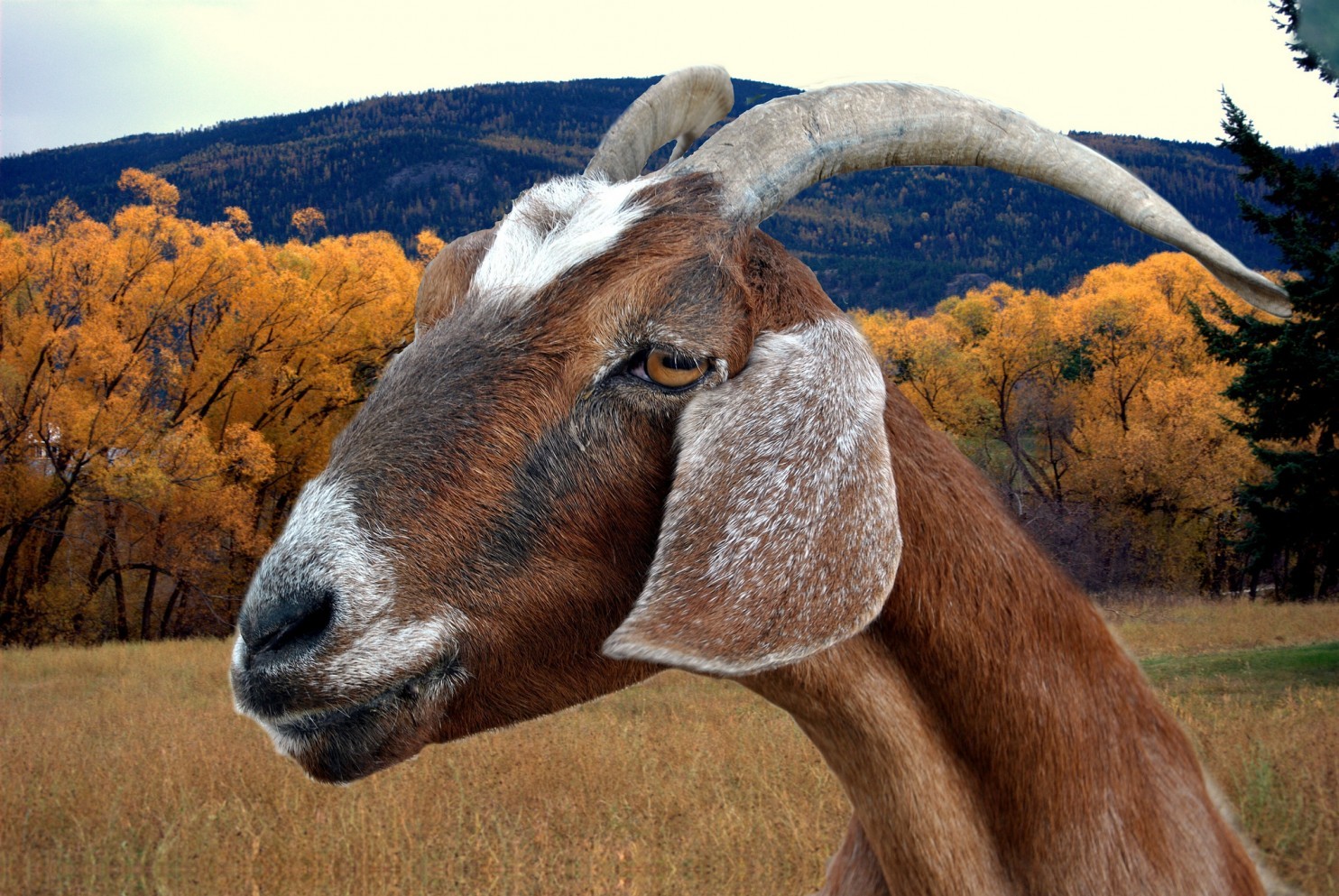
Goat photo courtesy the Washington Post (Flickr/Bagsgroove)

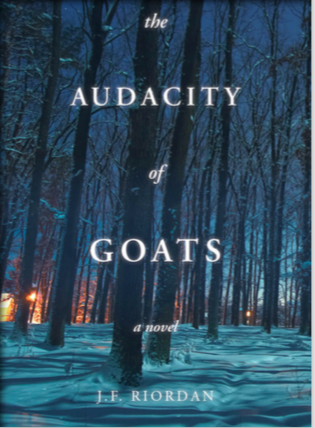
Come and celebrate the publication of The Audacity of Goats with me at Boswell Book Company on Friday May 20th, at 7 pm.

You can buy your copy there, or pre-order.

TAOG COVER

Support your local bookstore!

Screen Shot 2016-03-14 at 8.13.35 AM

Friday May 20 at 7 pm

Boswell Book Company

2559 N. Downer Ave.

Milwaukee, WI 53211

(From their website)

This is the only location. Don’t let a yellow pages tell you otherwise. The store is located on the same block as the Downer Theater, up the bluff from Lincoln Memorial Drive. They’re north of Columbia St. Mary’s Hospital and south of UWM. We’re also pretty much on the southernmost tip of Lake Drive.

If You Like Fiona…

Courtesy Smallpoppies.org

Screen Shot 2016-03-19 at 10.16.38 AM

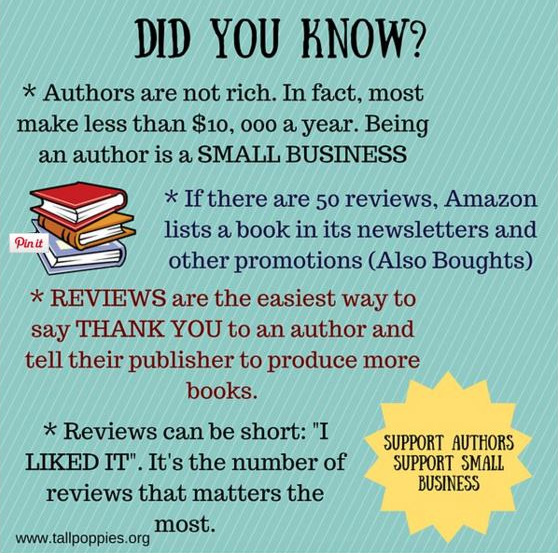
And please remember: Reviews matter everywhere, not just at Amazon. At Barnes & Noble, at your local bookstore, in your book clubs, at your library, at GoodReads, Library Thing, and wherever you chat with people.

North of the Tension Line Reviewed in National Review

Screen Shot 2015-04-12 at 5.09.41 PM

It’s behind the paywall, but here is the text of the review found in the April 20 edition of National Review.


Women’s Lives

by ROBERT P. GEORGE
April 20, 2015, Issue

North of the Tension Line, by J. F. Riordan (Beaufort, 478 pp., $24.95)

My initial impression of this book was: I’ve walked into the novelistic equivalent of a chick flick. What am I doing here — by myself? I go to these only in my wife’s company and at her behest.

Other male readers are likely to have the same first reaction. North of the Tension Line is a novel by a woman about women. Is it for women? Well, I wouldn’t say it’s not for women — but my judgment in the end is that it’s also for men, perhaps even primarily for men. A gifted female writer — one with a nearly Austenian gift for observing human nature and describing the quirks and foibles of the entire cast of characters one finds in the human drama — has produced a novel that reveals some things to us guys about how women’s minds and hearts work.

Women themselves, of course, already know these things. They can read North of the Tension Line for entertainment. Men should read it for instruction.

Fiona and Elisabeth, our heroines, are intelligent, attractive thirtysomething single women — and best friends. They have interests and professions — satisfying but not high-powered — and are far from preoccupied by the need to find Mr. Right. They are open to his walking into their lives and hopeful that someday he will: Finding him would be a good thing — indeed, a very good thing — and they’re not making the perfect the enemy of the good by holding out for the Ultimate Mr. Right when Mr. Right Enough will do. But neither are they pining away, or pursuing their avocational and professional interests as mere distractions while they wait. They have lives — lives worth living, lives in which non-romantic friends, jobs, passions, goals, and challenges of various sorts occupy them meaningfully and worthily.

Yet J. F. Riordan’s point is not the old feminist canard about a woman’s needing a man like a fish needs a bicycle. Quite the contrary. Fiona and Elisabeth are, like most women, sensible. Their hearts yearn for a special bond with one of those creatures on the other side of the mysterious line dividing the sexes, and their minds tell them that such a bond is worth the sacrifices — including some degree of loss of independence — required to establish and sustain that bond. They are not boy-crazy, nor are they imagining a knight in shining armor who will come astride a white charger to sweep them off their feet. What they want is a decent, honorable man, a man who is comfortable in his own skin and who is willing to be a man — a fellow whose gentle strength would complement their own strong gentleness.

There is nothing more familiar to readers and viewers these days than the story of a woman who manages to be caught up in an unhealthy relationship with every man in her life. She has, or had, an unhealthy relationship with her father; an unhealthy relationship with her first boyfriend, then her second, then third, and so forth; she has unhealthy non-romantic relationships with her guy friends, her boss, her dentist, her pastor, her plumber. She has an unhealthy relationship with her husband — one that doesn’t improve when he becomes her ex-husband. By the time her son is a teenager, she has an unhealthy relationship with him, too. Is the problem with her — or with them? In the standard plot, she begins by blaming herself.

But, of course, enlightenment eventually comes when she realizes that the fault is not with her at all, but indeed with them — and even more fundamentally with the institutional sexism and sexist (and, of course, heterosexist) culture that is ultimately what is driving both their bad attitudes and behavior and her initial impulse to blame herself. Pretty soon she is “off men” and living happily ever after in a lesbian commune in central Massachusetts.

What’s refreshing about Riordan’s novel is that her protagonists have healthy relationships with men. And it isn’t because Fiona and Elisabeth — or the guys with whom they have romantic and non-romantic friendships — are perfect. They’re not. In fact, North of the Tension Line is a sort of study in how imperfect but fundamentally decent women and imperfect but fundamentally honorable men can relate to each other (whether their relationships are romantic or not) in constructive ways, and find satisfaction and contentment in their relationships. In fact, part of her message is that the project of navigating the mysteries involved in relating to people of the opposite sex can — and where our relationships are healthy almost certainly will — challenge us and change us in ways that make us better men and women than we were: a little less imperfect. Relating to each other across the mysterious divide takes effort, but it’s worth it. The payoff is genuine. There must be something to the idea that men and women are made for each other — that by entering each other’s lives they supply a lack and have a lack supplied.

What about the relationships between women and other women and men and other men? Perhaps part of the reason Riordan’s characters can relate in healthy ways to those of the opposite sex is that they have deep, constructive friendships with people of their own sex. The friendship between Fiona and Elisabeth is front and center, and a beautiful friendship it is. The two women delight in each other’s company and each appreciates and cares deeply for the other. They are cognizant of each other’s imperfections, but each is no less aware of her own deficiencies. And each is grateful to the other for the gift of her friendship. They are fast friends, loyal friends. Yet neither woman jealously worries that the entry of a man into the other’s life will weaken the lovely bond between them. On the contrary, they are pulling for each other on the boyfriend front — precisely because they appreciate that there is something good, something uniquely fulfilling, that even the deepest friendship between two women (or, I daresay, two men) cannot provide.

Most of the guys in the book are good guys, and their friendships with other guys are good friendships. J. F. Riordan finds countless ways — usually suitably subtle ways — to call attention to the deep bonds of affection good men can form with each other. Of course men, being men, don’t talk about their feelings much, but rather express them in actions — including in actions toward women or for their sakes. Because of the setting Riordan has chosen for her study, most of the men in the novel — at least those we get to know best — are skilled workers. They build things, or fix things, or do things (like run a ferry from the mainland to an island). They are not intellectuals. Indeed, most are a bit less intellectual than the women. But they are not less intelligent, nor are they less thoughtful. What they are, God bless them, is old-fashioned, even chivalrous. They respect the womenfolk, and even look up to them in various ways; but their instinct is to help them and protect them because . . . well, because that’s what good men do.

You may, gentle reader, be worried that North of the Tension Line has no villains, mean dogs, or ghosts. But fear not: There is an excellent villain — a woman, by the way — a scary mean dog, and an exemplary ghost. To avoid spoiling things for you, I’ll say no more about them than to report that Riordan’s verbal artistry is up to the challenging task of handling villains, mean dogs, and ghosts — which is saying something when reviewing a writer’s first novel.

Mr. George is the McCormick Professor of Jurisprudence and the director of the James Madison Program in American Ideals and Institutions at Princeton University.

Read more at: https://www.nationalreview.com/nrd/articles/416347/womens-lives