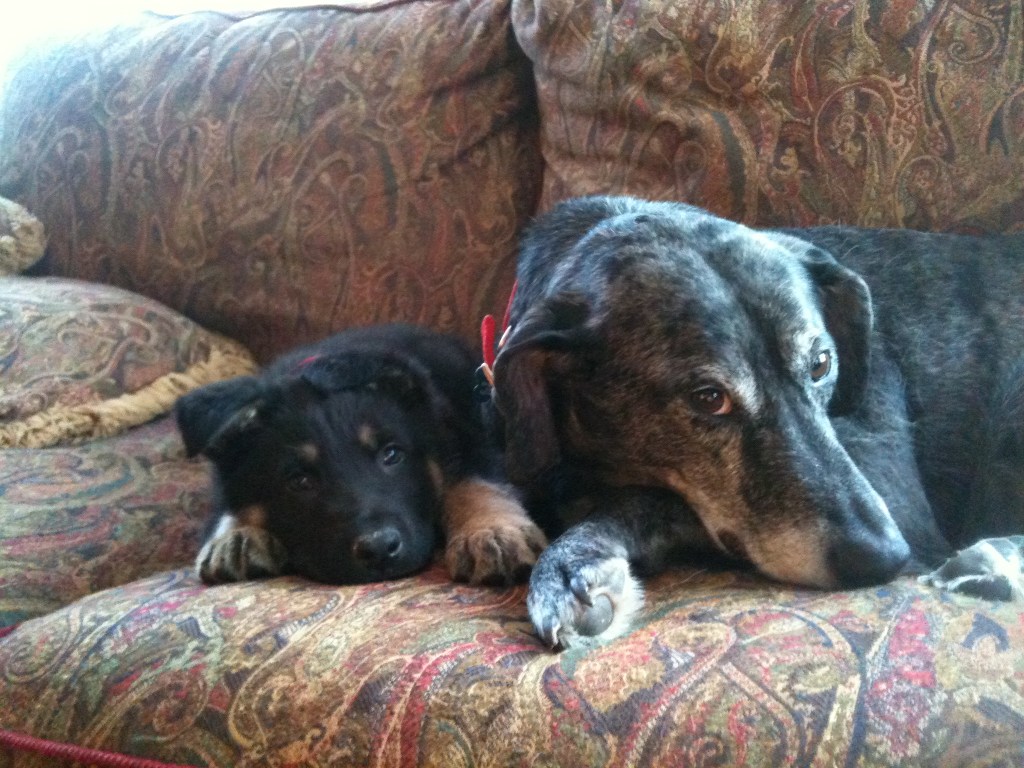
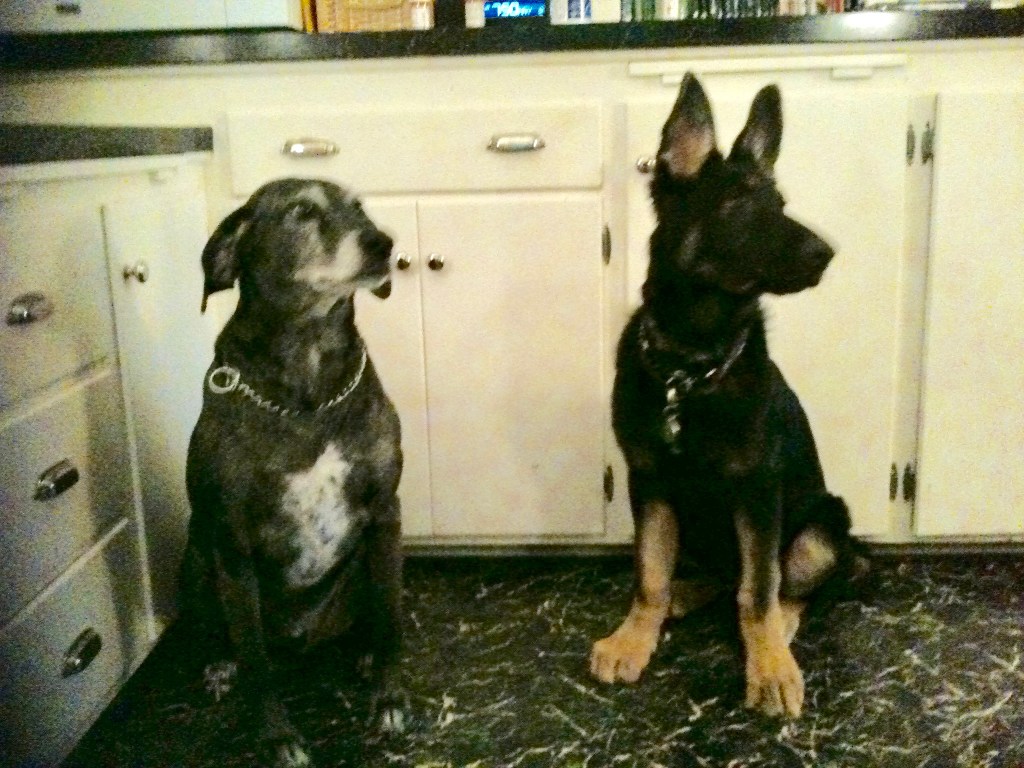
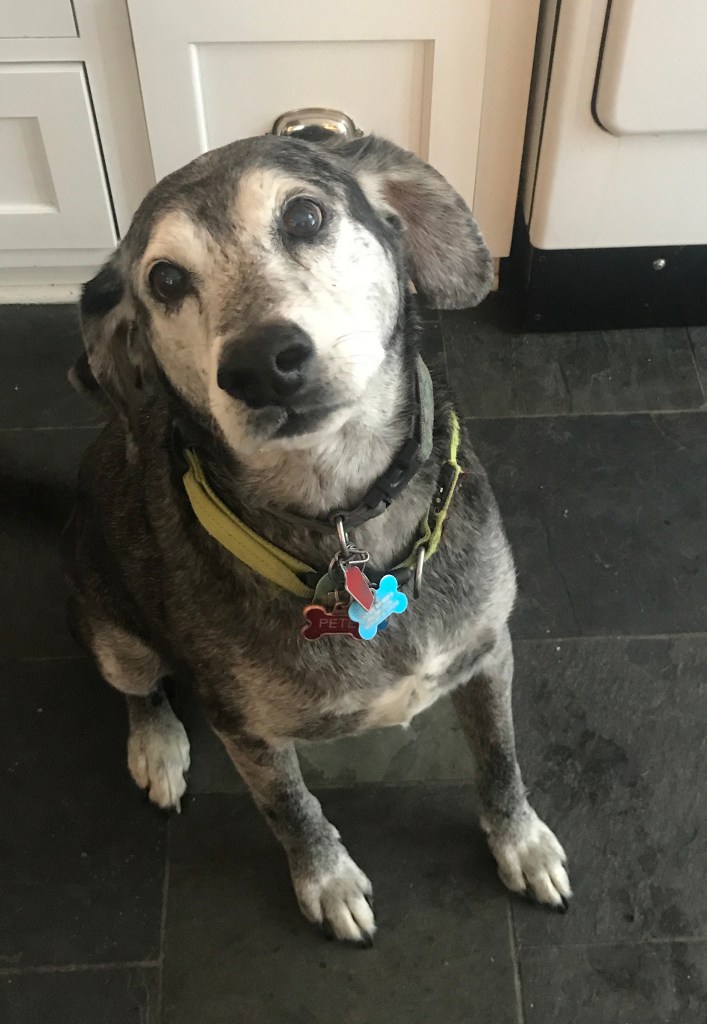
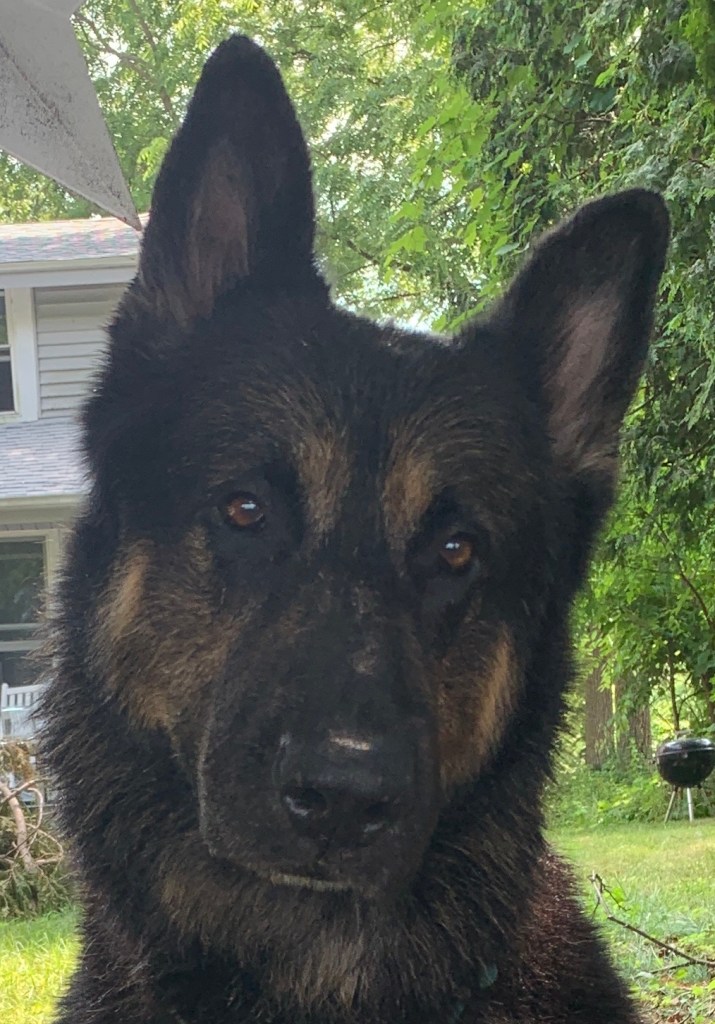
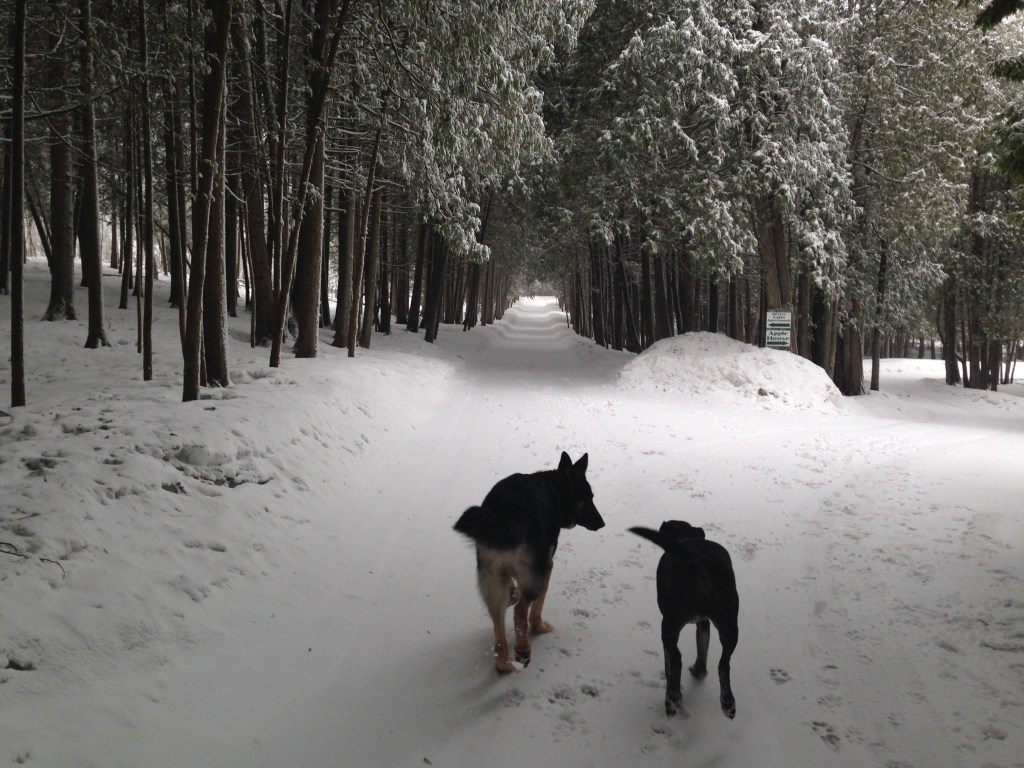
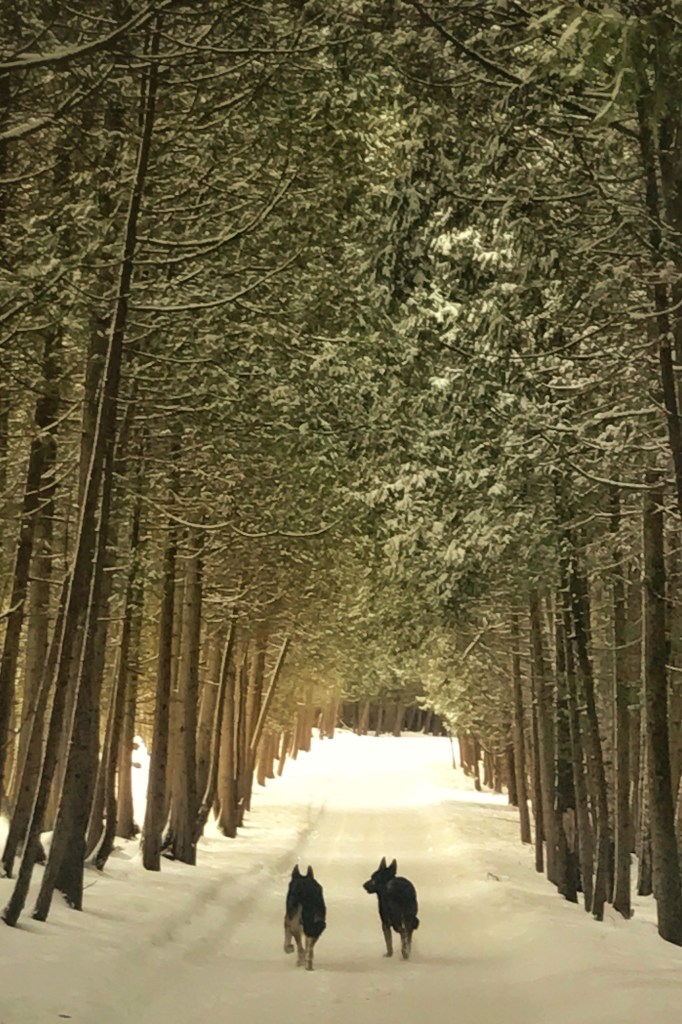
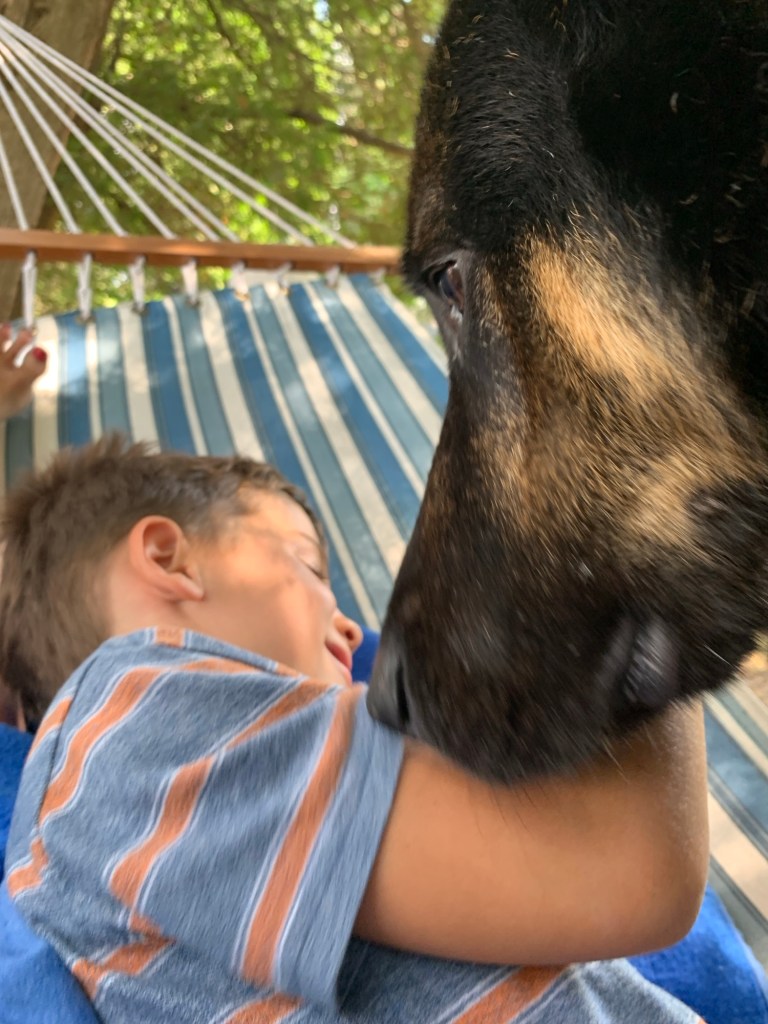
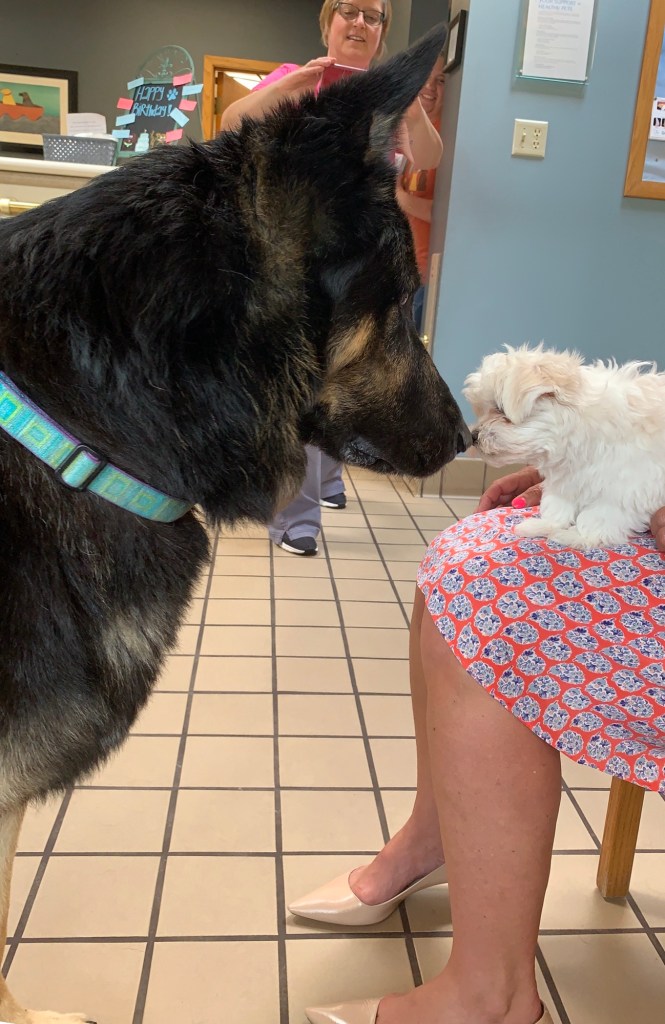
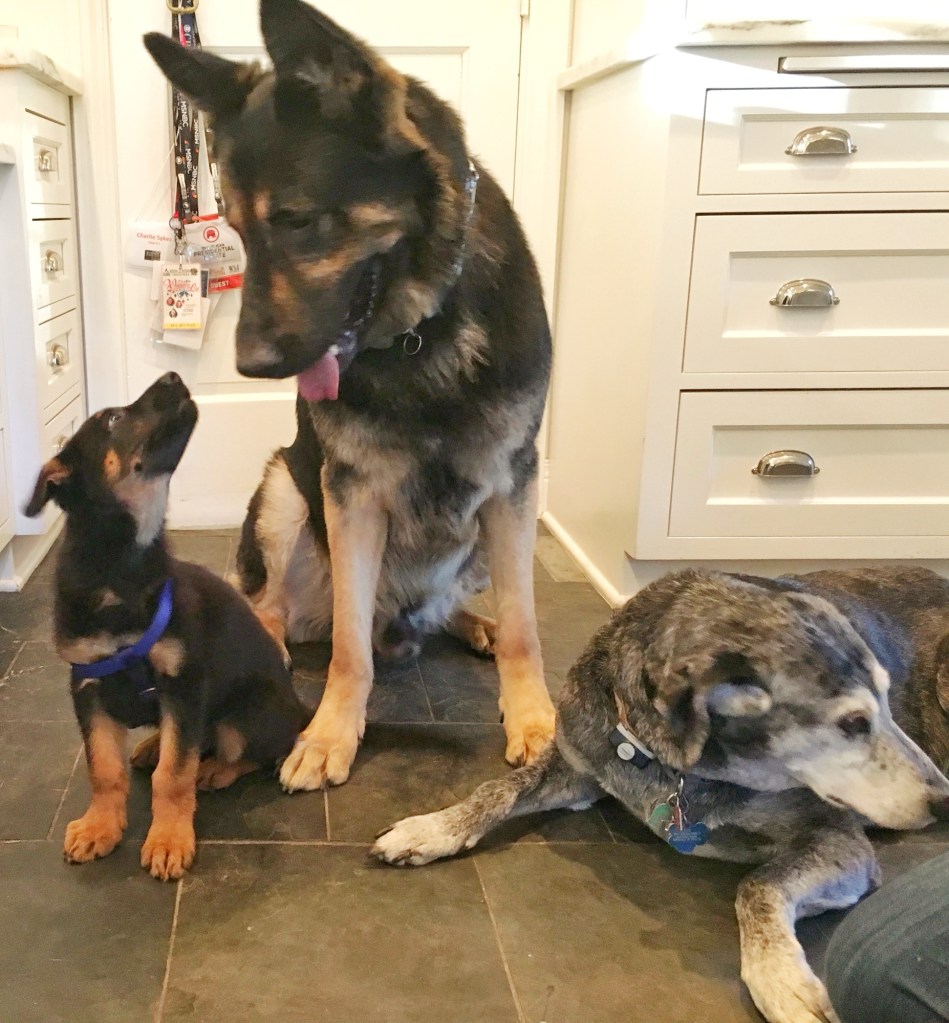
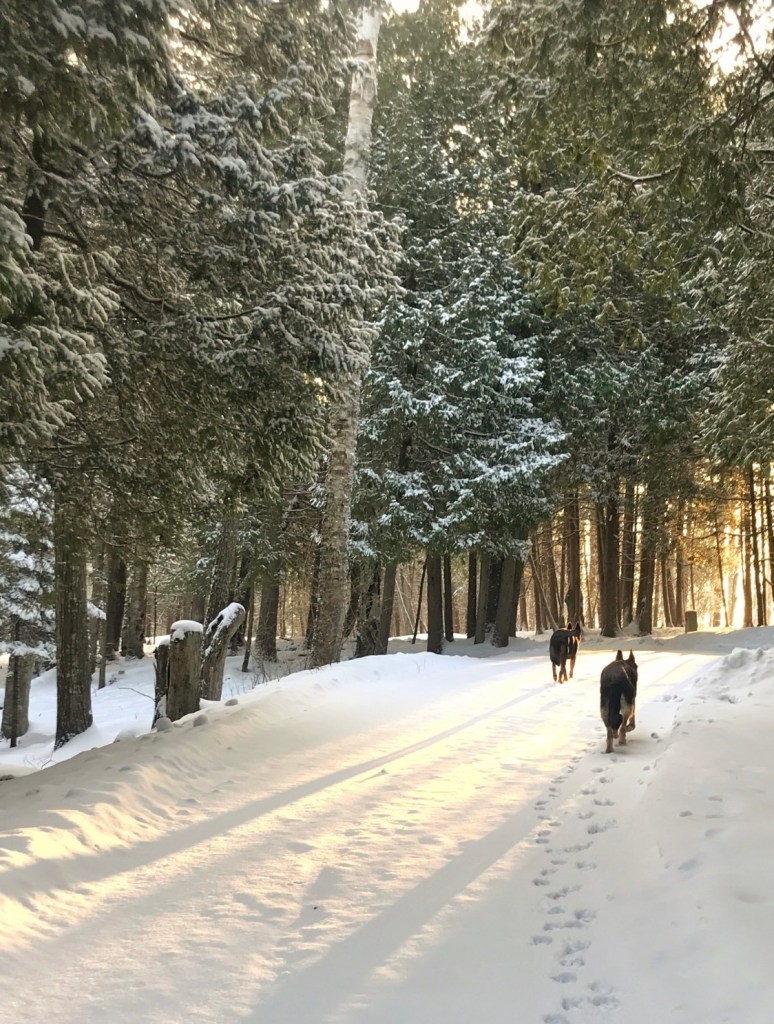
Today was the day we celebrated the birthdays of both Pete and Moses. The date for Moses was precise, but the date for Pete was an approximation. So we made it more festive by putting them together. We remember them with love and joy. (These dog photos are not gratuitous.)
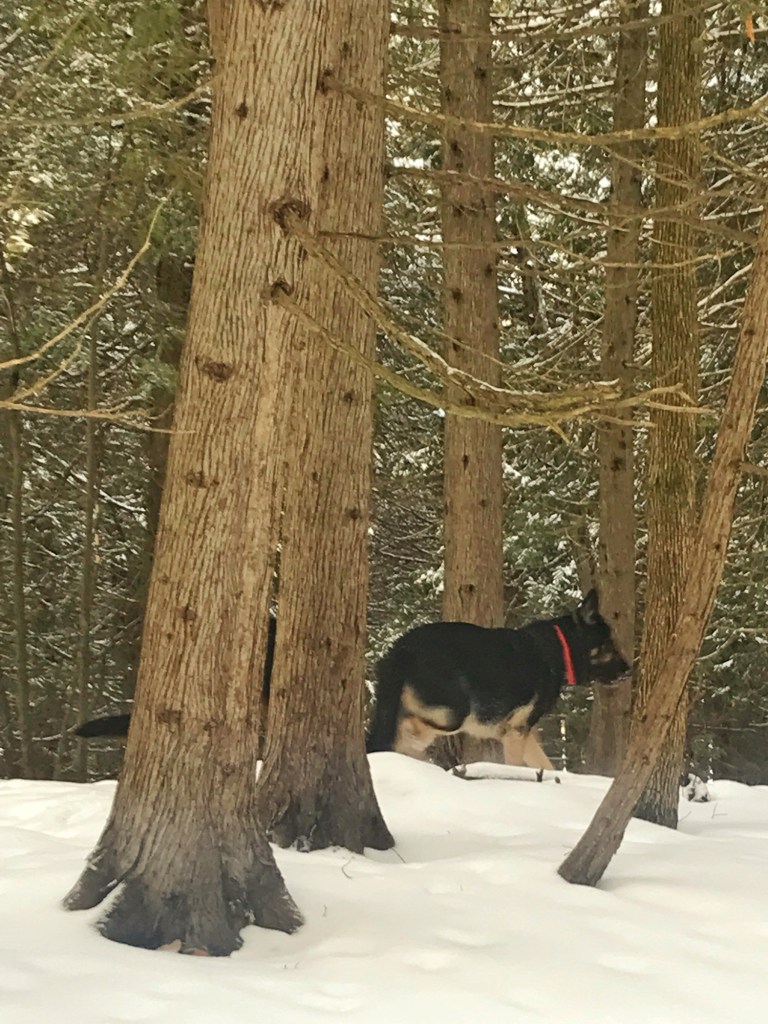
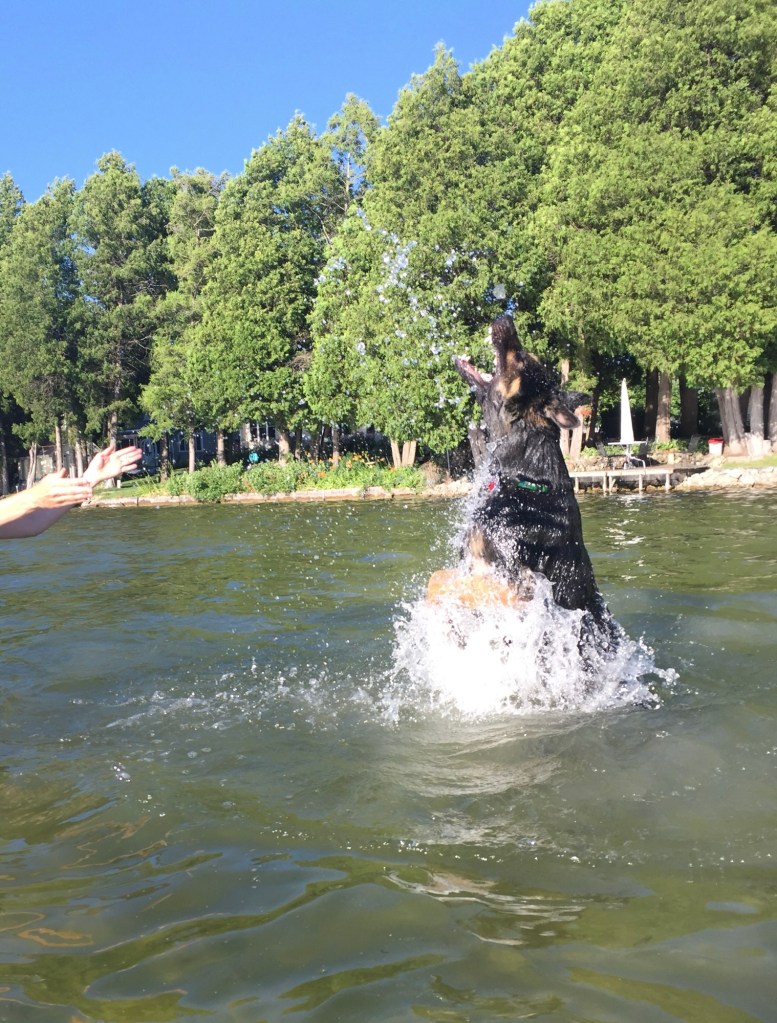
Moses was a well-trained dog, who obeyed. But he also thought for himself. I trusted him.He loved to follow me from the woods and sneak up on me.He loved splashing.
Dad’s working late tonight, but I have lovely company. Since Auggie’s illness the Germans have grown more affectionate with one another. I see them through the kitchen window as they’re playing together, and it surprises and delights me. They romp and hide and pounce on one another just as Moses and Auggie used to do. I’m not sure what’s different, but maybe dogs share with human beings the appreciation of things almost lost.
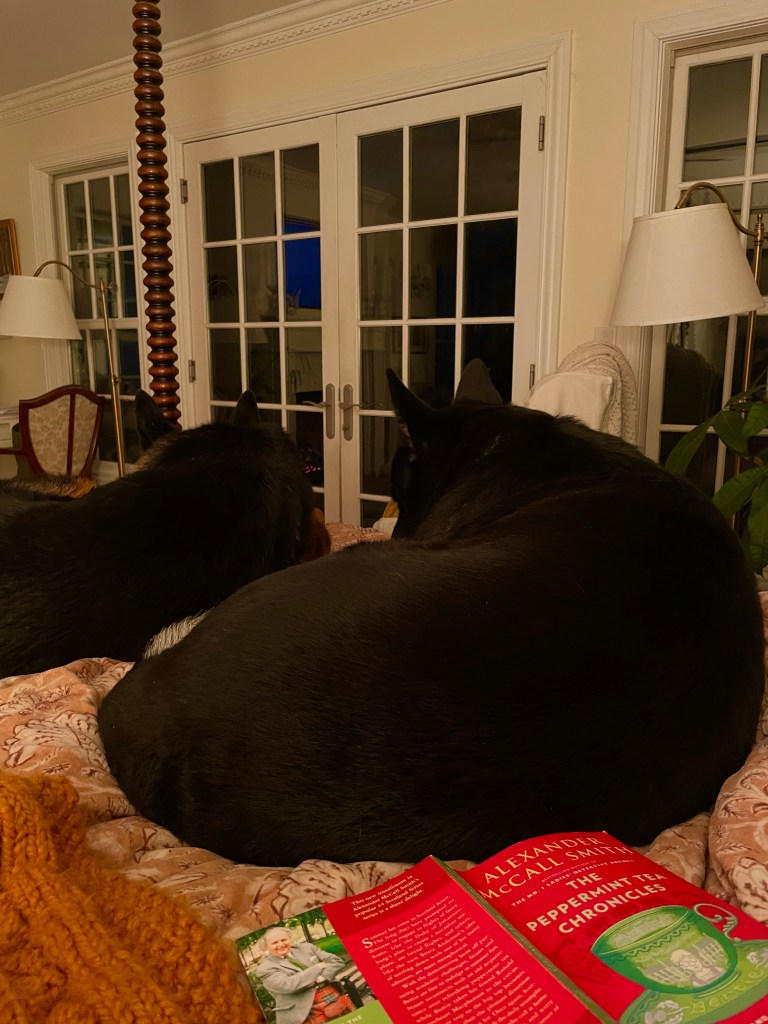
We are in bed with a fire in the fireplace and some Irish whisky to go along with a good book. The dogs are not particularly interested in whisky or books, but they do enjoy comfort.
This piece will appear in my new book of Essays And Still They Sing coming soon from Beaufort Books.
There comes a moment in grief when you begin to feel that you are being judged for it. People tell you that life goes on; that you need to stop looking back. I know that, because although I would never say it to anyone, I have often felt impatient with people who get into their problems and lie down in them. I have wanted to tell someone to get over it. In my own life, after various hard blows, including some difficult losses, I have managed to accept, to pick up the pieces of my life, and to move on. But it’s closing in on two years later, and I still have not gotten over Moses.
Life has a way of teaching us our faults.
His full name was Moses, Prince of Egypt. My husband and I argued about the name all the way to Iowa when we went to pick him up for the first time. I was insistent. It had to be Moses. It wasn’t a particularly religious choice. I had just watched too many reruns of The Ten Commandments, and wanted to be able to shake my head sadly at a naughty puppy and say “Oh, Moses, Moses, Moses.”
The name suited him. Despite having been bitten by one as a child, I had wanted a German Shepherd my whole life. I had even made a German Shepherd a character in my novels. Readers who met Moses always assumed that my character Elisabeth’s big dog, Rocco, was based on him. But Rocco was really an expression of longing. He came first. Then came Moses. Sometimes I have the sense that I willed him into being.
And he did, after all, lead us out of the wilderness. Our beloved Golden Retriever had died after a futile battle with lymphoma. Our other dog, Pete, was grieving, and our house felt empty, so we decided to sign up for the twelve to eighteen month waiting list for the perfect German Shepherd. Within twenty minutes we heard back: there had been a cancellation. Did we want a puppy on Saturday? I had the sense that it was meant to be: unplanned, the result of a series of unforeseeable events. And isn’t that what Fate is? The inevitable coming together of paths that seemed intended to diverge? Does it always have to be a human story?
From the beginning, I knew he would break my heart. I loved him too much. I can’t even explain exactly why. All I know is that there was a kind of destiny, an inevitability about him that I always felt. We belonged to each other. He was my soulmate. How to convey how much I loved him? How much I love him still? I know most people won’t think it normal. I can’t help that. It just was. It just is.
When he was only a few months old I sat in our living room, holding him on my lap, hugging him and whispering endearments. He was already too big to really fit, but I had my arms around him like a baby. My husband walked into the room and said casually: “You love that dog too much. You know he’s going to break your heart some day.” To the surprise of us both, I burst into wild sobs.
I was afraid of him at first. I’d never had a German Shepherd before, and I didn’t have confidence in how to handle him. By the time he came along I’d trained four dogs, and felt that I knew what I was doing. But when he chewed a shoe and I slapped the floor with it, scolding to show my displeasure, he avoided that spot in the kitchen for three days. That’s when I realized how delicate his sensibilities were. If I hurt his feelings, I could lose him forever.
But the moment that really frightened me was when, at 9 weeks, I tried to pull him off the bed he had no permission to be on. He growled and snarled at me, and I was struck with fear that I had a dragon in the house I could not control. I called my dog trainer that day, and begged her to let us start early. He earned his first obedience title at six months, and his second not long afterward. It required retrieval and he did not really take to retrieving, but he obliged me because that was what he did.
This is not to say that he was a tamed creature, tied to my will. Quite the contrary. Moses did things because he knew he should, and when I asked him to do something that was wrong for both of us, he would flat out refuse. One night, in the dead of a Wisconsin winter, I had an emergency call about my elderly mother. It was well below zero, and I had to meet the ambulance at the hospital. Moses knew I was upset, and he saw his job as being with me no matter what. But of course, he couldn’t sit outside in the car for hours in sub-zero temperatures. He followed me out to the car, refusing to let me leave without him, and trying to climb onto my lap. My husband gently put his hand on Moses’s collar to pull him away, and Moses turned and very meaningfully put his teeth on my husband’s arm. He did not bite; he nevertheless expressed his feelings very clearly. Moses knew his duty, and he was not easily dissuaded from it. I had to drive away from him, knowing we both felt betrayed by the separation.
I felt so much pride having this magnificent animal walk beside me. Moses loved going to the Fourth of July parade. The parade begins every year with a long line of historic fire engines, followed by the latest and most innovative, as the proud company of volunteer firefighters marches along. Moses would sing with the fire engines, a long, lovely howl that made people turn and smile. He would sit upright and bark at the three gun signal that began the parade, and he would duly accept the admiration of anyone who stopped to see him. When the parade was over, we would walk with the crowds down the street toward the park, and people would reach out their hands to touch him as he walked by, like Aslan in the resurrection.
There was a fierceness about Moses that is not in my other dogs. It lay beneath the surface, but it was right here for anyone to see. People respected Moses. As he deserved.
While we were remodeling our house, a five man insulation team arrived one morning without notice. My husband and I were at work, and only the carpenter, who adored Moses, was there. The insulators opened the door and walked in. According to the carpenter, who laughed while telling the story, Moses chased all five of them “screaming like girls” into the powder room, where they all crowded in, slamming the door behind them.
They called their manager while Moses waited outside the door.
Moses had a passion for butter. When he was young, he would steal whole sticks of it from the plate on a high shelf next to the stove. After we broke that habit, he sang for his butter, his paws dancing as he looked from the butter dish to my face and back, carefully explaining what he wanted.
More than anything else, Moses loved the lake. He was the first of our dogs brought up to swim, and he took to it immediately. But it wasn’t swimming that was his passion; it was splashing. His jumps to catch the water we splashed at him were stupendous. He leapt out of the water like a mythical beast, and his yearning to splash was relentless. If I were lazy and lounging on the dock, he would swim around the edge to me and paddle his paws to splash me, hoping to start a game. If I ignored him, he would urge me with increasingly louder moans of protest and pleading, splashing harder. He was impossible to resist.
There’s a Christina Perry song from a silly vampire movie that I used to sing to Moses. I remember the last time we were at the lake, a few months before he died. The music came on, and I whispered it to him, holding him in my arms, tears rolling down my face.
I’ve loved you for a thousand years.
I’ll love you for a thousand more.
I see now that I knew at some level it would be the last time we splashed together. Somehow, some part of me knew he was dying.
He had been in pain from an injured back, and it was slowing him down. I took him for exams. I asked every medical professional we saw—and there were a few—to reassure me that he would be all right. He’s not going to die, is he? He’ll be okay, won’t he? They all, with varying degrees of patience and curiosity assured me. Why would I even think that? He was only 7 years old. His back hurt. That was all.
But they were wrong. Somehow, in the deep connection Moses and I had with one another, I sensed that something, but it was nothing that showed up on any tests. It was just arthritis pain from a back injury, nothing more, I was told. Of course he didn’t feel well if his back hurt. We did acupuncture, chiropractic, and laser therapy. I took him for swimming therapy. He had varying levels of pain meds.
But he didn’t look right. His eyes were glassy. His fur seemed without luster. And all the while, the tumor was growing unseen, waiting to break his heart, and mine.
What hurts me most is that I wasn’t there. We had slipped away for three precious days to spend Christmas with our new baby granddaughter. While we were away, Moses had an upset tummy, but, like so many German Shepherds, he often did. We used to joke about such a big scary dog having “princess tummy”. We also live in the woods, and the dogs tend to eat things that require periodic doses of antibiotics.
He was sad when we left. He knew what suitcases meant. But we were unconcerned because he would be in his own home with his brothers and someone who cared for him. Over the course of our trip I spoke with the dog sitter multiple times. She was kind and reassuring. He wasn’t sick, but he was moping. He wasn’t eating, but he was drinking a lot of water. I was more worried about reassuring her than I was about Moses. We’d dealt with these tummy troubles before. I called the vet and arranged to pick up some antibiotics on the way home from the airport. We didn’t know he would already be there, cooling on a metal table.
Our dog sitter, never imagining we would go to the vet first, waited at our house, dreading our return. She didn’t want to tell us on the phone.
The one obligation of a soulmate is to be present when you die. But I wasn’t there. Instead, while we were in the air, Moses lay down next to our dog sitter, put his paw on her arm, looked into her eyes, and let out a long sigh. Then he died.
I know it sounds overly-dramatic, but I will never forgive myself. People have tried to tell me that he knew he shouldn’t die in front of me. I don’t buy it. He felt abandoned. He didn’t know where I was. I let him down. I, who sang love songs to him, who loved and trusted him, for whom he would have laid down his life, wasn’t there when he needed me most, and he died not knowing whether I would ever come back.
Looking back on that last year, I almost did the best I could. I didn’t miss his cues. The mistake I made was believing everyone—good people who didn’t know him as I did— who told me he was okay. I should have trusted my own heart. He was telling me, and I didn’t take his word for it.
Grief is one thing that never dies. I will be haunted by his loss forever. My only hope is that those insipid rainbow bridge poems are true, and that someday he will run to me, and I will be able to kneel down, gather him into my arms, and whisper my love into those big fierce ears.
I have a lot on my mind: an unfinished and recalcitrant book, the usual tribulations of book sales—or lack thereof—a family reunion that includes children, grandchildren, five dogs, and one bathroom at our lake cottage, and a baby shower focused on the joy of the occasion, but whose logistics are complex. In case anyone doubts the (self-imposed) complexities of my life, I have three big dogs whose various health needs have led me to commit to giving them homemade dog food, and the coming family visits suggest that preparing 8 days of dog food in advance might be advisable. There’s a full day’s work, including the scramble to find affordable meat for them. It’s a nuisance, but the dogs are healthy, vital, and unappreciative.
I’m not sleeping well.
I defy myself in my wakefulness: I will not do laundry in the middle of the night.
I just poured myself a bourbon at 2 am, which is in violation of my own protocol, but an emergency method of acquiring some sleep before a day with many tasks.
Even in the depths of the night, the sky here is brighter than the trees, and the abstract pattern of their leaves against the pale night surrounds and engulfs the house. I lie on the couch in our library and am consoled by the sky. The dogs breathe; Pete, fast and shallow as if he is racing; Moses, deep and sonorant.. Both follow me in my restless wanderings through the house, and we share our love and our wakefulness. Auggie, in his youth, sleeps through.
I found Pete around midnight, curled up in an odd place on the kitchen floor. Yesterday morning I found him lying among the piles (no, mountains: two houses, visitors, bed linens, beach towels, clothing) of sorted laundry, far from his sleeping family. I wonder whether he seeks solitude, or whether he is actually lost: befuddled by deafness and blindness.
Pete has much joy in life. He eats with gusto, he runs and romps. He protects his interests. He polices his younger brothers. But he is an old dog, and his quiet demeanor means he is easily pushed aside by the exigencies of the moment, and each day I resolve to spend time with Pete that is only his. Each day I fall short.
Whose kid is playing booming bass on his car stereo at 3 am on our sleepy rural road?
I get up to start a load of laundry.
I am awake because my dreams were of my father’s death: explicit; agonizing. I rose from our bed and went to where my stirrings would not disturb my hardworking husband. Moses smells my tears and licks my face. I tell myself that my troubles are small. The world is filled with tragedies and pain, and my life is easy, rich, and full. But still, it is an act of will to find the right messaging for my troubled mind. I have a good life, it’s true. But even so, grief holds hard on a heavy heart.
Last night, just after dark on Ash Wednesday, I took the dogs out for a little ramble. The first thing I heard was a coyote in the distance, and then, later than usual, church bells, signaling the seven o’clock service for the Lutherans. Each, in its way, calling the community to assemble. It was a curious juxtaposition: the two sounds, one of civilization, one of the wild, both of God.
We walked in the dark, the dogs and I. Old man Pete and I walked gingerly, careful not to fall on the ice. Puppy Auggie raced and slipped, and slipped again, joyous and without care. Moses loped ahead, making sure all was secure. It was warmer than it had been, but the wind cut, and the coyote made us watchful and tense. Pete paused to point into the dark ravine. We all stopped to look, and then moved on.
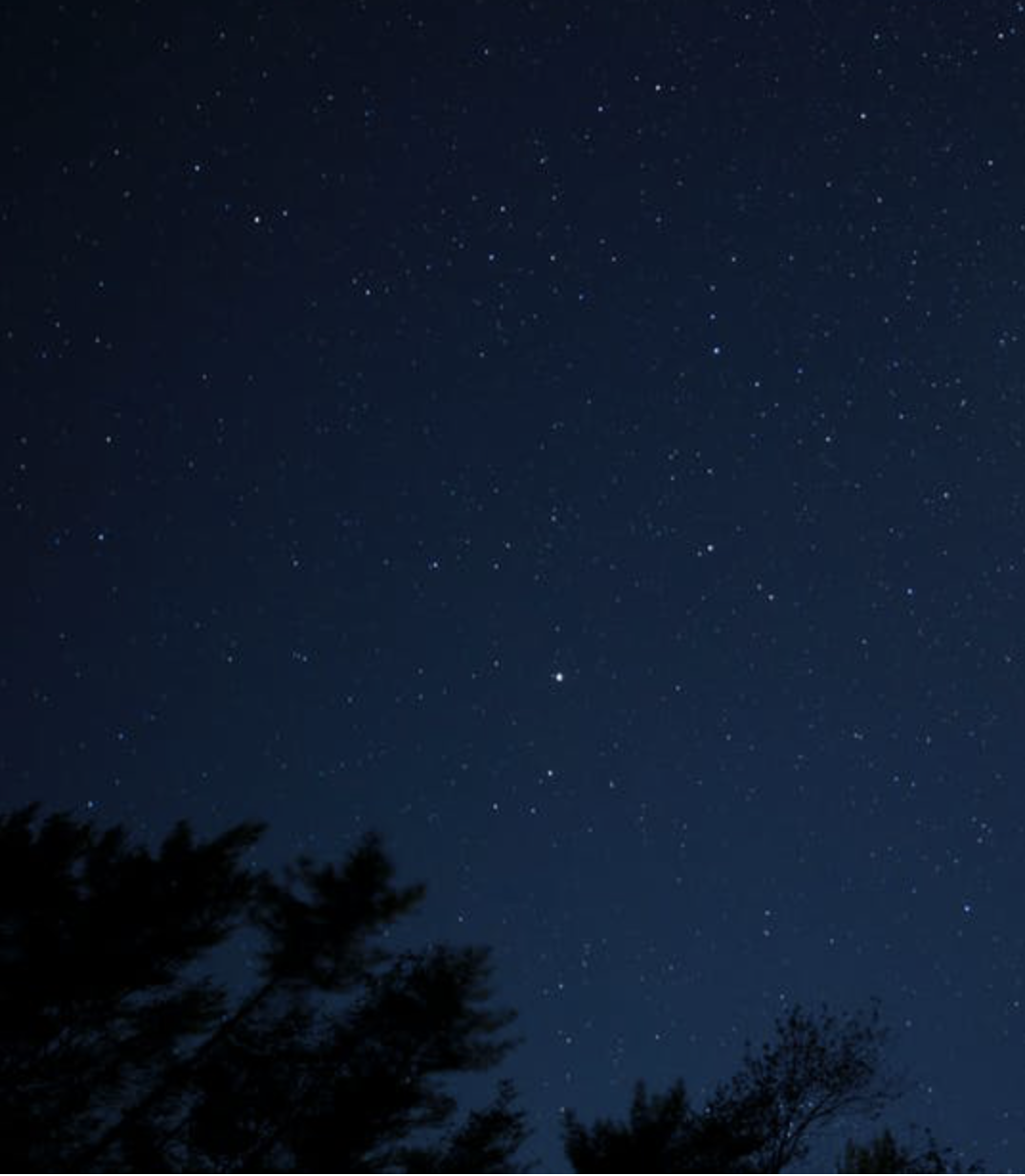
With my hood up, I could hear strange sounds behind me. With my hood off, I could hear the unfamiliar crunch of my new boots. The sky was clearing, and a few stars shone. We walked only a little way before returning to the warmth of the house to sit by the fire.
When I am on the Island, every night, before bed, the dogs and I go out for a long walk in the dark.
There is nowhere else on earth where I could walk alone, in the dark, in the woods, and feel so completely safe. It’s true I have my dogs with me, but they are even less worried than I, and frequently slip away into the trees to leave me to the sound of my own footsteps. On a cloudy night like this, it is so dark that only the melted dirt paths of this January thaw distinguish where to walk from the white snow everywhere.
Moses, who still carries the echoes of lupine ancestors in his soul, likes to disappear into the woods, projecting my course, to silently stalk me, later to charge out onto the path in front of me, in an unnerving fashion. It is a delightful game for him. Auggie, his apprentice, has begun to follow him deep among the cedar trees.
Their stealth is remarkable, and their ability to judge the intersection of vectors is proof that dogs understand geometry. Each has a red light-up collar: Moses with a slow blink, and Auggie with a fast one, so when they walk with me I can tell who is who. But when they dissolve into the woods and turn dead-on, their collars are no longer visible, and I cannot hear the sound of their padded feet, their bodies long and low, in stalking mode, until they are immediately in front of me, delighted by their prowess and by my praise. Their happiness shifts them from predators to pets, but there is an inner reality that is vital to remember.
These night walks are essential to their well-being and to mine. For them, it is a chance to reassess the activities of the local wildlife. The fox has been out since we walked this afternoon, and the raccoon and deer and possum. The turkeys are roosting in a tree somewhere near, and the deer are no doubt nearby, waiting for the dogs to go in before they come to feed. Their game with me exhilarates the dogs and empowers them.
For me, it is an expansive moment of the soul. Alone, in the dark, but utterly unafraid, I walk along almost invisible paths, listening to the lake, to the occasional cries of owls or foxes, and I feel that I am in my life.




 J.F. Riordan