I see you never

There is a short story by Ray Bradbury–an underrated master of American literature–that I read long ago. In it, Mr. Ramirez, an illegal immigrant, and tenant of Mrs. O’Brian, is being taken away to be deported. He is a good man, and she likes him, but she is unable to help him in the face of the law. At the last moment, desperately, he cries out to her, “Oh, Mrs. O’Brian! I see you never! I see you never!” After he is gone, the woman starts to go on with her interrupted dinner, when she suddenly puts down her knife and fork, painfully struck by the realization that she will never see Mr. Ramirez again.

In winding up the details of my late mother’s estate there are large griefs and small ones. Each time I come back from her house I am spent from the turmoil of emotion. There are so many things to do: the paperwork, the bills, the wrapping, the packing, and the decisions about what remnants of my parents lives to keep and what to abandon. It is heavy work. I never liked the house itself, but the finality of each step of the parting beats on the walls of my heart.

The house will be sold tomorrow, so I was there yesterday to meet the movers. The mailman, whom I have known for decades, was on his way to deliver a package across the street, and he stopped to talk. He is a kind man, always smiling, and he delivered mail to me in my own small house when I lived in that town, as well as to my parents. I haven’t lived on his route for many years, but when we see each other we exchange pleasantries. He is, as a friend of mine likes to say, one of my life’s cast of characters. He doesn’t have a major part, but he has played in many small pleasant scenes, and his cheerful interactions have given me some of the happy little ordinary moments of everyday life.

Our conversation was light, and he enquired about the house. As we parted we shook hands for the first and only time, and I said to him something I don’t think I’ve ever said to anyone before: I will probably never see you again. I had to turn away quickly to hide my feelings.

The finality broke hard, and I cried all the way up to the house.

I don’t even know his name.
Joys of the Season

Dear Secret Santa:

First, I want to thank you for reading my blog. I need all the readers I can get.

Second, I want to thank you for the package of Chuckles I found in my mailbox yesterday morning. My husband handed me the envelope which he had opened accidentally, and recognized who the gift must be for. The message inside said: Merry Christmas from your Secret Santa.

I was in the middle of vacuuming out the car so human beings could sit in the back without acquiring full coats of fur, but I opened the package and ate them immediately. Green one first; red one last, all in the proper order. They were slightly frozen and chewier than usual. Delicious.

It was a lovely surprise, Santa. I am grateful.

My love to you, whoever you are.

And, of course, Merry Christmas!

Old friends

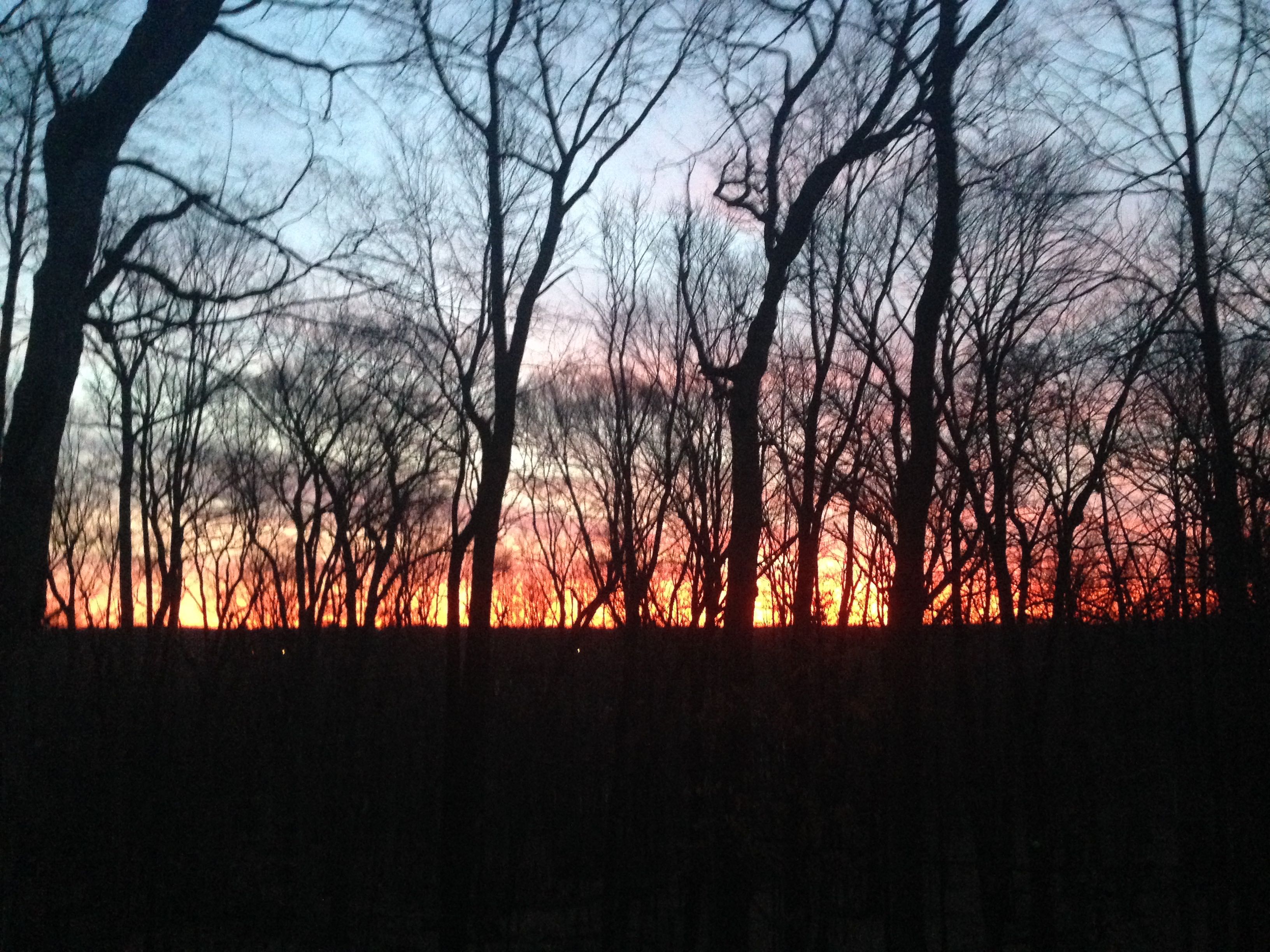
Winter sunrise

My late mother had a good friend whom she admired greatly. Blanche will be 108 years old in February, and she still lives alone in her own house. She gets her hair done weekly, dresses beautifully, and is generally in good health.

A year or so ago I stopped by to deliver my mother’s birthday gift to Blanche while my mother–then 90–waited in the car. I spoke to Blanche and to her daughter, and, accustomed to my mother’s deafness, used my opera singer voice.
“You don’t have to yell at me,” said Blanche, with great dignity. “I am not deaf.”
“I’m sorry. My mother is,” I said apologetically.
“I know,” said Blanche.

I picked up my mother’s mail this week, and in the piles of junk mail and solicitations for donations for every charitable cause imaginable, I found a Christmas card from Blanche, signed in a firm, lovely hand.
Somehow, in my mother’s small town, the news of her death six months ago had not reached Blanche, and it had not occurred to me to call her personally.

I will have to write a note this week. I dread bearing the news that will reduce the small circle of contemporaries for this remarkable old lady. (If contemporary is the right word. At 91, my mother could have been her daughter.) My mother used to say how hard it was when all your friends were gone. How lonely. Blanche is accustomed to death, no doubt, but each loss must surely add up, and one hesitates to add weight to so many years.

I am wondering if I should wait until after Christmas, but perhaps that would be a form of selfishness.

It’s difficult to know. But probably sooner is better.

A Thanksgiving for Orphans

IMG_7499

Thanksgiving is my favorite holiday. I love the starkness of late fall, the sense of the beginning of things, filled with the anticipation of the holidays and the beauty of the coming winter. Ever since I have had my own household I have filled my house with guests for Thanksgiving, joking that I was always on the look-out for holiday orphans.

But this year for the first time there will be no guests. I will make a traditional dinner, but it will only be my husband and me. For the first time we are both orphans ourselves, and I don’t have the energy to put up a cheerful front when the absence of so many people we loved will be so fully felt. Last year, on my mother’s last Thanksgiving, I could fill the absence with the special care of her. She was the last man standing. Now she is gone.

Of those who used to annually grace our table, we have lost four.

You would think that in middle age the loss of a parent would not hurt so much, but that is only what you would think until it happens to you. Every memory now is fraught with the poignancy of passing time, and the changing human geography of our lives. My dear friend, who lost her mother recently, said to me the other day: Remember when we were kids and no one ever died?

I see now how age can bring melancholy, with every new occasion or holiday memory colored by the loss of those who once celebrated with you, the loss of your old life, your old self, the family you always had.

But this is not the proper way to live. Each day is meant to be embraced with hope and joy. To do otherwise is a form of sinfulness.

Today will be hard, a deliberate pause to remember and mourn, and then to shed the old skin of grief.

Hope begins again tomorrow.

North of the Tension Line’s Publicity Machine

IMG_9009-0.JPG

When people talk to me about North of the Tension Line,, they often mention Rocco, the thoughtful and easy-going German Shepherd who lives with Elisabeth.

When people see Moses-shown above-they assume that Rocco is Moses. But, in fact, the reverse is true: Moses is Rocco. I began writing about Rocco long before Moses came into my life. Opportunism, however, is a new author’s responsibility, and this permits me to bring Moses along to book events.

Children climb on him, people want their pictures taken with him, and, inevitably, when people hesitantly reach out to touch this Big Scary Dog, he rolls over so they can rub his tummy. A dog is a public relations boon.

And also excellent company for the road.

And Now For Something Completely Different

Caroline

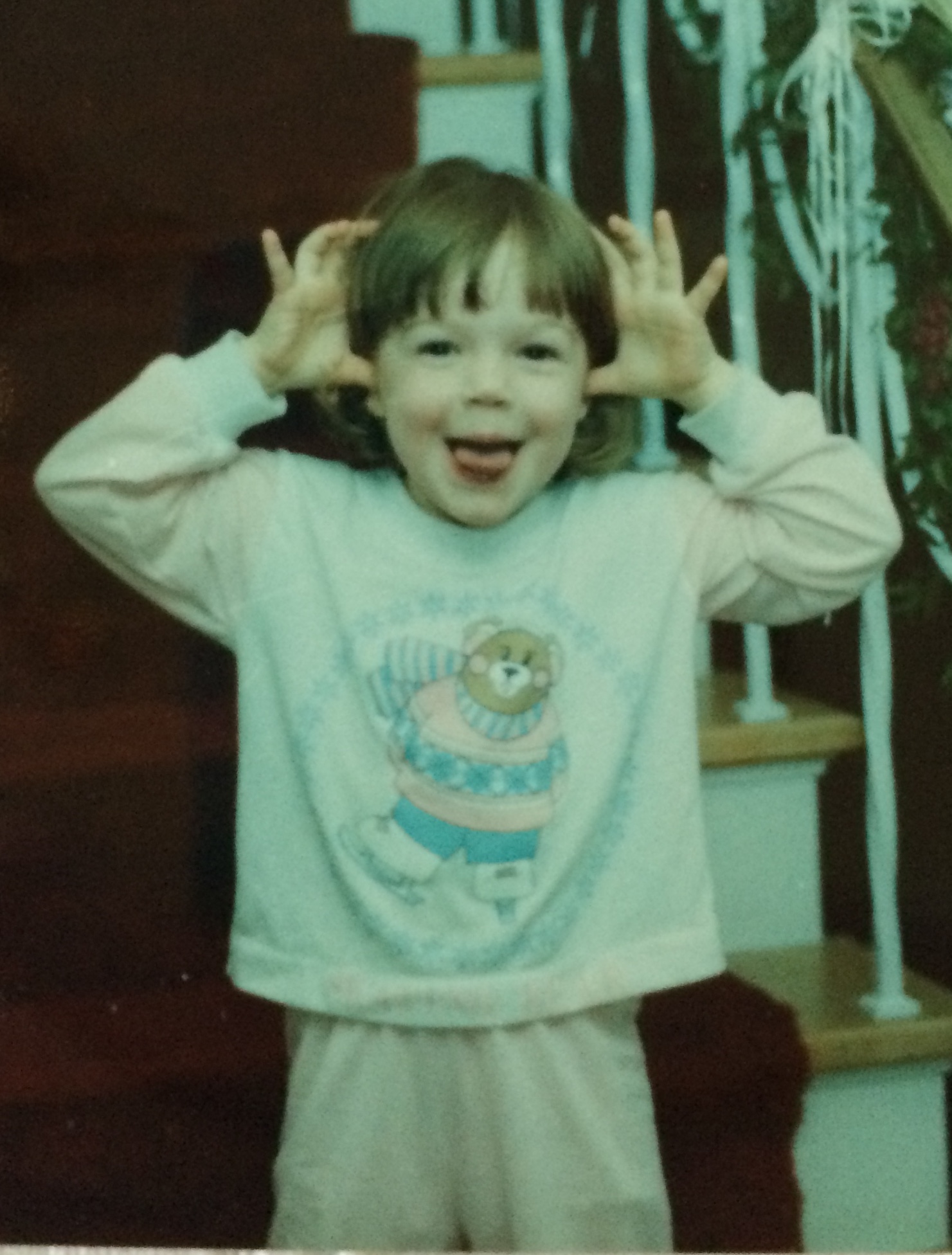
I’m taking a hiatus from the book tour this week. My favorite niece (See above. She’s bigger now.) is getting married and I expect to fulfill my auntly duties by running errands and tying bows on things. Apparently I am also the designated cake decorator, in which, fortunately, I will be assisted by a talented friend of the family.

I will make a strong effort not to drop anything.

The Kindness of Strangers

In the interests of realism–as opposed to self-pity–it is reasonable to point out that the life of an unknown author on book tour is not glamorous. It is, in fact, lonely, discouraging, and humbling in the truest sense of the word. You know how when people win the Nobel Prize and say that it is humbling? Well, winning the Nobel Prize is not humbling. No. Waking up alone in a hotel room, driving all day, having a book event and having four people show up in a room set up for 35, then going back alone to another hotel room that is humbling.

I am not complaining. At least not at this moment. This is all part of the process of breaking into a difficult business as an unknown author. If I persist, I hope that someday I can increase my audience turnout to something more respectable. Possibly even to double it. I am merely pointing out how meaningful interactions with people can be in these circumstances. So the other night in Lake Orion Michigan, after a day of this kind, I decided to take myself out for a nice dinner. And possibly a cocktail. Possibly more than one.

It was a Saturday night. The place was packed, and the wait for a table was over an hour. So I found a single place at the bar–an advantage to traveling alone–and decided to have my dinner there. There was a couple seated next to me–I was on the corner–and we started chatting. We talked for well over an hour. They were parents whose first child was a freshman in college and they were struggling over parenting withdrawal, and I was deeply grateful for the conversation. They generously asked questions about my book. I gave them a book card and wished that I had a book with me to give to them. When they left we all exchanged good wishes, but I didn’t realize until I was ready to leave a little while later that they had paid my bill.  So I didn’t have a chance to thank them.

So to the couple at the bar in Lake Orion, just in case you decided to check out my blog, please accept my thanks. Your gesture was gratefully received and will be duly passed along to someone else who may appreciate it.

Cheers.

Heigh ho, the Glamorous Life

Barnes & Noble

So many writers have written about the humiliation of book tours: the awkwardness of sitting at a table waiting for strangers to approach. There are people who don’t want to buy a book and feel that it would be a form of rejection to stop and not purchase (and they’re right),  but I hadn’t realized how many people are actually just shy. I watched today as people carefully turned their heads so as not to have to see me sitting alone at the table at Barnes & Noble. For the people who didn’t care it was easy. I could hail them and offer a bookmark which they could take or not, and they could then wander on. But there were several people whom I knew perfectly well wanted to engage in conversation, but who couldn’t bring themselves to do it. They lingered agonizingly near, sometimes for nearly an hour, but could never position themselves in such a way that I could catch their glance or smile and thus invite conversation.

I knew them, because they were me. I remember sitting next to Beverly Sills at dinner for an entire evening and hardly knowing what to say to her. I was 18 years old, and wanted so much to be an opera singer just like her, but I couldn’t think of a single thing to say. Ultimately she took pity on me, but it was an opportunity missed.

Today I am going to see if I can engage more people. If nothing else it will be a way to pass the time.