Our property is almost entirely wooded, and the trees have a way of creating their own little ecosystem. It can be warm and sunny elsewhere, but when you turn in our driveway the shade envelopes you, dropping the temperature, delaying the melting of ice and snow, and, in the summer, providing sanctuary to far too many flying insects.
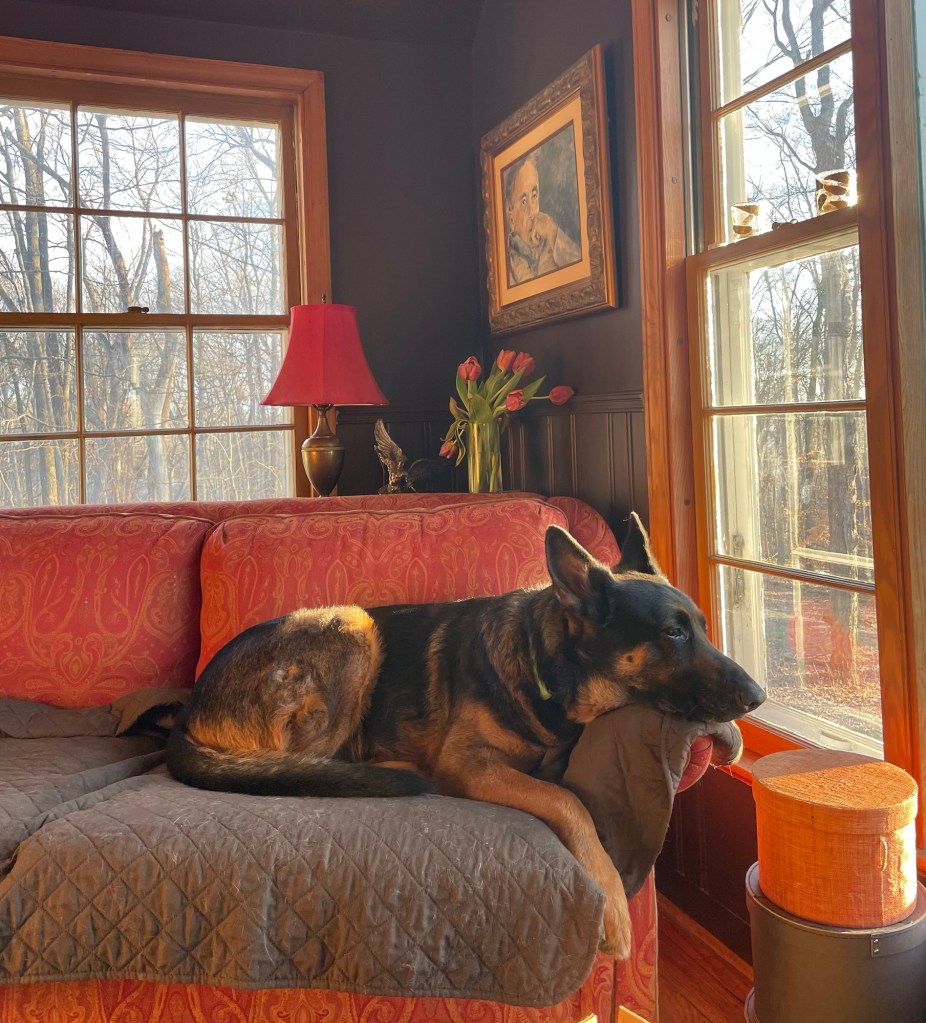
The shade in our house is so ubiquitous that I have chosen the color schemes to maintain a warm coziness, lest the leaves turn everything inside green in summer. In winter, the bright sunlight is a welcome change.
Maintaining this property is a bit like managing a park, and sometimes it means making some hard decisions. This week we are having to take down a healthy sugar maple—which truly pains me—but it was leaning perilously over the house, and after our recent heavy snow and ice, it became clear that it was us or the tree.
Enter Johanna. She runs a small tree care company, and recently won a state championship for her climbing and cutting skills. She is not someone we call for the minor things, but I trust her implicitly with the big stuff. Her calm cheerfulness is warm and reassuring, even as she is dangling from a rope and holding a chain saw.
She has colleagues who manage the ropes, feed the chipper, and help to make sure she is safe, but she does the climbing. Her team will be here for at least three days, felling the tree, cleaning up the storm damage, and cabling another big sugar maple to ensure its stability.
Whenever she is here I am distracted by a compulsion to watch her work. It isn’t something you see every day, and, frankly, her courage dazzles me. So, today may not be a very productive day, but it will certainly be an entertaining one.
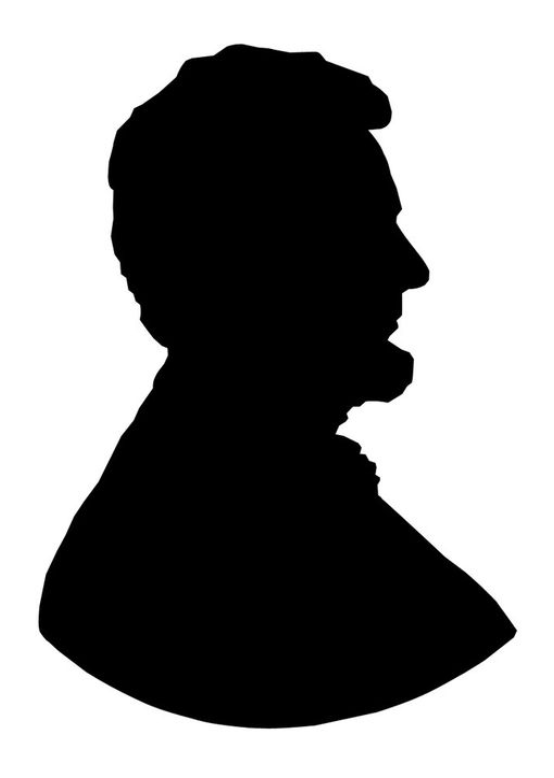
Today is Abraham Lincoln’s birthday. It bothers me that we have lumped Lincoln’s and Washington’s birthday’s into one generic Presidents’ Day. They were not generic men; each in their particular ways were fathers of new eras in the American experiment. It bothers me still further, that at a recent trip to an elementary school, even the third graders didn’t know who Lincoln was, or recognize that distinctive profile. It’s a subject simple enough for kindergarteners, but we seem to assume that children are incapable of learning things these days.
As a former teacher—and lifelong admirer of President Lincoln—I consider the abandonment of history a disgrace to our schools. Not to mention the abandonment of grammar, literature, and civics and…just reading. If you don’t believe me, look at the statistics. I’ll wait.
Children are sponges. They love knowing things, and their brains are programmed to memorize facts. It’s what human beings are meant to do. The education establishment dismisses memorization as mere rote learning—as if memorizing is somehow wrong. But I see memorization both as a gift and as the proper preparation for thinking. And at any rate, it would be a nice start.
I saw this close-up and personally when I was helping my grandson with his algebra this fall. How do you factor if you haven’t (in second grade) memorized the multiplication tables? It’s a form of rote learning that forms the facility for all the mathematics that follows.
Literature, too, is aided by youthful memorization. Children may not be ready to grasp the depths of meaning or the literary allusions in a memorized poem. But they internalize everything. Once memorized, the poem belongs to them in their own personal library to be recalled at will, or to arise unbidden at an apposite moment. And because it is theirs, their understanding gradually develops as they mature. They internalize the rhythms, too, and those old lines roll up like waves in the unconscious, building a sense for the language and its music. These things form good writers and appreciative readers, and create a common cultural underpinning that bonds us as human beings.
And history—that rhythm of ascent and failure that we repeat as civilizations and as individuals—begins with facts. Who did that? When was that? What happened first? What happened next? It’s only armed with these facts that we can form any opinions of what we think. You can’t think about history without knowing its essential details. And if we don’t know essential details, what do we have to remember?
The millennia-old tradition of education was that children go to grammar school to memorize—history, grammar, languages, literature, scientific and mathematical facts—until the age of twelve. At twelve, having reached the age of reason, they begin their true education. But that education is based upon the foundation of everything built before.
On this day in 1809, a great man of American history was born in a log cabin in Kentucky. He was a poor farmer’s son, and his life grew terribly hard when his beloved mother, Nancy Hanks, died at age 34 of poisoned milk. But his step-mother, the determined Sarah, encouraged him to read, and insisted that he educate himself. And read he did—whatever he could find—after a grueling day of manual labor, by the fire light. His speeches and letters reflect how deeply he internalized the great literature of his time, how influenced he was by the Psalms, by Shakespeare, by Milton, by the ancient Greeks. He walked miles to borrow—and return—books. He read widely and deeply, and he memorized. Today, if we have any sense, we look back and honor him for his righteousness, his valor, his humanity, and his martyrdom to the cause of freedom. He was an honorable man, worthy of being honored.
I didn’t use a book to look this up this morning. I learned it in elementary school.
Welcome to my new followers from “Morning Shots”. Funny how one mention leads to so many new visitors. It’s been fun to watch.
This newsletter is not very much like that one. In contrast, this is a politics-free zone. It’s not because we don’t care or don’t have views, but because we all need a respite from the “hamster wheel of crazy”. I relish the civility and kindness of my readers, and I know they enjoy the calm.
I am a novelist and essayist, (you can find and order my books wherever you like to shop) but I use this newsletter to warm up for my day’s work. The topics are whatever catches my attention, and even I don’t always know what will happen when I sit down to write. Recent posts have been about day to day life: writing, friendship, making sauerbraten, animals—we have lots of turkeys—and the regular appearance of gratuitous dog photos.
I don’t write about the momentous. I write about the small beauties that enrich our days. In a world of celebrity culture, I turn away from red carpets and controversy, and focus on the richness of ordinary observations; the ephemeral moments of joy, love, and creativity. Daily life is filled with extraordinary gifts far surpassing the rush, flash and pop that are just distractions from what matters.
Those small things are the momentous ones.
I hope you will browse here and find something that interests you. I enjoy and look forward to your comments.
–JFR
***
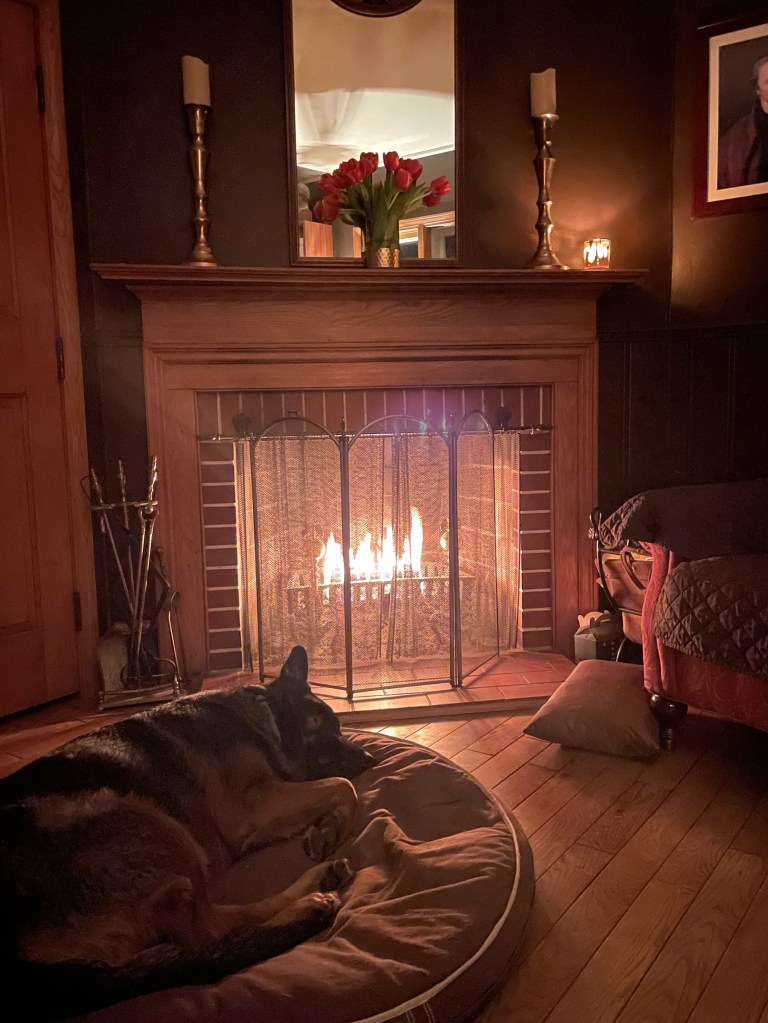
And now for your gratuitous dog photos:
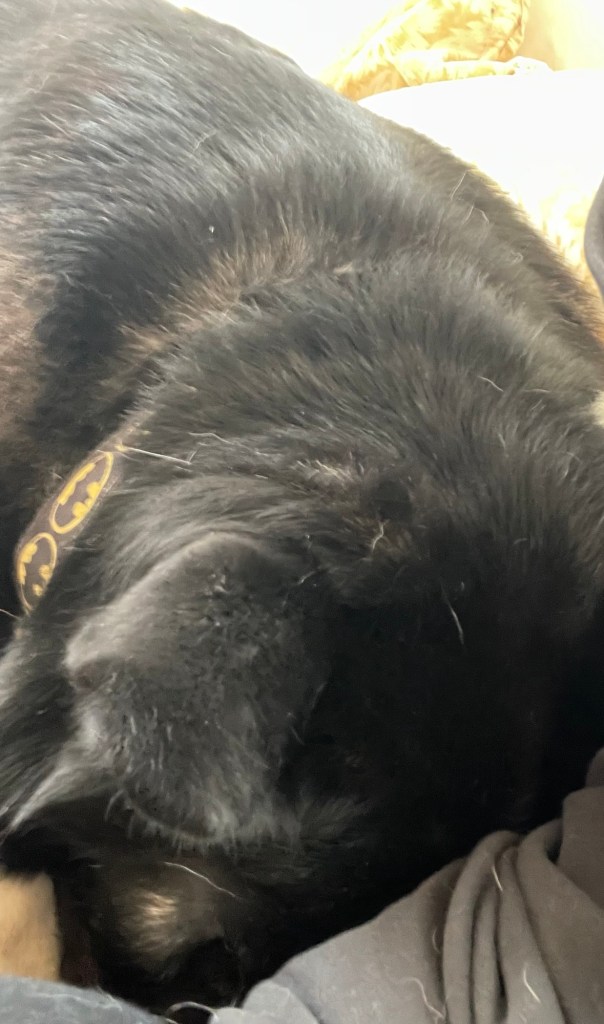
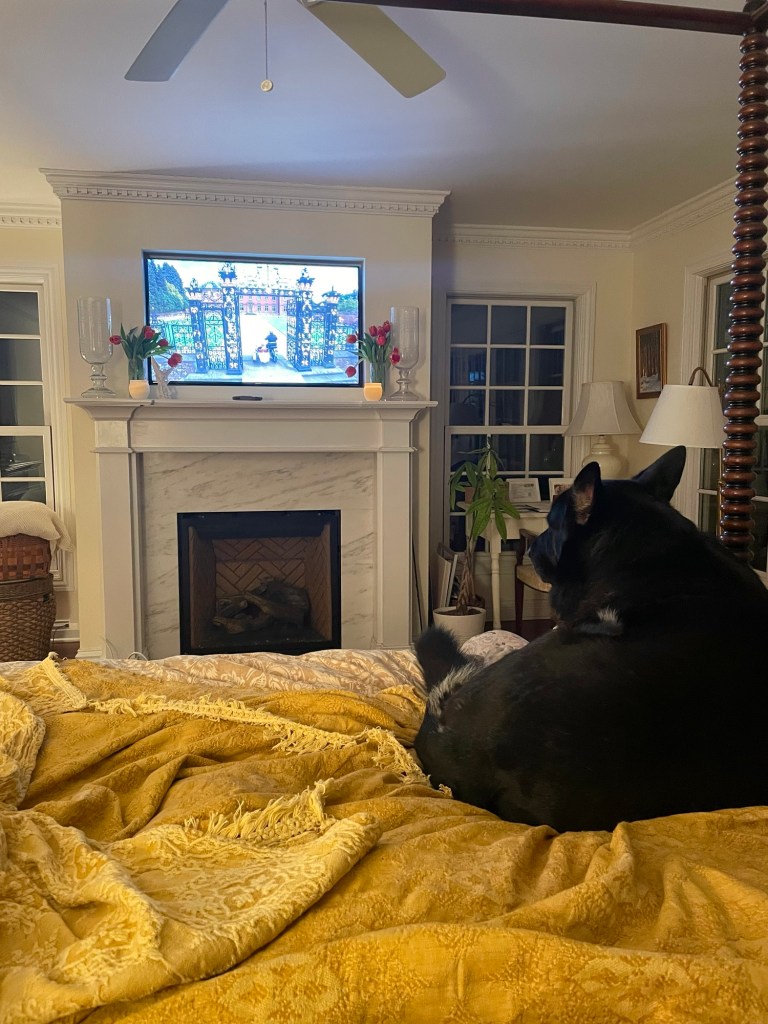
Eli is good company, and remarkably snuggly. He is also a fierce protector.When I bore them, they amuse themselves. Auggie, left; Eli, right.
My friends, Evelyn and Rose, are twin sisters, age 93. I have known them all my life. They have their share of challenges, as do we all, but they are utterly undiminished by age in any meaningful sense, and carry on with rare gallantry.
Today, for my birthday, they sent me not one, but two bottles of Veuve Clicquot, all beautifully packaged in a big box with excelsior that feels like a beautiful and elegant difference from plastic bubble wrap.
I think it will be a a very happy night. Or possibly afternoon.
When I wrote to say thank you, Evelyn said, “We know what you like.”
What would a year of your life be worth? Is there any amount of money you would accept to shorten your time on earth? What if the money offered would give you everything you dream of having? What if it would save the life of a child? When the payment came due, and your time was up, what would you pay to have it back?
This is a version of the Faustian bargain, although Faust wanted youth and love, not money, and the price he paid was eternal damnation. Most jobs are not the Inferno (although I bet we all have stories). But it is, in concentrated form, a question we all grapple with in one way or another when we work. It is the question I asked every single morning when I stood at my picture window, dressed for the office or the classroom, and looked out at the sun rising through the trees. My office was on the bluffs above Lake Michigan, and sometimes, before I pulled into the parking lot, I would stop to watch the sun and the mists rising over the water, hear the gulls crying, and feel what I now realize was a form of grief. But then I got out of the car and went into the building and went to work. And that was not a bad thing.
Most of us have to work for a living. If we are lucky we find work that is meaningful, that makes the world better in some way. But for most of us, even the best job takes time away from things we care about.
I have been very lucky these past few years, because now my work is my writing, and I can do it in my own house with my husband nearby and my dogs on my feet. I choose what and when to write, and sometimes I play hooky. But that’s because I have the freedom to make choices about my priorities.
It is a luxury I appreciate every single day. I do not look back on my years at a job as wasted. I do sometimes look back with regret, but I also know that each step I took was a step toward who I am. Besides, anyone with no regrets hasn’t been trying hard enough.
The theologian Frederick Buechner wrote something I try to think of every day:
One life on this earth is all we get, whether it is enough or not enough. And the obvious conclusion would seem to be that, at the very least, we are fools if we do not live it as fully, and bravely, and beautifully as we can.
No one has a perfect life. No one has a life without grief or loss. But I think happiness is about gathering in the small beauties all around us Right. Now.
But increasingly, after centuries of human conceit about our moral superiority, science is being forced to acknowledge that animals do demonstrate care for their communities, sometimes even for other species. Today’s New York Times story about a male elephant seal rescuing a drowning pup is another example of an animal’s taking action that was not necessarily in its own interest.
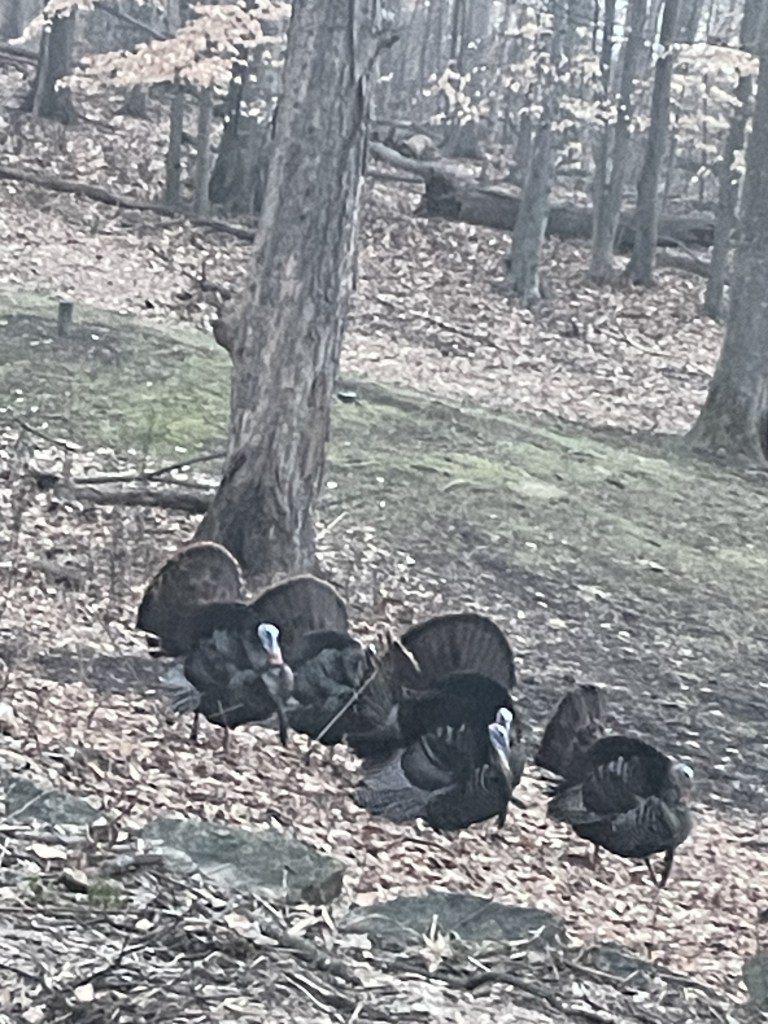
This past fall I saw another incident of turkey community action. The turkeys were on their daily march back to our woods to roost. The big toms were in front, and there were several groups of hens, surrounded by eleven scrambling poults—I counted—following about forty feet behind. Herding cats has nothing on herding turkey poults.
Our ravine is a water conservancy, which means there are some fairly deep holes that are usually dry, but fill with leaves in autumn. They seem like solid ground, but you can sink pretty deeply (and turn your ankle) if you accidentally step in the wrong place.
As I watched—seeing the babies is rare— the poults, one by one, managed to just barely avoid the biggest hole, scattering around it. Holding my breath, I could see what was about to happen: one took the wrong line, and promptly disappeared deep into the leaves. Its frantic peeping was terrible to hear.
Instantly the line stopped, and the toms turned and raced back to the sound of the crying poult. Soon the whole flock was surrounding the area—not in an orderly way at all—but homing in on the baby. I turned my head at exactly the wrong moment—dogs, you know—but suddenly the peeping stopped, and when I looked back, the adults were reassembling into the line, and I counted: one, two, three…all eleven poults were there. Counting turkeys can be tricky, so I counted three times. Everyone moved back into line, and on to the assembly grounds to carry on with their evening routine.
I still don’t know how they got the poult out of the hole.
It’s completely normal for parents to risk all for their offspring, and in this case, the poult was likely genetically linked to the adults who sped to its rescue. But to see the entire flock work together like that was another lesson to me. We humans have to learn a thing or two, and meanwhile, maybe we should stop being so smug about ourselves.
The toms think they’re pretty important. They’re not wrong.




 J.F. Riordan