Cooking from scratches

My mother was an excellent cook. Her meals were complex, flavorful, and creative. She baked her own bread, catered to my father’s sweet tooth with all kinds of amazing desserts: pies, chocolate eclairs, apple crumble, cookies. Her stews and main courses had depth and richness. She cooked with lashings of wine and butter, and although she used recipes, they were merely jumping off points for her creativity.

She was also not a woman much devoted to method. I think you could fairly call her general style slapdash, except for the fact that her results were so wonderful. Her handwriting was distinctive, but often scrawled (much like my own) and such recipe cards as she had—and she had a lot—are often nearly impossible to decipher. My niece very thoughtfully gave me a dishtowel with some of my mother’s recipes reproduced in her own writing, and when people see it they almost always ask: Can you read that? Usually, I can. A lifetime’s experience. But sometimes reading them isn’t enough.

My old friend, Julie, from sixth grade, like so many Wisconsin natives, is German through and through. She was lamenting recently that most of the old restaurants that served Sauerbraten are gone. Sauerbraten is a dish that requires three to five days to marinate the beef, and comes with complicated side dishes. Very German. My mom always made it, and although I have the recipe, I never have. So, back in December when things were hectic I told Julie—who is a treasured friend—that come January I would make Sauerbraten for her husband and her. It was a leap of faith.

Sauerbraten is one of those things that really does require a recipe. The seasonings and details vary regionally: Some versions have raisins, some have crumbled Lebkuchen, some have a chunk of rye bread at the bottom. But the fundamental seasonings are the same: apple cider vinegar, sugar, bay leaf, peppercorns, cloves, onions, lemon. It doesn’t sound good, does it? But it is delicious: the German version of sweet and sour. The beef has been marinating since yesterday, and today I will make potato dumplings—which scare me— and red cabbage. So I am depending heavily upon my mother’s recipe cards.

The funny thing is my mother’s recipes are a bit like that old Far Side cartoon, where the mathematics professor has a long equation with an arrow pointing to the phrase: And then a miracle occurs. Many of the steps are not clearly explained. It makes me laugh. SO like her. For example, the recipe tells me the ingredients for the potato dumplings (Kartoffelklösse), but it’s kind of vague on how to cook them. The Sauerbraten is the same. I inherited her authentic German cookbook, and it, too, assumes that every idiot knows how to cook dumplings. But the Sauerbraten steps are so elaborate and complex that they tell the close reader much about the German mind.

My mother didn’t have a German mind. She had a passionate, fiery and creative Irish mind—which made her an interesting match to my studious, brilliant, but also passionate father. Tomorrow will be their wedding anniversary—79 years ago they were married at the Navy chapel in Anapolis—so it seems appropriate to be making the meal that was my mother’s specialty and my father’s favorite. And I think the best approach for me will be to throw culinary caution to the wind and adopt my mother’s joyful carelessness. If nothing else, it will be more fun.

I will report back.
Howling back

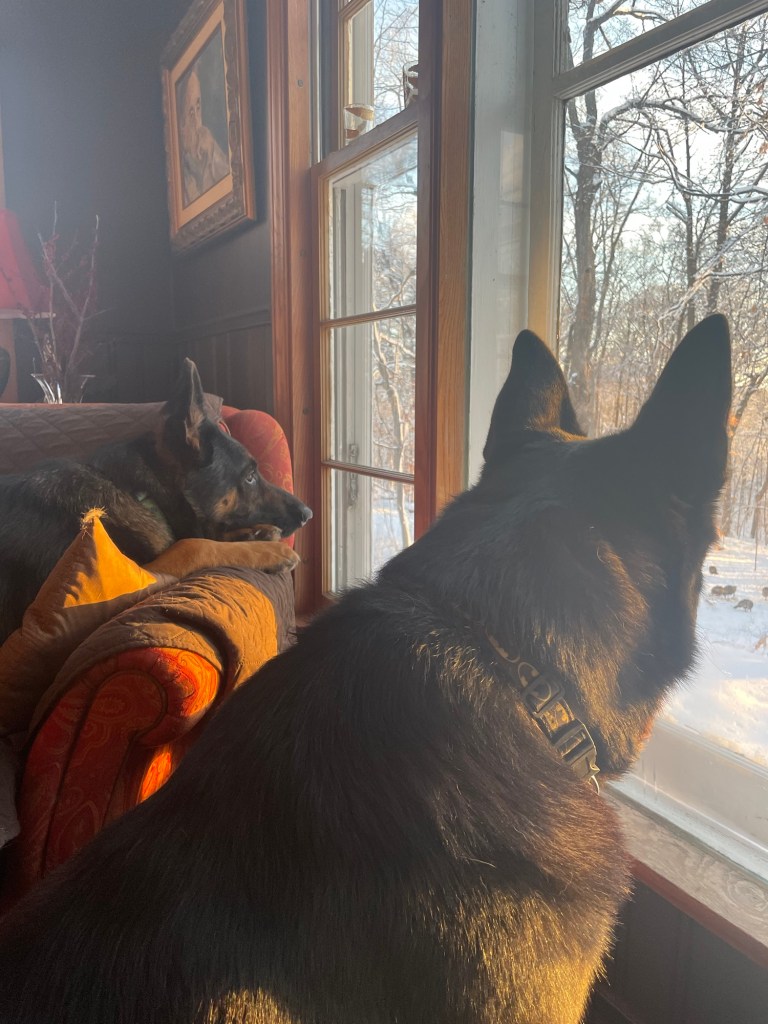
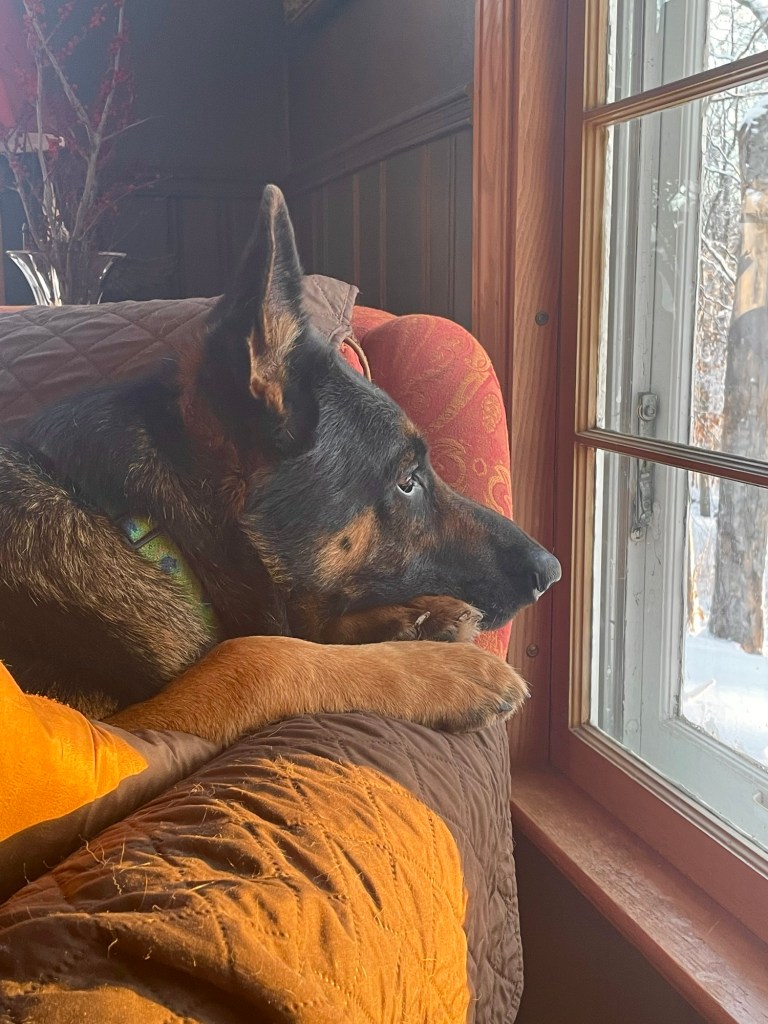
At this time of year, I try to spend the last hour of daylight where I begin my mornings: sitting in a big armchair in the library, watching the wildlife gather. Usually there are deer and turkeys, sometimes possums, always squirrels, and I find their antics endlessly interesting. I light a fire, and sometimes pour myself a glass of port. The play of light on the snow is beautiful whatever the weather.

But last night I was a little late, and it was nearly dark when I came to stand at the window and peer out. The turkeys were already roosting, and there were no deer. But there was a small shadowy form moving down by the bonfire pile. Eli saw it at the same time: coyote.

It’s been quite a while since we have seen or heard coyotes, and I have come to the conclusion that someone was secretly killing them. We used to have a neighbor—a former Navy Seal—who would stand on his porch and pick them off with a rifle after they attacked his dogs. But I have to confess, I do not hate coyotes. They are too much like dogs for me to feel any real animus toward them. Mostly, I feel compassion for these intelligent creatures who must survive in a world where they are so hated. But I have to be realistic: they are a real threat to our dogs, and to our neighbors’ dogs, one of whom is quite elderly and vulnerable. And if I caught any of them trying to harm Auggie or Eli, my reaction would not be benign. You might think big German Shepherds would not be in danger, but a few years ago there were news reports that a pack of coyotes in our neighborhood chased two Malinois—who are far more ferocious than a GSD—right up to their back door.

So, following the advice of the experts, I went out to scare it off. The hill is steep and snow covered, so I stood at the top of the hill and did what any self-respecting opera singer would do. I projected. “You! Get out! You get out of here! You!” I could hear my voice resonating through the woods, and could only guess what our elusive neighbors to the north—the ones in the new house who wave from their Teslas but whom we have never met—must think. The coyote startled, stared, and ran off into the woods. I felt sorry for it, but I went inside laughing under my breath, wondering whether my husband’s audience on national tv had heard.

About five minutes later the coyote was back. I scared it off again, but it was harder this time, and I knew I was teaching it not to be afraid of me.

After dinner I looked out and there was the long-tailed black shadow, lying in the snow to eat, just as Auggie lies with his bowl on the kitchen floor. My husband had an insanely early interview and had already gone to bed in the guest room, so it was up to me. I stood at the windows watching. It was a fairly plump coyote, which didn’t really match the way it was eating, and I wonder whether it was a pregnant female. Coyote pups are born in February, and here we are in the last week of January.

I had been texting our neighbors to the south, and we considered what to do. He offered to bring his gun to scare it off. (Most definitely not to shoot it.) Shooting off guns in the night these days can be fairly disquieting to anyone who doesn’t know what’s going on, and I had misgivings. But we really can’t have a coyote hanging around to eat, and later bringing her pups. So, they came, tromping through the woods in big boots, and I met them outside, while Auggie and Eli watched suspiciously from the comfort of the house.

Reluctant to shoot, we yelled to scare her off again, and this time she ran deep into the woods. We watched until we couldn’t see her blue eyes sparkling in the light of the flashlights. And then we heard four tiny pips, not full howls. “Maybe we should howl back as a territorial thing,” someone suggested. It’s not flattering, but the howling seemed like a job for me. So, I pipped back, mimicking what we had heard, and then I let out a long fluctuating yodel, modeled on the kind Moses used to give. We waited in silence. I howled again. Auggie and Eli barked ferociously, and in the distance we could hear the neighbors’ dogs barking inside their house. This went on for a minute or two. It was kind of fun.

I learned later that my husband was upstairs in the guest room laughing. He knows me too well.

After a long silence, we stood on the hill, watching and talking over the options, and finally said good night without a shot fired. I went inside to pour a glass of wine and put on my pajamas. As I went into the library to turn off the lights, I looked out into the woods.

There was the coyote, lying on her tummy in the dark, ravenously eating birdseed.

I let her be. Hungry creatures touch my heart.

Nevertheless, it’s time to recharge the paintball cartridges. They are harmless, but they hurt. It’s not good for anyone when coyotes are fearless around humans. Least of all for the coyotes.

Thinking makes it so

Who’s your audience? It’s a question asked of writers all the time. Agents want to know. Publishers want to know. Even book club readers want to know. Most writers know how to gauge our answers to meet our business needs. Of course, to be published, a book needs to meet customer demand. But, to be honest, most of the time that’s only a guess based on what has sold before, and demand can also be created by marketing teams and media campaigns.

So, while I am delighted to have my books published, I don’t think about any of that when I’m writing. I really only write for an audience of one: me.


I write the kinds of books I want to read, and to be honest, while I do read for information, I mostly read for comfort and companionship. When I had high-pressure, stressful day jobs, I didn’t want to come home to read high-pressure, stressful books. I taught in the inner city. I didn’t want to read about suffering, murder, crime, drug use, and lost opportunities. I lived with that every day. When I moved into an executive position, I still spent a great deal of time thinking about human misery and how to help alleviate it. Again, I was often in the inner city, visiting schools, homeless shelters, prisons, half-way houses, and addiction centers. I also had many uplifting experiences in the fine arts world, to be sure. But what hung with me was always the human traumas that went on before my eyes every day.

I don’t think I’m alone in that. Many people have intense, exhausting, high stress jobs. And some of them find catharsis in reading about intense things, perhaps because at the end of a well-written book, there can be a release of the built-up strains.

But that’s not for me. I want to go to a world where there is a group of characters who feel like friends I can hang out with. I want to look deeply at the small miracles of daily life. I want to feel enmeshed and revived by the creativity and joy of an ordinary day. And so, both in the novels I write, and in my books of essays, I linger on the hope, the joy, the beautiful and all the ways in which frustrations, unkindness, and misery can be diminished—although never eliminated—by the way we focus our attention.

And so, when I’m writing, my incentive is the pleasure I take in joining the worlds I’ve created. I write (mostly) about characters I want to be with, who live in a world I enjoy being in. Maybe that’s selfish. I don’t know.

But honestly, I don’t know any other way to write; I don’t think I could write a horror story if I had to. “Write what you know” is the old adage, and I really don’t think there’s any better advice. Luckily, based on my readers’ comments, the kinds of books I like are also liked by other people. And that’s a pretty good system, I think.

So now, if you’ll excuse me, it’s time to go hang out with some old friends.

Cheers.

***

Turkey in the Sky Addendum

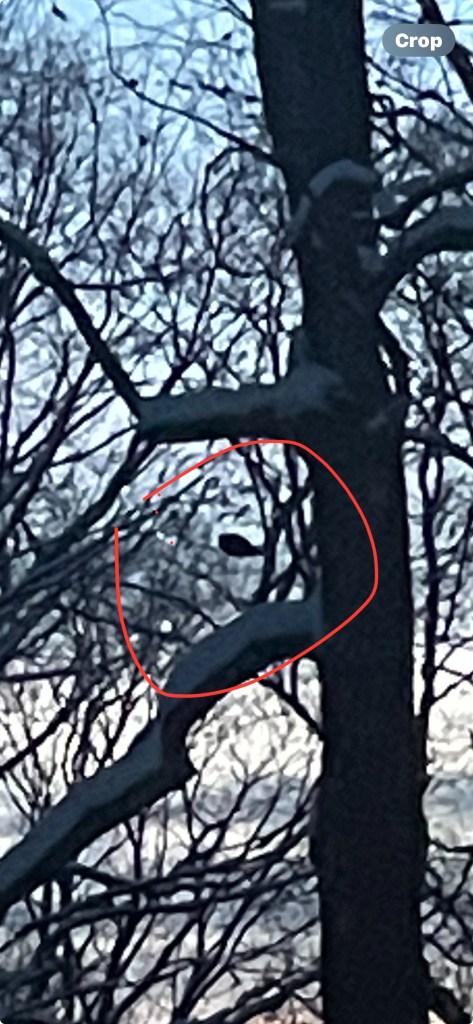
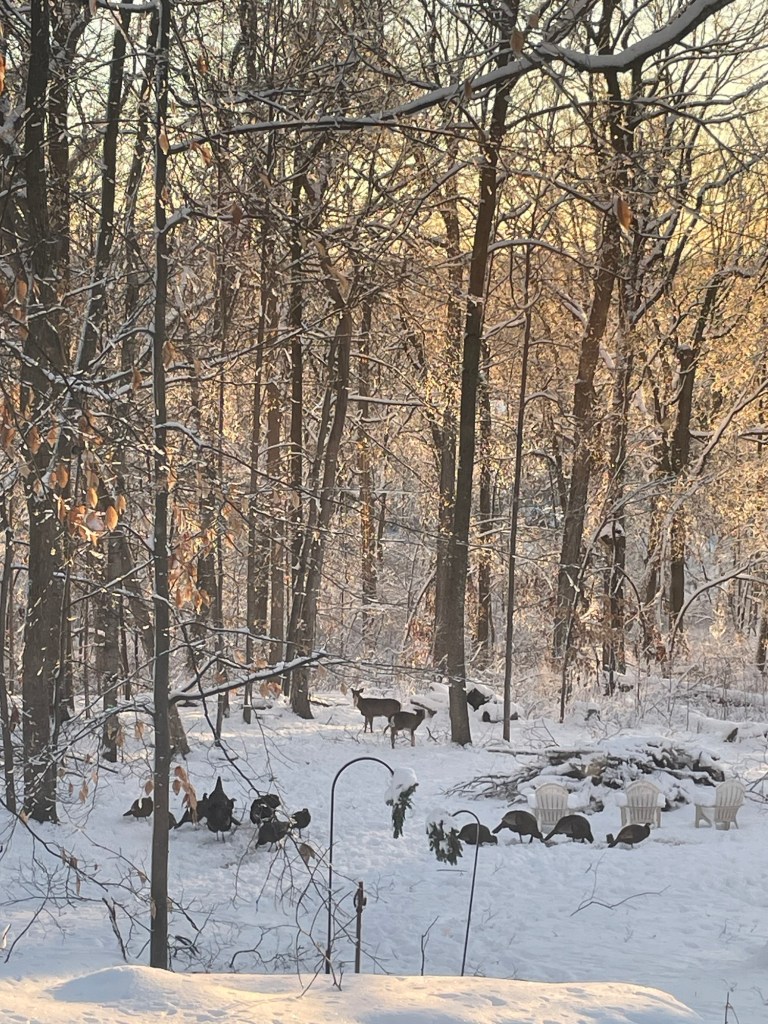
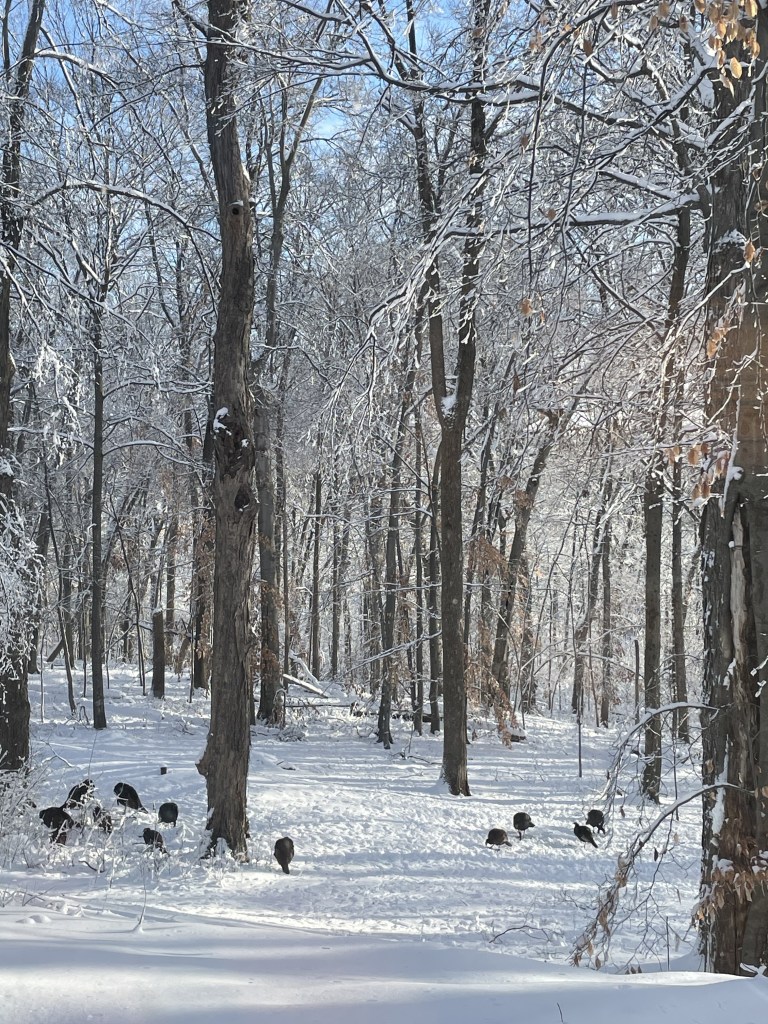
Many of you couldn’t find the turkey in the photos yesterday. That’s because I don’t have a good zoom lens. But here’s the best I can do.

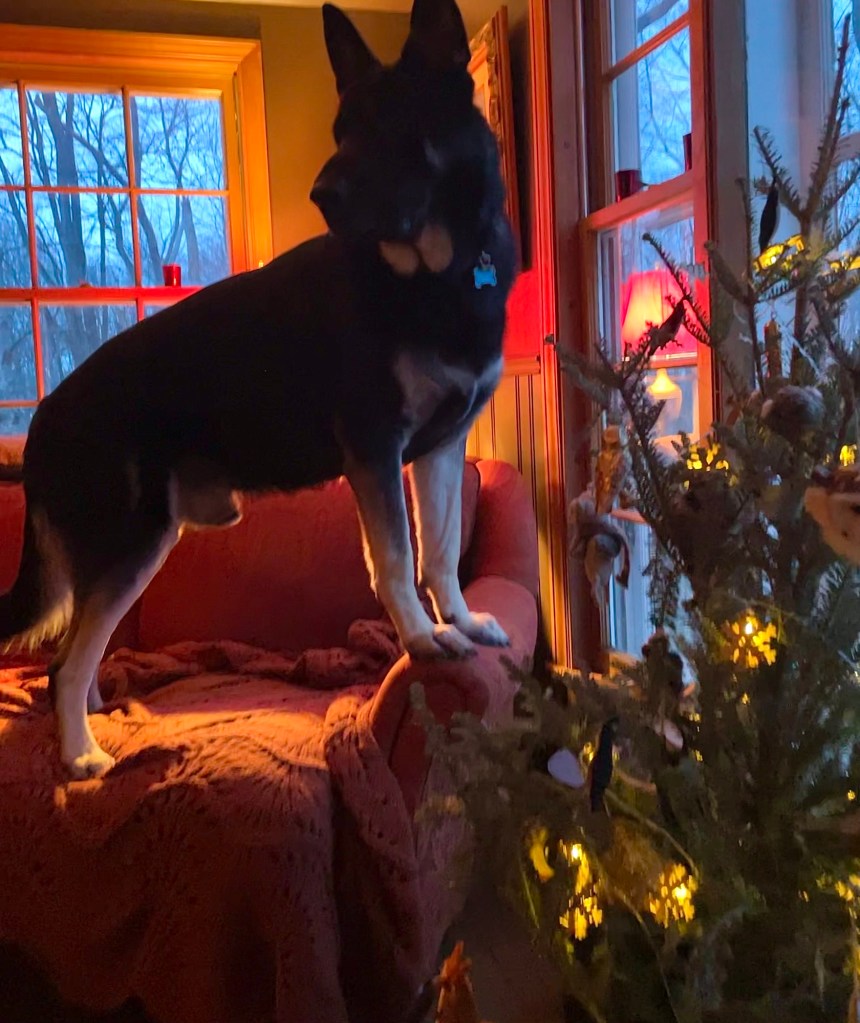
Today’s Gratuitous Dog Photo

He’s snoring.

Ears Up!

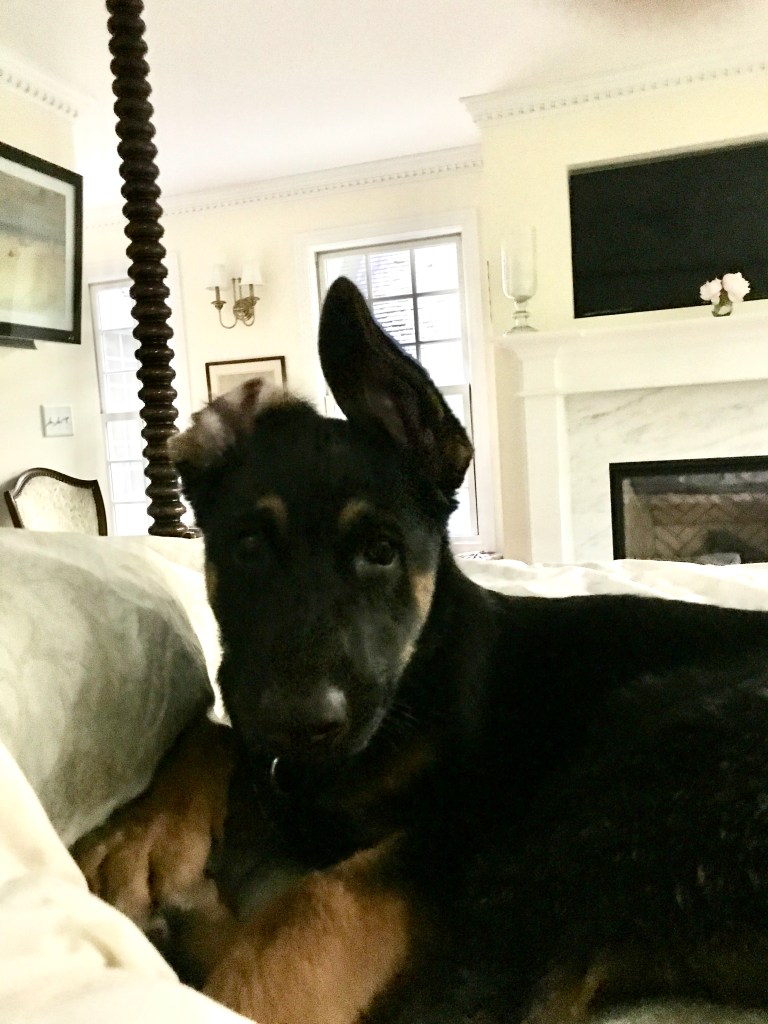
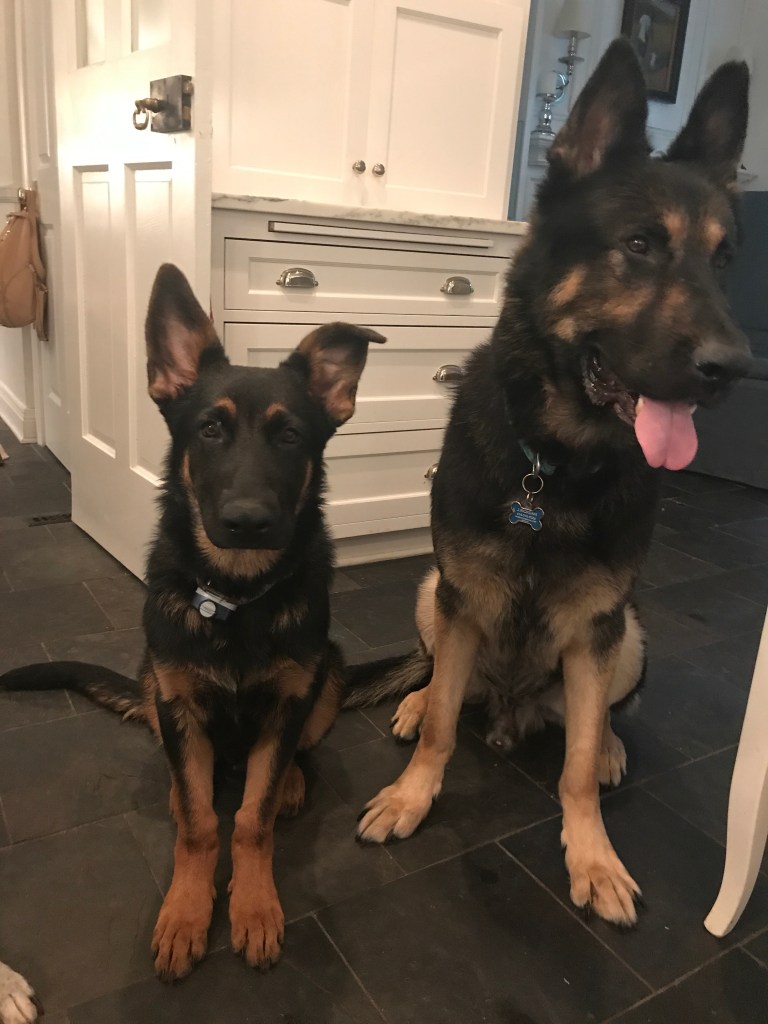
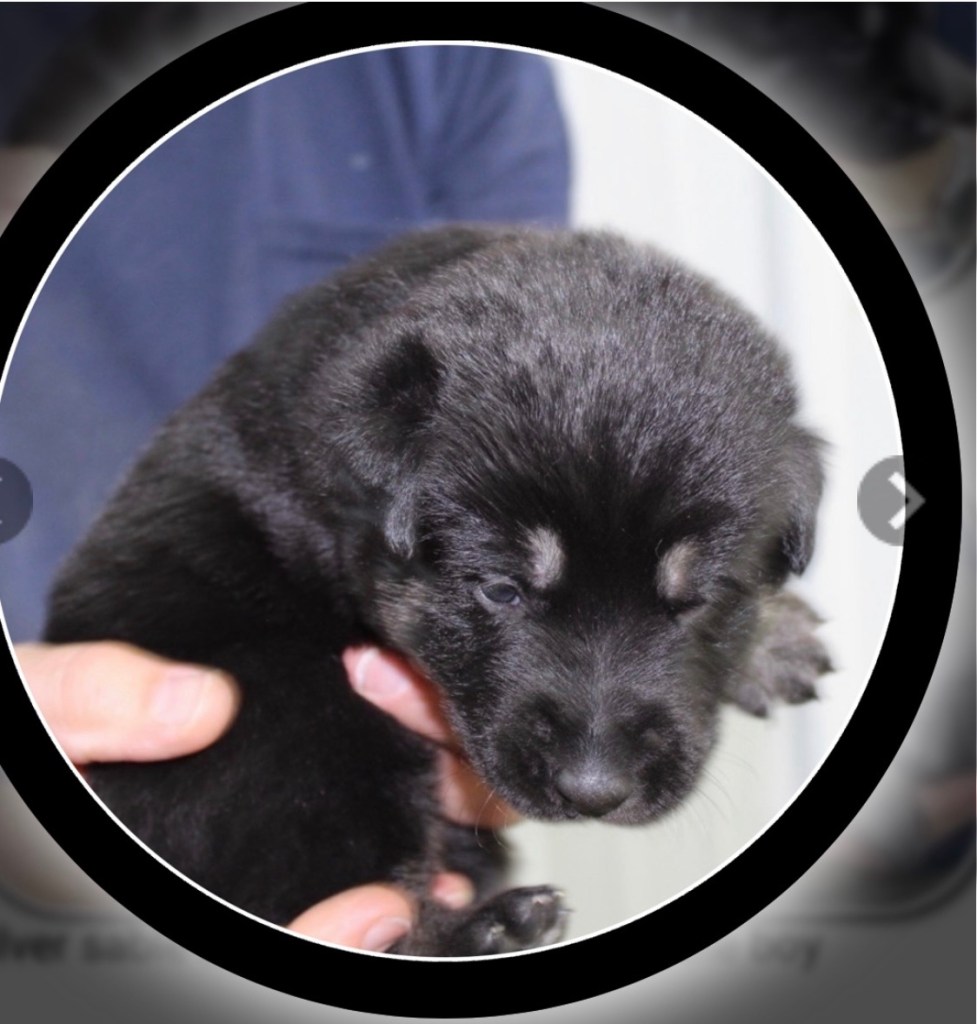
There’s a moment in the life of every German Shepherd puppy when, somewhere around five to eight months old, their ears are permanently up. Until then, they have adorable floppy ears, and for weeks, as they grow, there’s a one-day-up/next-day-down process which is both fun and suspenseful. For some individual dogs, the ears never fully stand. I don’t know if it’s genetics, nutrition, or a lack of ambition. Some owners obsess about whether their dog’s ears will stand straight, but it doesn’t matter to the dog, and it shouldn’t matter to anyone who loves him.

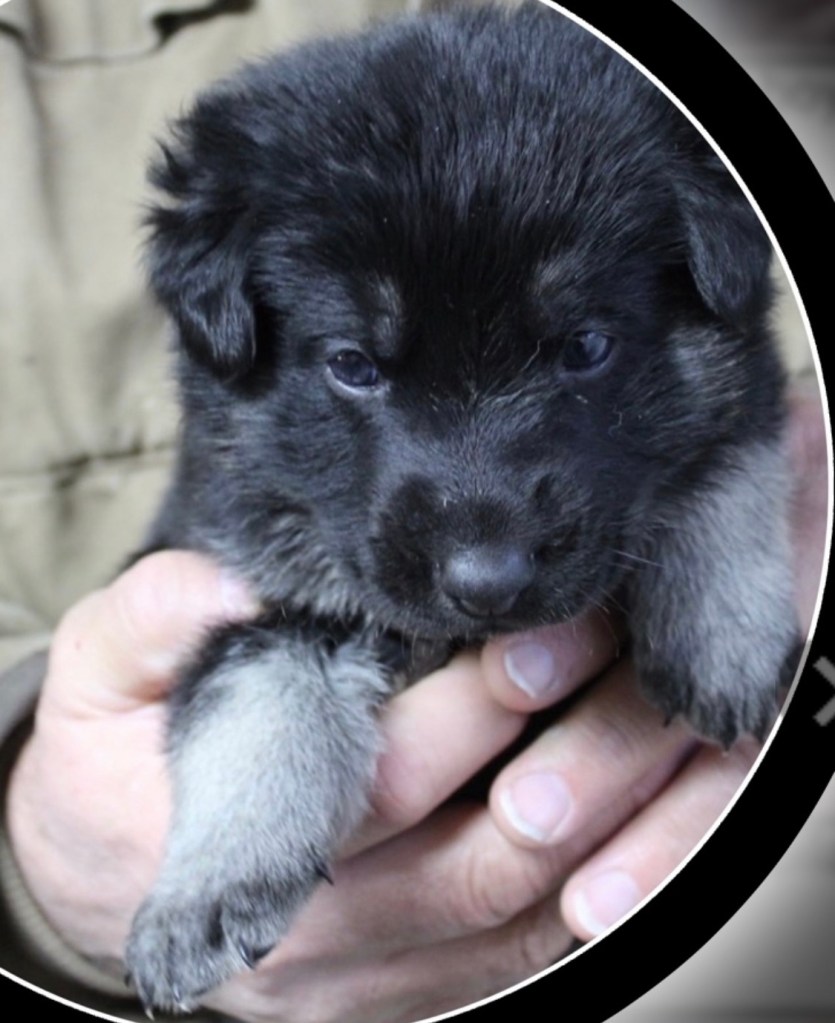
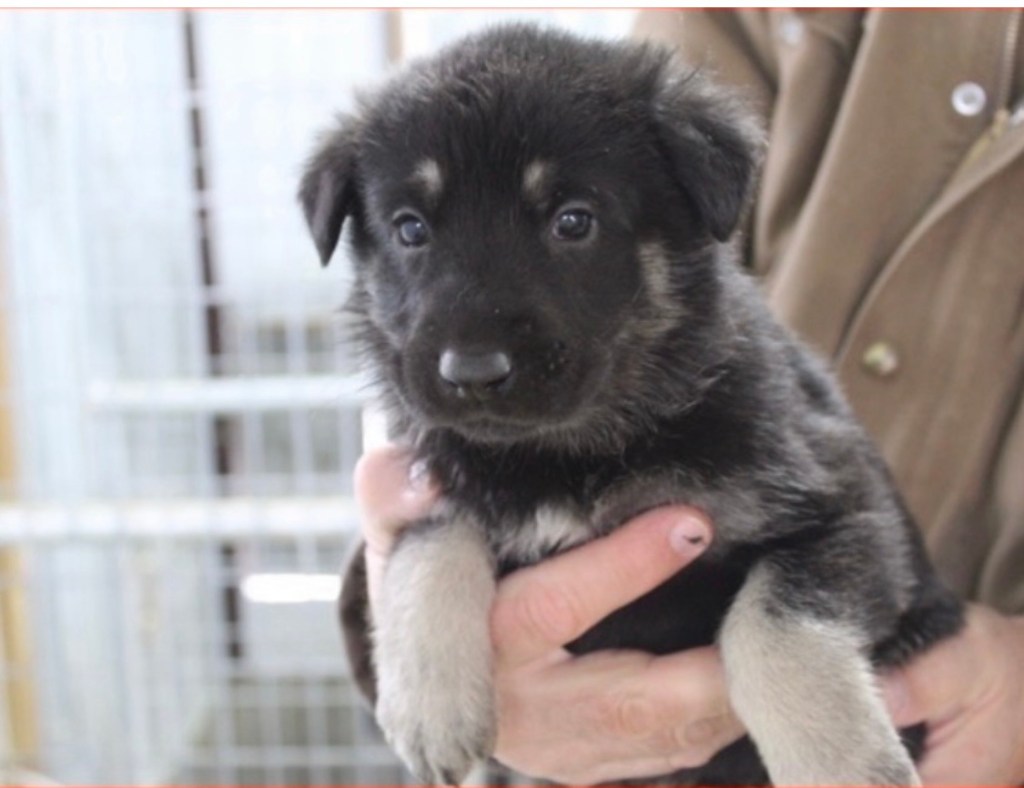
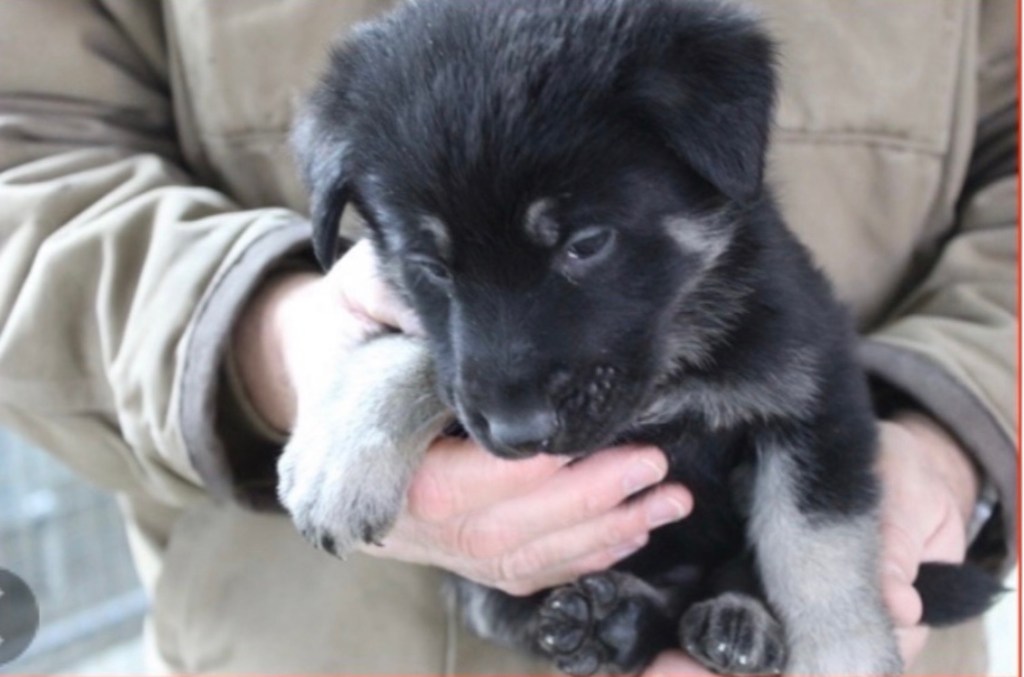
Auggie, two days short of eight weeks old.

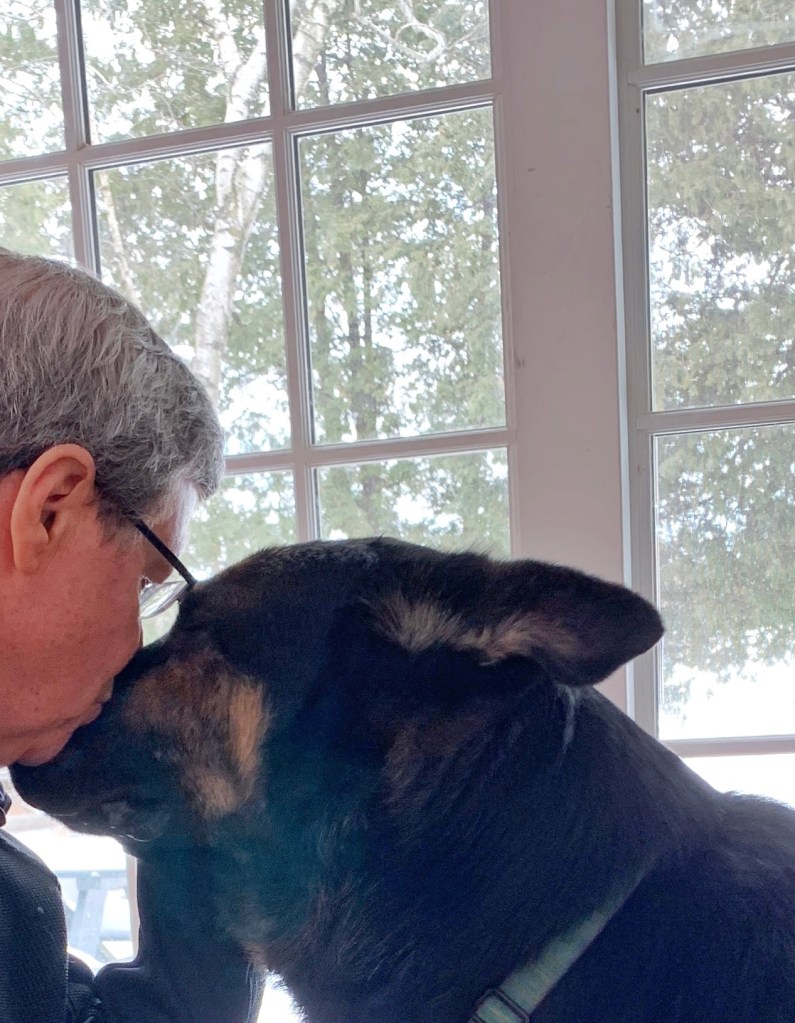
German Shepherd ears are not merely for hearing. They are deeply sensitive instruments of expression and state of mind. If he is showing pride, joy, or dominance, his ears are straight up on the top of his head, slightly rotating to take in data like a space radio telescope. If he is running fast, or swimming, his ears lay flat for aerodynamic advantage. If he is submissive or doubtful, the ears slide down the back of the head. The ears slide back and flatten completely in extreme situations, particularly if he is demonstrating love. A mama GSD will flatten her ears when her puppies approach, perhaps to show she is receptive to their feeding. We call these “love ears,” and we see this daily with our own guys when they want a scratch or a kiss. A fearful German Shepherd will also flatten his ears, and, like any dog, his tail will drop.

Moses, who was the only musical member of my pack, also laid his ears back and stomped his front feet while singing. He loved to sing.

In my experience, no German Shepherd likes his ears touched. Unless you have a deep personal relationship with him, don’t even try. If you belong to a German Shepherd, he may enjoy being touched on his ears, but only when they are flat, or, with my dogs, if they know you are protecting them from a biting insect. German Shepherds will do almost anything to please those they love. But, unless there is life-threatening cold, do not ask them to wear a hat, a hood, or a costume that covers their ears. They will mope and become so depressed you will want to rip your heart right out.

Auggie is a particularly energetic and proud German Shepherd, and has always kept his ears ramrod straight unless in situations as noted above, but also when he plays his favorite charging game. Then, he will wait for my signal to speed toward me at top speed, ears sharply flattened. When he reaches me, growling in mock fury, his eyes sparkle and his ears pop up, straight and tall.

But when he came home from his nearly month-long stay at the veterinary hospital this fall, something had changed. He was cheerful, energetic, and delighted to be home. We had to drug him to keep him from running, and refuse to play his favorite games. “Not now, baby” is a phrase he understands, and he was hearing it an awful lot.

But he was not his usual self in two key respects: his left ear sagged slightly down the side of his head, and his lip on the same side had a droopy spot that caused him to drool continually. I spoke with the vet. Could he have had a minor stroke? Nerve damage? Was his lip just stretched out from having a breathing tube for so long? He didn’t know; it was possible. I felt sad, and slightly confounded by Auggie’s newfound capacity to spread NASA-grade sticky saliva on walls and ceiling (seriously), but I was so grateful that he was alive and home and doing well, that I didn’t care too much. Still, it nagged at me: a signal that he would never be the same.

He’s been home for more than two months now, and he continues to thrive. He is always hungry, and has consequently gained nine pounds. He is still slim, so that’s okay. It’s good, even, because it means he is thriving. Come spring I imagine—unlike me—the weight will fall away. But the ear and lip continued to droop. Until this week. I noticed first that I wasn’t constantly needing to wipe his lip with a paper towel. Then, my husband noticed his ears—perfectly straight and perfectly normal, even when playing Charge.

Had he been he depressed? Was it the crazy regimen of nine different drugs? Had his body been using the calcium to restore something more important, just as when GSD puppy ears flop while they’re teething? I will probably never know.

But Auggie’s back to his old self, and that’s all that matters.

Some Apposite Dog Photos

Auggie’s three month ears.
Pete, Moses, and four-month-old Auggie.

Moses and four-month-old Auggie. Note that his ears are already full-size, even though the rest of him is not. This is the bunny rabbit stage.

Moses showing his love ears. You needn’t be fearful approaching a German Shepherd whose ears are low.

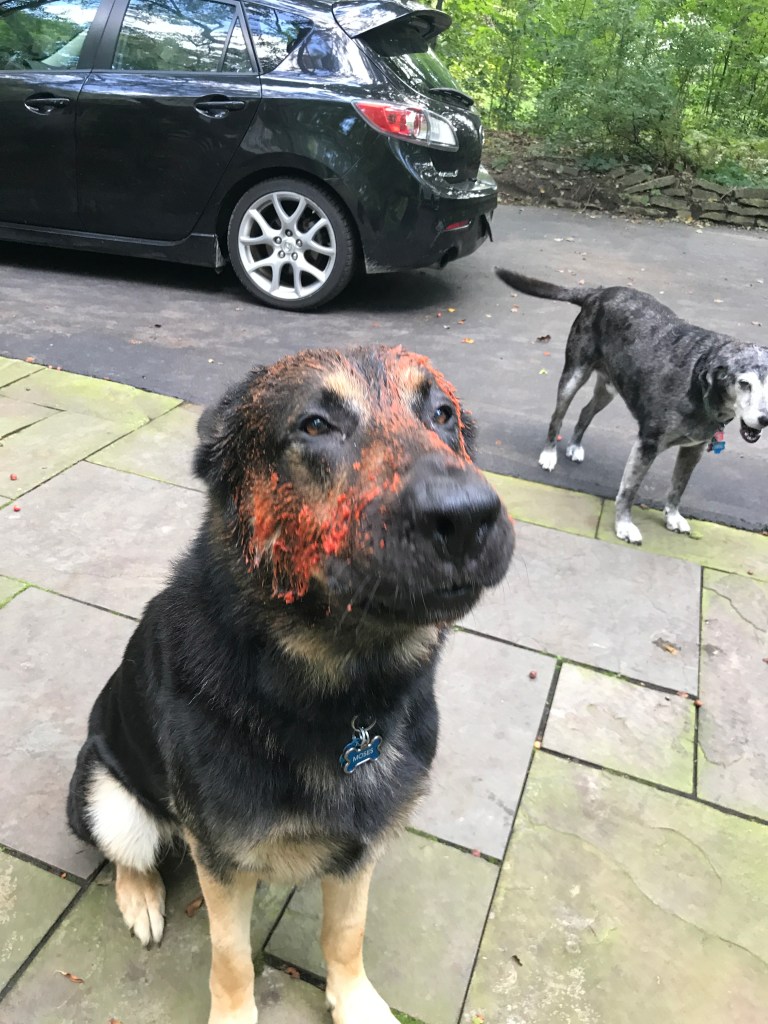
Moses uses his ears to express his displeasure at being doused with tomato paste (it works!) to mitigate his encounter with an unhappy skunk. He’d gotten sprayed full in the face, and bitten, too. Pete laughs in the background.

Moses and Auggie, February 2019. The only time I made them wear hoods was during a polar vortex. It was -25F, and I feared their ears would freeze. You can see their opinion of my decision. The photo made international news.

Auggie at five months. Shown here with his brothers, Moses, and Pete. Ears up!

My brother’s keeper

We’re in the teeth of winter now. The actual temperature is -5F but the wind chill is -15F to -25F, which means the wind sweeps away your body heat at a rapid clip, and flesh freezes in mere minutes. In this bitter cold both animals and humans are suffering. Although we got our power back, not everyone did, and outside in this dangerous weather, there are people working hard to protect the rest of us, restoring power and operating community shelters.

I’m watching the turkeys this morning from my warm, comfortable vantage point on top of the hill, looking down into the woods. We have a flock1 of nineteen this year, somewhat smaller than usual, but always fascinating.

After the deer had finished their morning graze, the turkeys came down from their roosts and spread themselves among the three spots where we have put out seed. As I watched, I saw my one-footed friend—who has been with us for several years now—sit down by himself in the snow, fifteen feet removed from the rest of the flock as they fed. He knew he could not compete with the rough and tumble of the flock’s drive for food. My heart broke for him, because even though the others do seem to look out for him generally, the nature of turkeys seems querulous and wholly intent on individual survival. I told myself he would be able to eat when the rest had finished, but wished I could go out to give him his own little stash. He looked cold and lonely.

As I watched, one of the other turkeys broke off from the flock and walked over to him, nudging him gently. He got up, and together they walked to the pile of seeds, and, shielded by his friend, the injured turkey joined the others and began to feed. For the remainder of breakfast time, the limpy guy ate with all the others.

If I hadn’t seen it myself, I wouldn’t have believed it.

The turkeys are still here, and have been joined by squirrels, junkos, and chickadees. I know from long observation that today, instead of marching off on their usual trek, the turkeys will stay close by, puffing up their down coats, and sitting on logs somewhere out of the wind, preferably under bushes or brush piles. And they will all have eaten enough to fuel their bodies against the cold.

So, who wants to discuss how animals don’t practice altruism?

  1. For domestic turkeys the correct term for a group is rafter. I have been informed, however, that wild turkeys are in flocks. Don’t ask me. ↩︎