In Praise of Small Towns

W.I. Crossroads

My column that will appear in Sunday’s Milwaukee Journal Sentinel.


A writer in a national magazine recently theorized that small town voters who are worried about the deterioration of American culture are “insular” and unenlightened, stuck in the past, resistant to progress.
Having grown up in a small town, and also having taught at a high school in the inner city of Milwaukee, I can say that most of my students and their families were also living in their hometown, and the hometown of their families. Does that make them insular? Or does it make them normal?

City life is fine. It is filled with cultural and social and employment opportunities that may not exist elsewhere. You can choose how and whether to connect with other people. But bustle is not for everyone, nor is anonymity.

Some among us choose to live in a different way. But it would be a mistake to believe that small town life is a bucolic and peaceful existence. Living in a small community is not for the faint of heart.

Small towns are a microcosm of the human experience, but with more intensity. You live shoulder to shoulder with your oldest friends, and your fiercest enemies. You daily encounter the person who cheated you; who stood you up; who broke your heart; and with people who know your complete history: every bad decision, every embarrassment, every moment of kindness (if any). In cities, there can be the relief of some anonymity, but not in a small town. Living in a small town is a psychologically raw way to live.

But small town life also requires a deep connection to community that city people may not acquire. It generally means that you go to church because that is what is expected, and what almost everyone does. It means you are surrounded by people who know you. In the city it’s called networking. In a small town, the network is your neighbors, and you are expected to participate. Your neighbors are the ones who gather around you to celebrate births and mourn deaths. They plow your driveway when you have the flu. They raise money to help in a tragedy. They put an arm around your shoulder. They make casseroles. And you, in turn, celebrate, and mourn, and plow, and comfort, and bake. This sharing and mutual support is as old as human beings. And it is good.

We live in a society in which the elites make a continuing push against the values of faith and decency and commonsense. The cultural gatekeepers seem to believe that someone who doesn’t live in your community can decide what’s wrong with you, and what you need. It’s an insult, and a barely veiled one. You are flyover country: insular, irrelevant bumpkins filled with prejudices, unable to participate in the enlightenment of the cities, destined never to be famous. Living in a small town means that you are aware of the scorn heaped upon you by city dwellers who think they are better, and you shrug your shoulders and get on with it.

Maybe resisting progress isn’t all bad. In an age of celebrity and reality television, of Instagram and Twitter, most small town people live out quiet, uncelebrated lives of dignity and depth. They work; they care for their families and their friends; they mow their lawns and mop their floors. They may not be famous or trend-setting. But they have lives worth living.

And that is something worth standing for.
Delayed Gratification


Pete and Baby Moses

We are expecting a new puppy: a companion for Moses, and a respite–and new pupil–for Pete. My husband has misgivings about a third dog, and–although I generally keep it to myself–so do I. But, sadly, we won’t have three forever, and I want Pete, the elder statesman, to help train the puppy.

The puppy will be a special one, like Moses, carefully bred to be healthy, smart, even-tempered, gentle, and sweet. Also long-lived. These German Shepherds often live to be 13 or 14 years old, which is long for a big dog. Every day I check the breeder’s website, to see the current puppies, and look for news of the coming event. But today I found out it won’t be late fall, but early spring.

I am a little disappointed, but it gives me time to continue my ruminations on names. Leading contenders for now are Marcus Aurelius (guess why); St. Augustine (remember Augie Doggie?); Herodotus (I know); and George.

Official dog names are usually kind of pompous, with the kennel name in the possessive first, followed by the particular dog’s name.  Still, it’s always possible to have fun with the form. With Peter and Moses we have New Testament and Old Testament represented. But the truth is that Moses’ name, although he is officially Moses, Prince of Egypt, was actually the result of my watching The Ten Commandments too frequently in my youth. I wanted to be able to shake my head sorrowfully and say, “Moses, Moses, Moses.”

I’m kind of leaning toward George. But I am open to suggestions. Drop me a line if you have a perfect name for a big, beautiful, new German Shepherd puppy. Did I mention that he’s expected to be 150 pounds? He’ll need something he can grow into.

If I pick your suggestion, I’ll send you a copy of my latest book.

IMG_5144

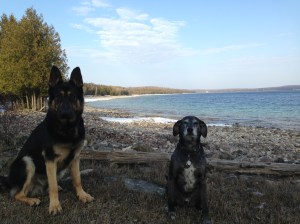
Moses, left, and Pete on Washington Island.


Between Despair and Pride

IMG_7499

I am reading some essays by Wendell Berry in which he captures–with great simplicity and concision–the necessity of loneliness. I think that is one of the reasons I love Washington Island so much: when I say that I feel more myself there than anywhere else, I think it is because I am alone there, and lonely there.

Loneliness is frightening. And that is part of what is necessary. I mitigate my loneliness with my dogs. They are soulful and joyous companions, and I need them, because the intensity of emotion is sometimes threatening.

And I would never walk in the woods in the dark without them, even though Moses likes to pretend he is a wolf: running off to return and stalk me silently along the far edges of the path. This is his great game, and he makes me feel that I am in a Russian fairy tale.

But in this loneliness there is also a settling in to the essence of self. It’s not an exercise in ego, but an escape from it. It feels, as the non-essential is pulled away, that the course of life is running along its proper path. I am simply myself. Again and for the first time. Theodore Roethke wrote “What falls away is always, and is near.” I think this experience is what he was referring to.

All this is to say that it has been a long time since I have been to the Island for any length of time, and I need to go there. My trip was almost cancelled this week by other kinds of necessity, and the thought of not being able to go created a rising panic that started deep. I need to go there to let the world fall away. I need myself back.

Berry talks of the right place in life as being between despair and pride. They are his opposites. I am ready to know whether they are mine.

I’d Vote for Them

Miss Marple for President

From The Bluestocking Salon:

Miss Jane Marple was born in an English cathedral close, a gentlewoman and lifelong resident of the village of St. Mary Mead. While most women of her generation devoted themselves to homemaking, Miss Marple leveraged her unflappable constitution and needle-sharp understanding of human nature into an unorthodox career in criminal justice. Weathering criticism and scorn from those who question the intellect and skill of spinsters, Miss Marple has quietly cultivated a sterling reputation as “the finest detective God ever made,” unmasking criminals from all walks of life and earning the respect of Scotland Yard’s top brass. Her tireless work over the years has saved countless lives…and laid the groundwork for a presidency rooted in fairness and fearlessness in the face of evil. Thus it’s only natural that Miss Marple would choose former police officer Hercule Poirot as her estimable running mate. Monsieur Poirot’s devotion to law and order shapes all aspects of his life, work, and moustaches, and his little grey cells and sophisticated worldview are matched only by his reputation across Europe and the Orient as one of the most unique personalities in law enforcement. United in their quest for truth and justice, voters can rest assured: Marple and Poirot are on the case.

I’ve always loved the kind of murder mystery in which bodies are decorously laid out on the library floor without a lot of fuss and bother, and the rest of the books concern witty conversation and much drinking of tea–or tisanes.  When I was living in Austria, I polished my German by reading translations of Agatha Christie novels. It was extremely helpful, but also led to a rather peculiar vocabulary.

I’m pretty sure that my taste for series of books in which readers can re-visit the characters like old friends came, in large part, from my affection for Miss Marple and Hercule Poirot.

Miss Marple for President!


Points of Interest

One of my readers, Laura Holmes, made a trip to the Island recently, and made a point of searching out the locations in the books. She was kind enough to send me some of the photos.

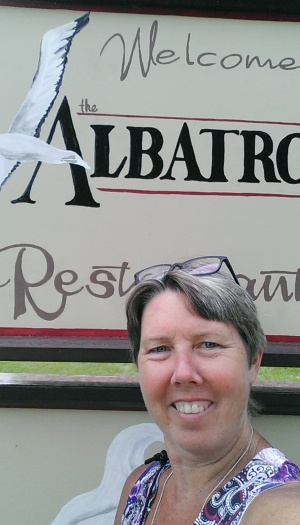
She had ice cream at the Albatross;

Laura at the Albatross

She lay on the rocks at School House Beach;

School house beach

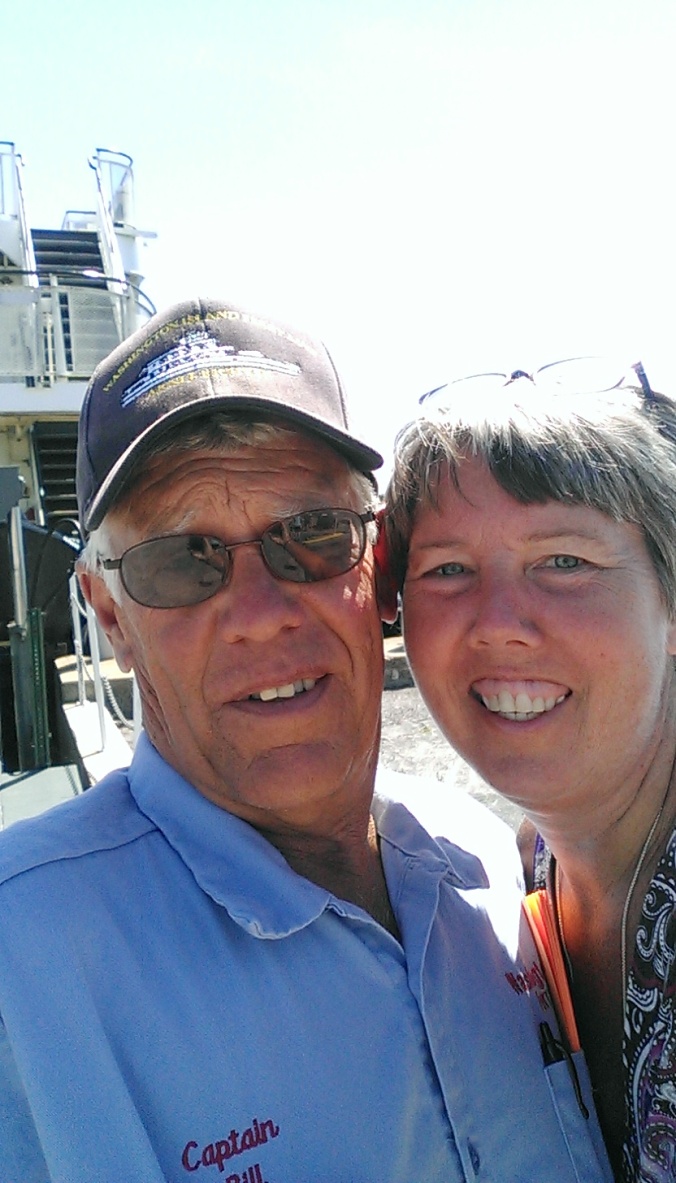
and she sought out my friend, Captain Bill, who was one of my best resources for information while I was researching.

Laura and Captain Bill

Captain Bill is mentioned in both books, but would only be noticed by those of you who read authors’ notes and acknowledgments. (Confession: I generally do not.) I missed him at my recent book signing. He was working that day, and apparently got to the book shop just after I had left.

He’s one of my favorite people.


Small Town Glory

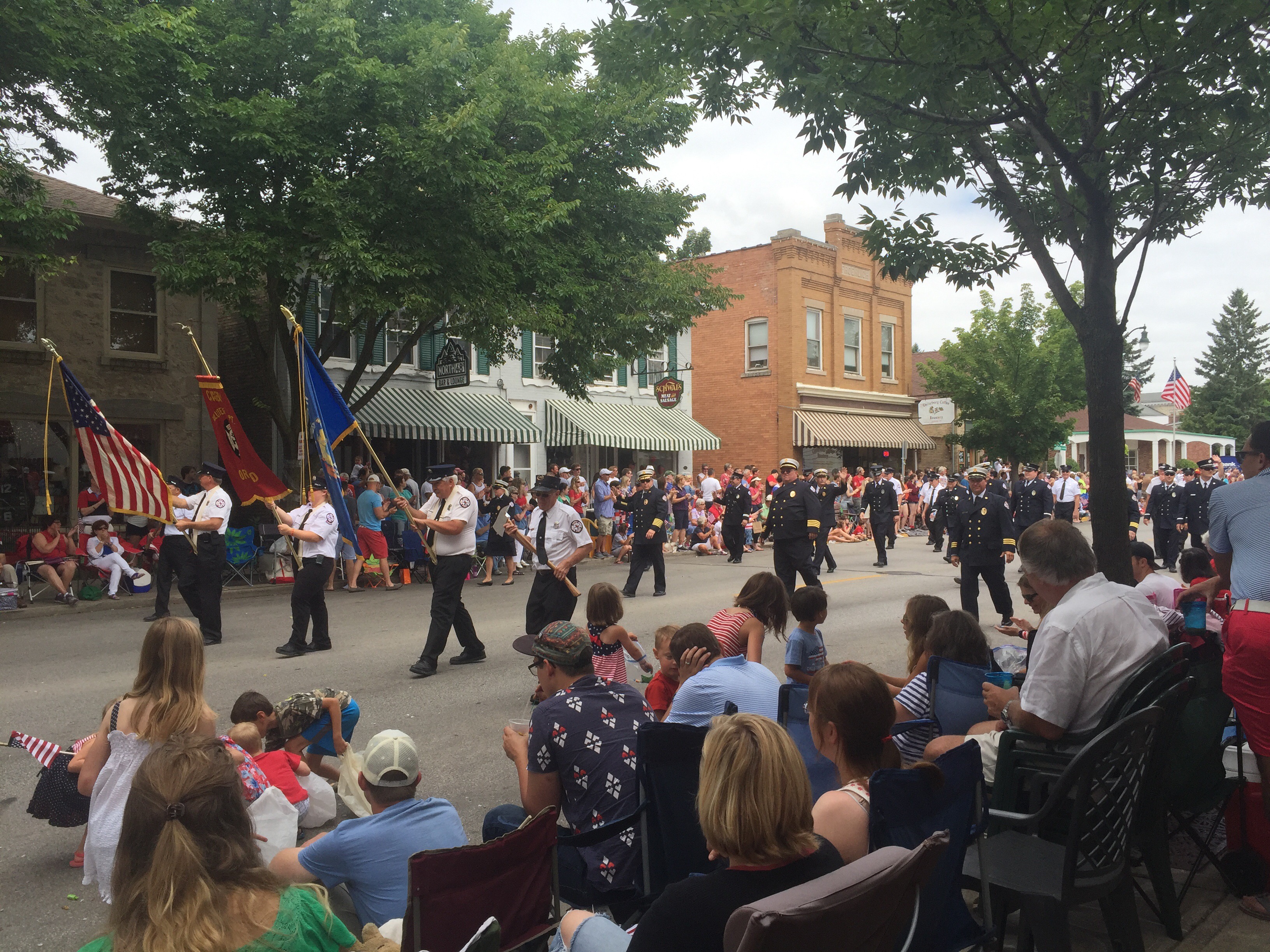
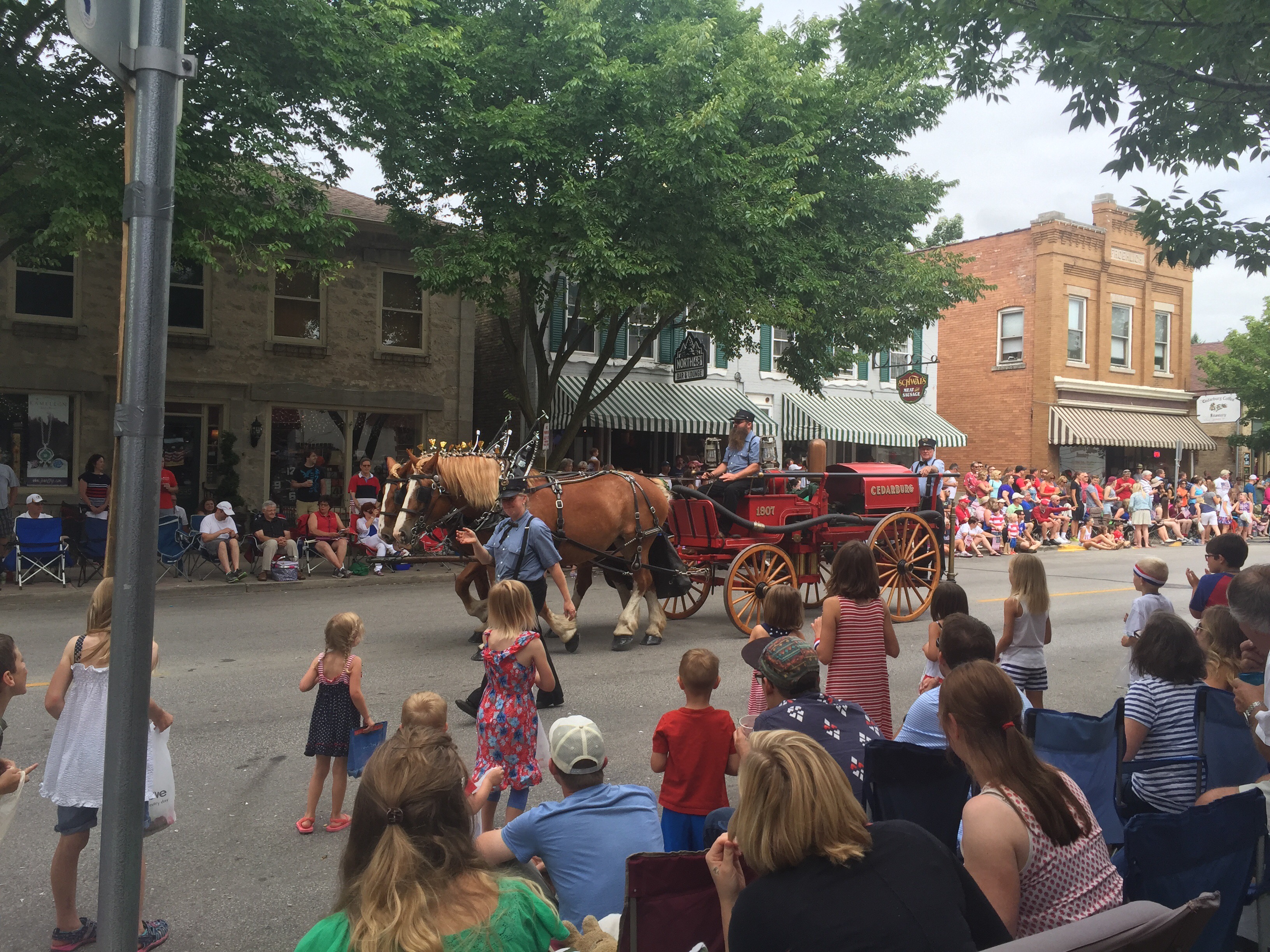
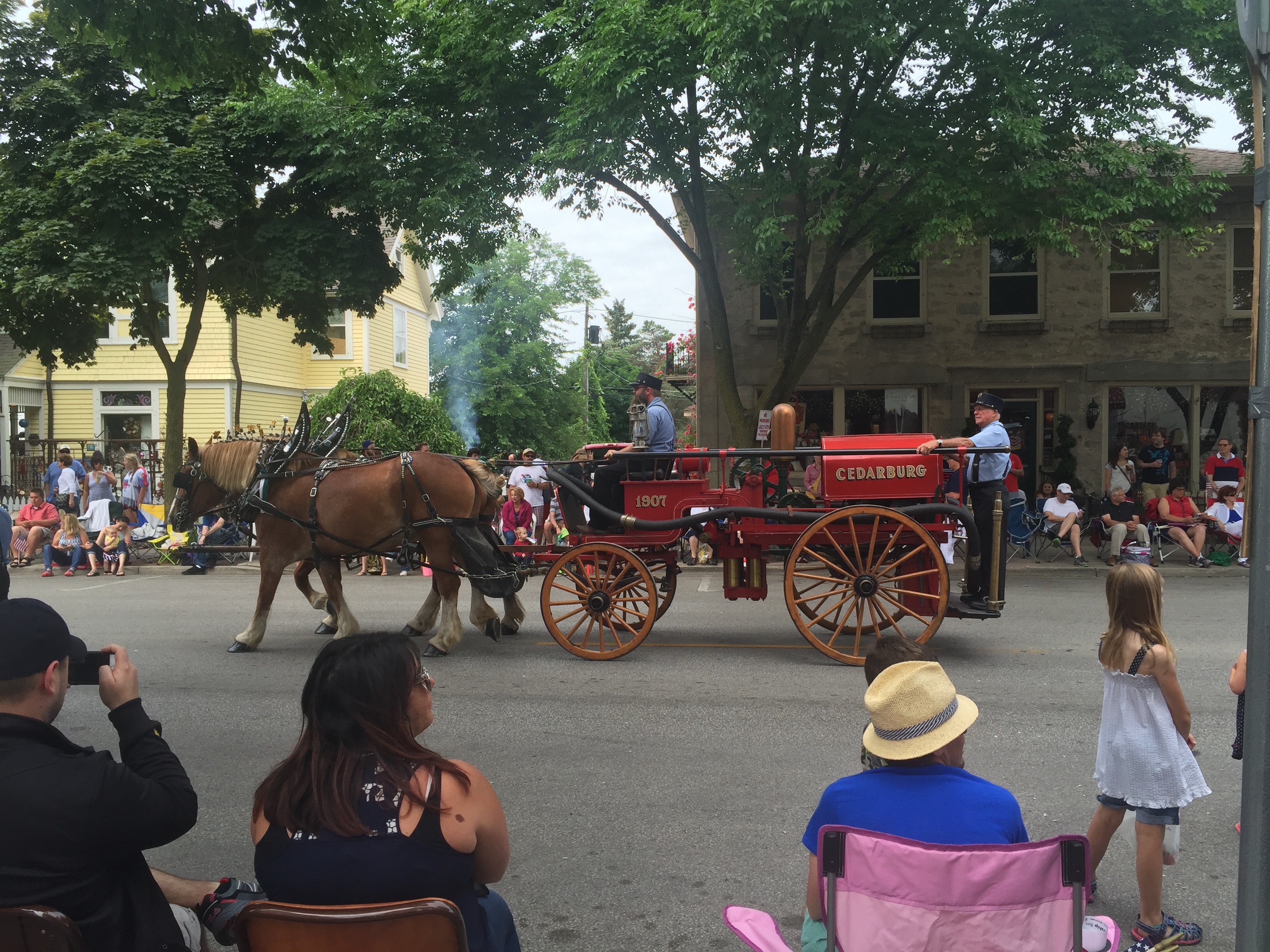
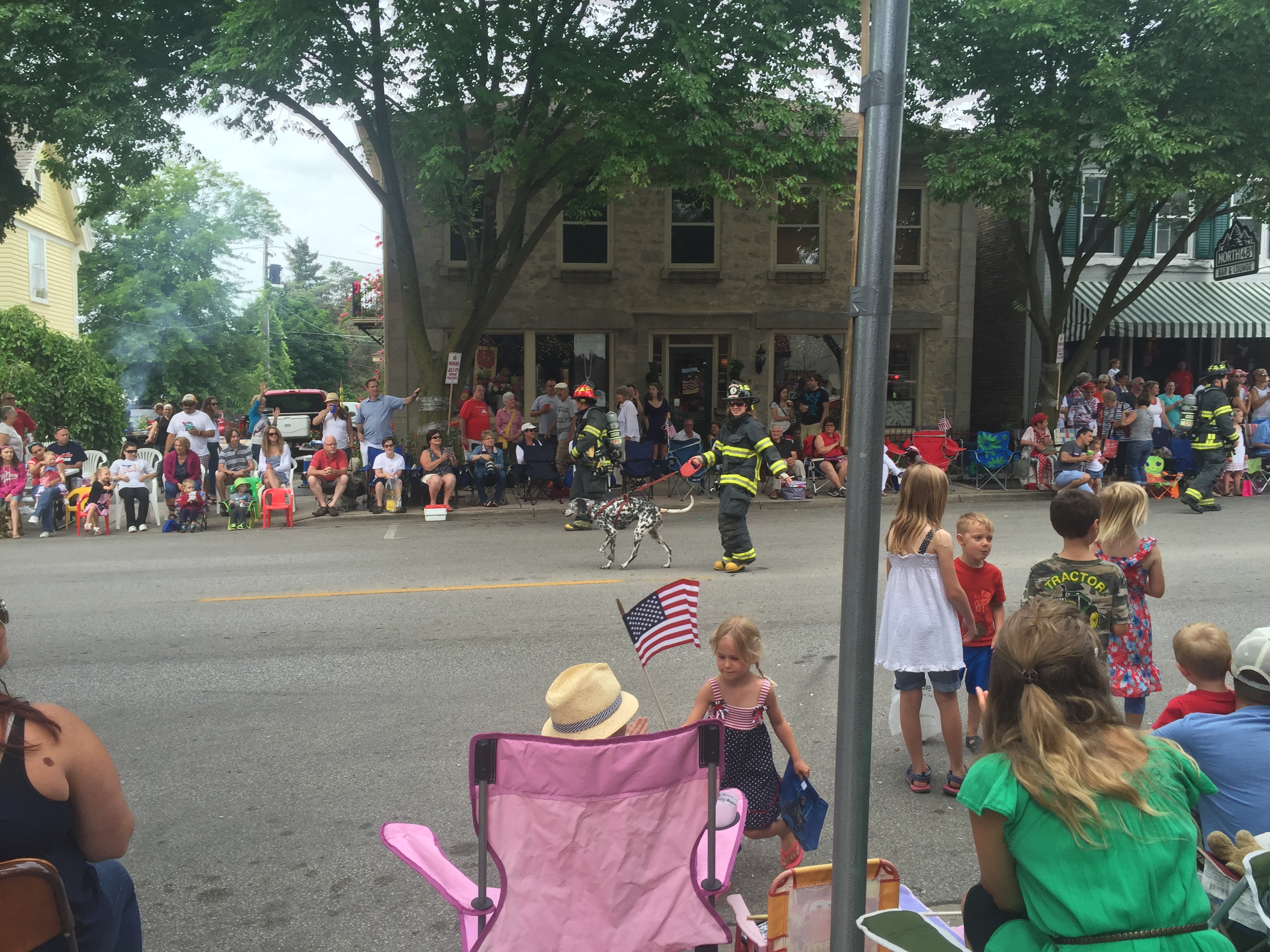
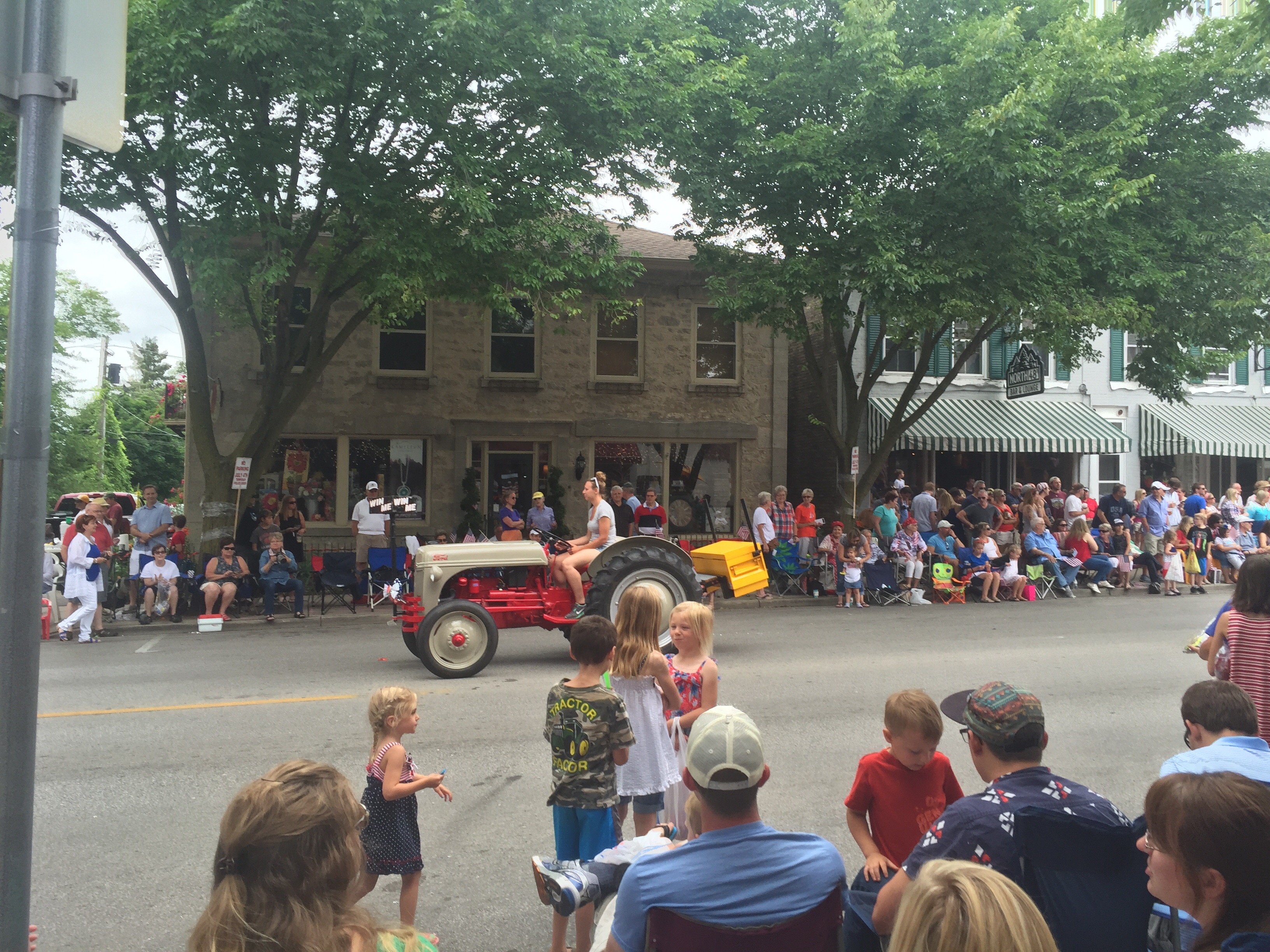
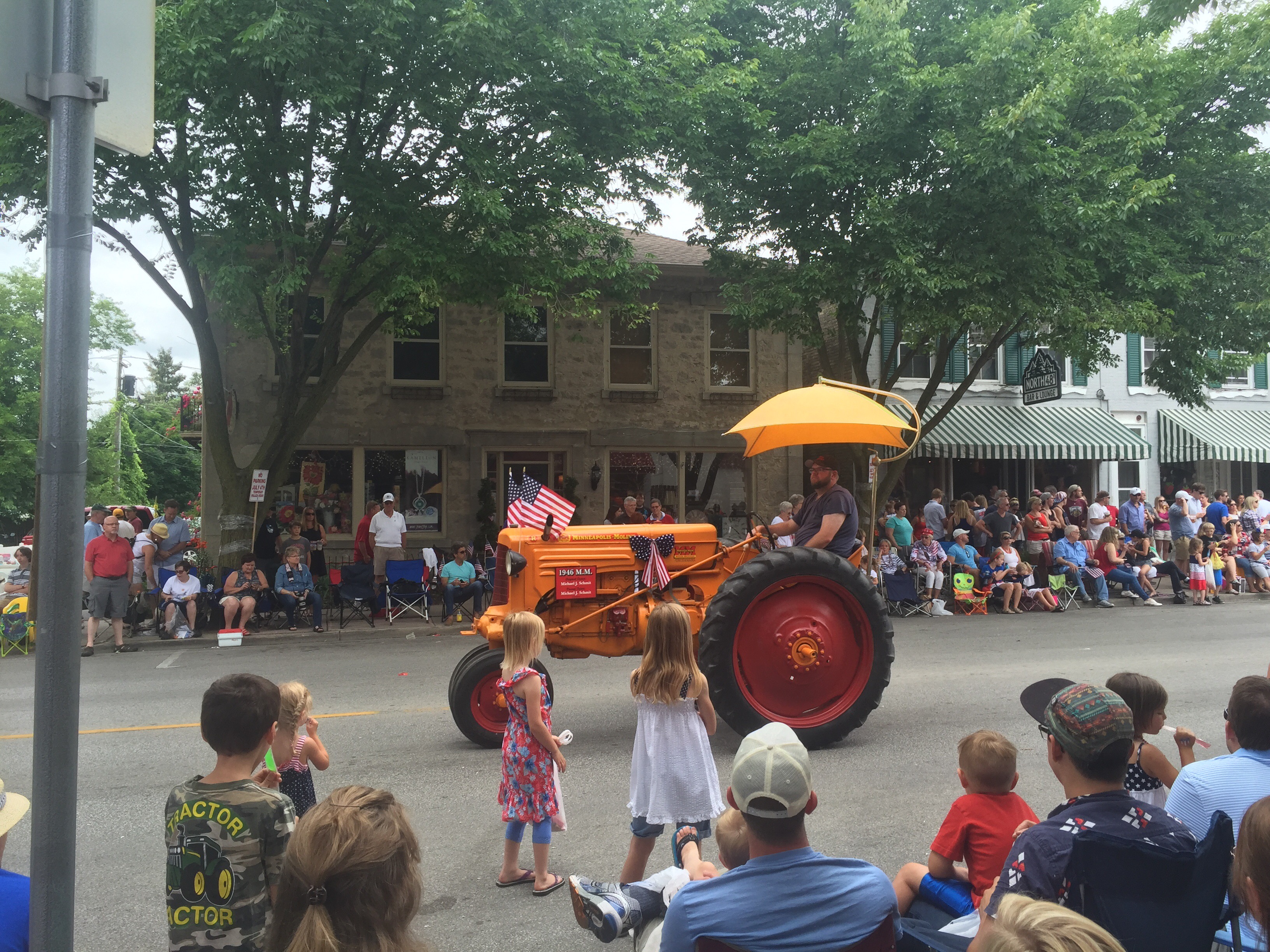
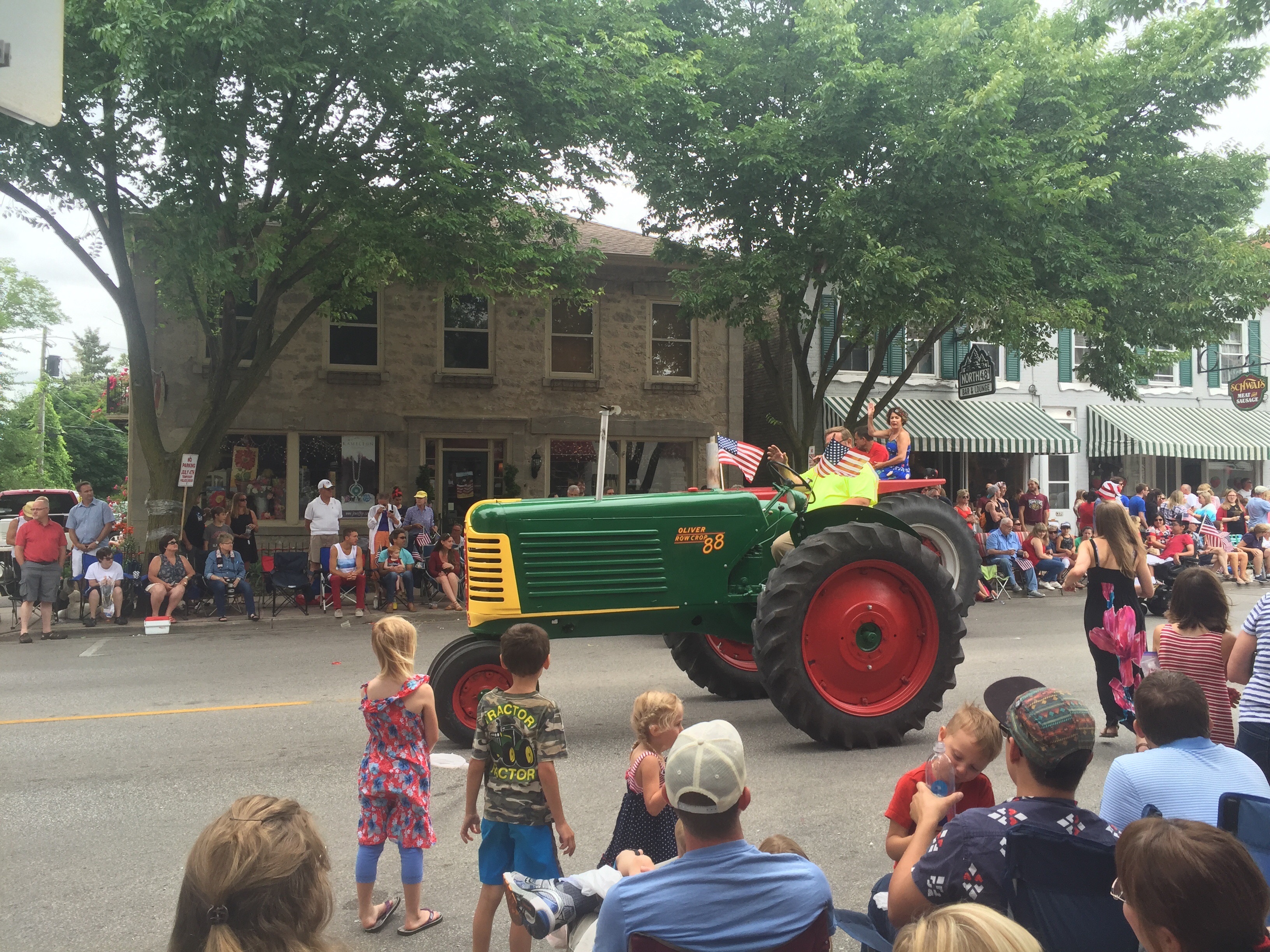
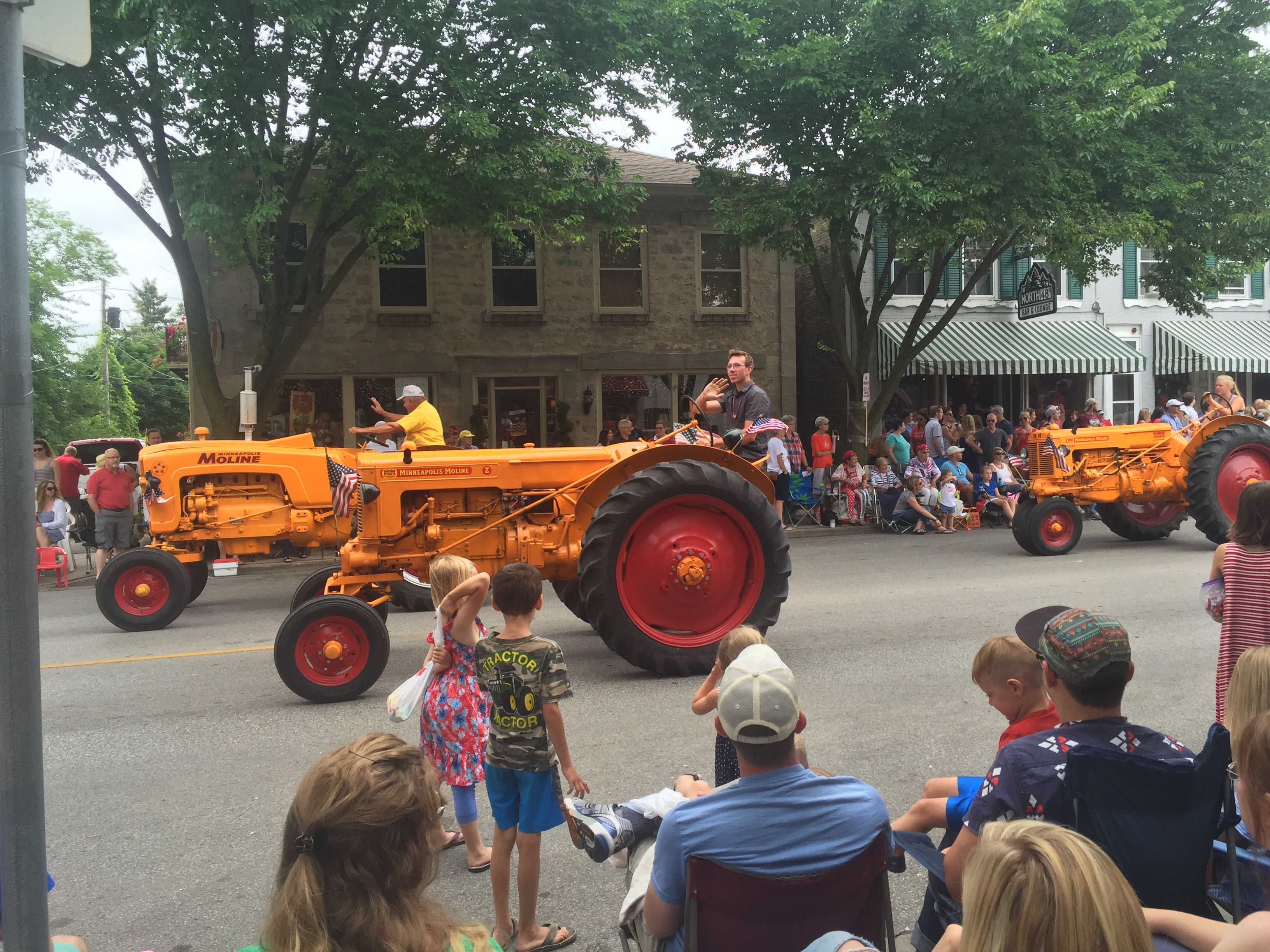
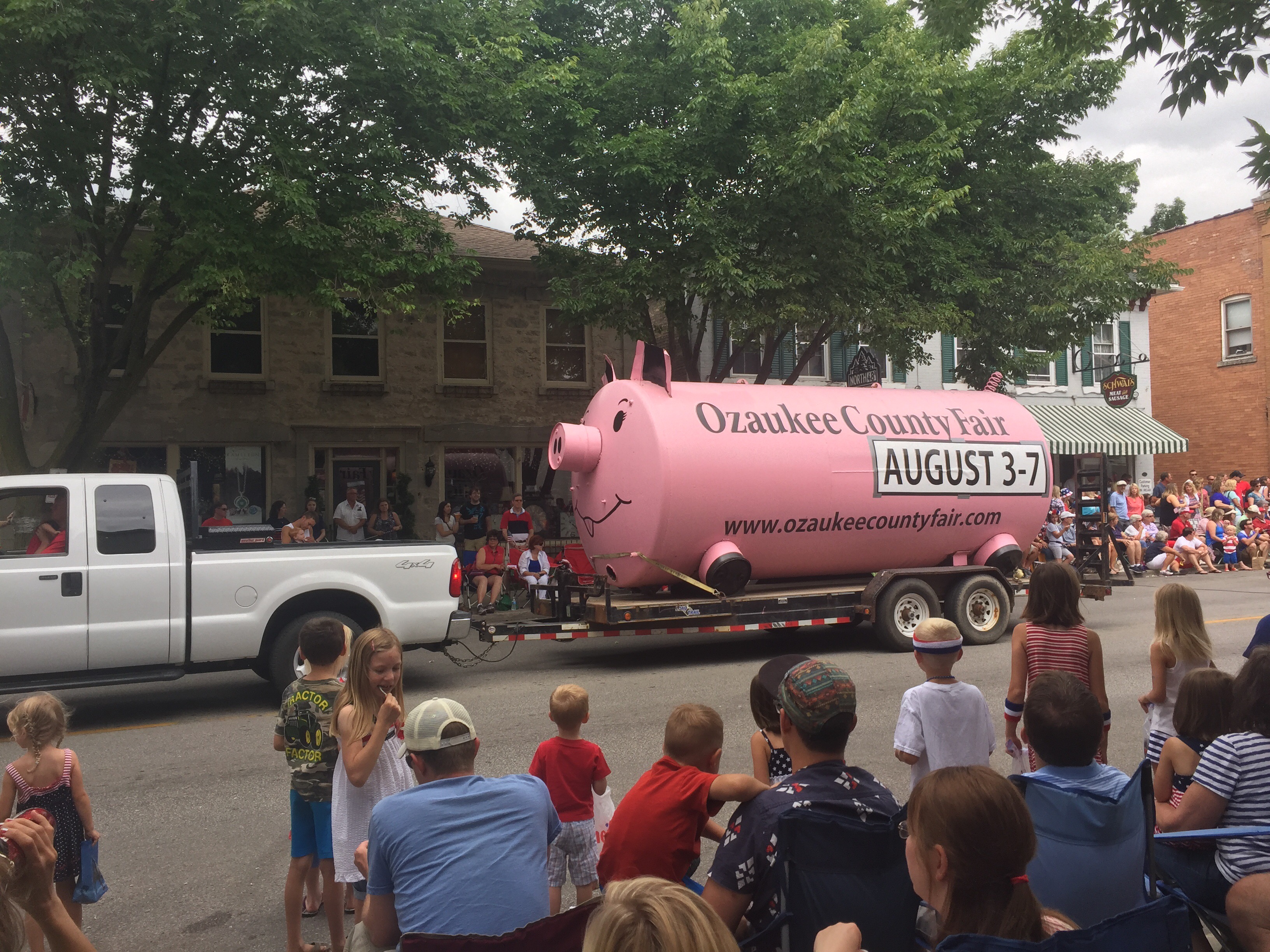
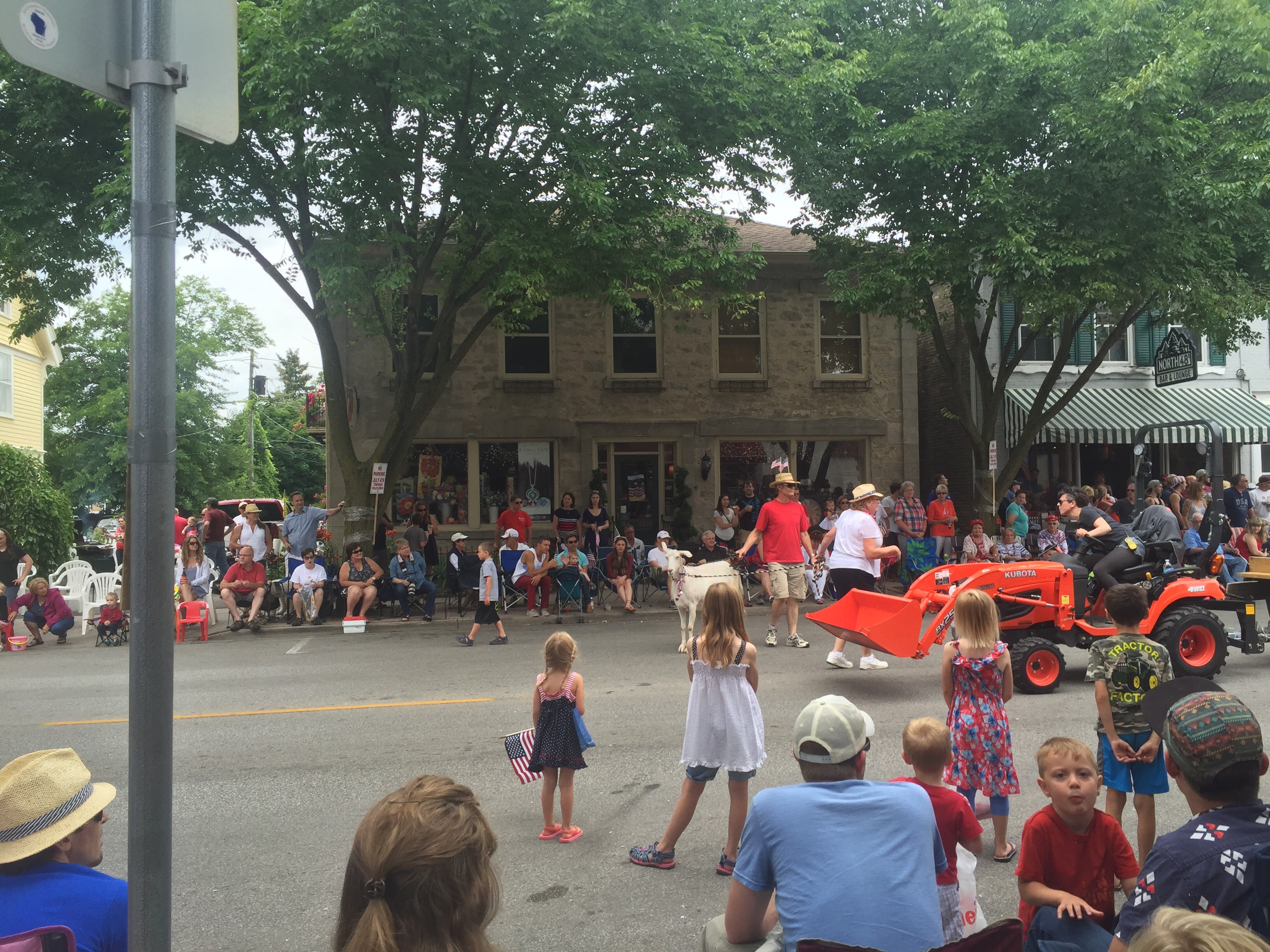
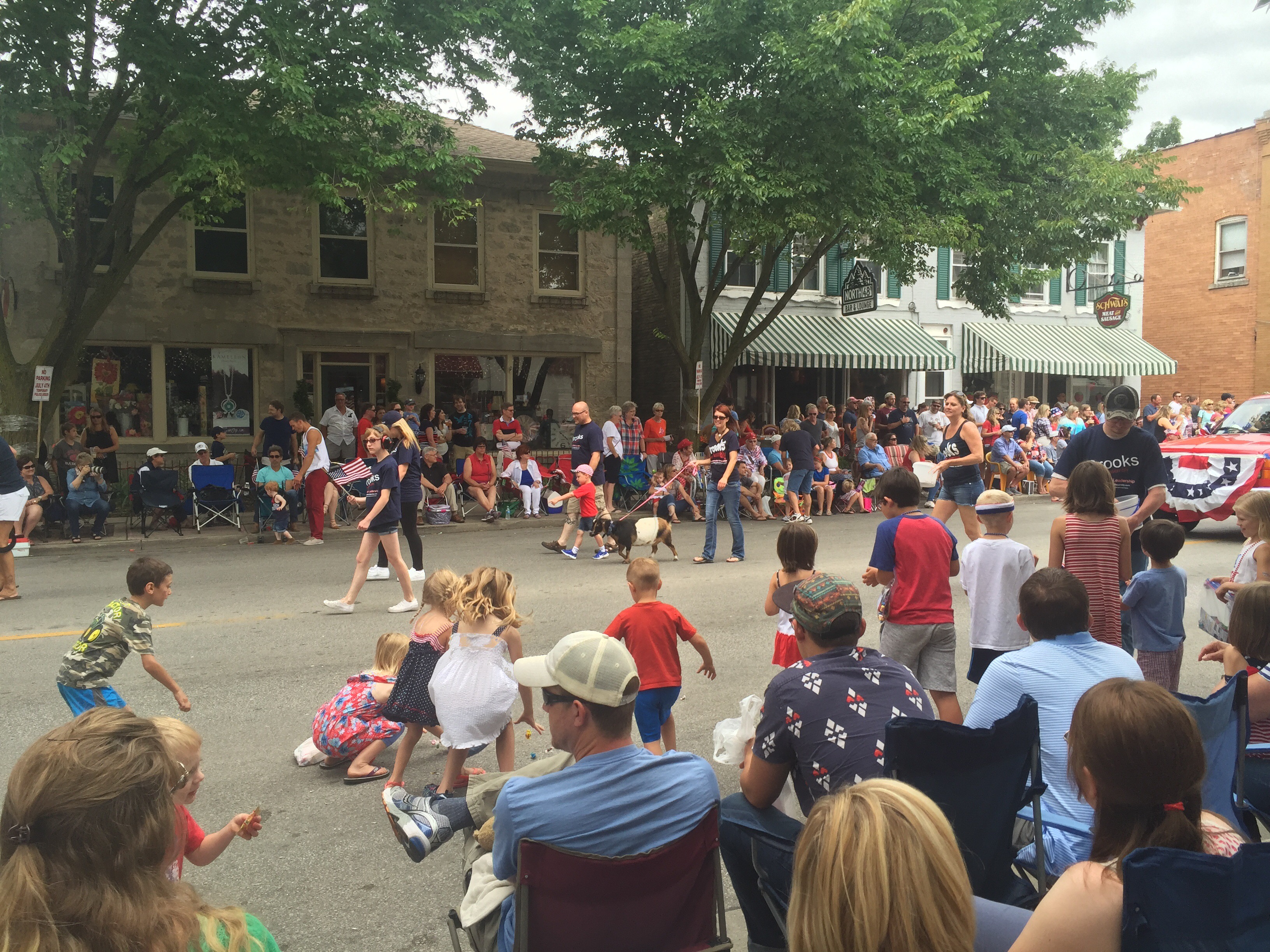
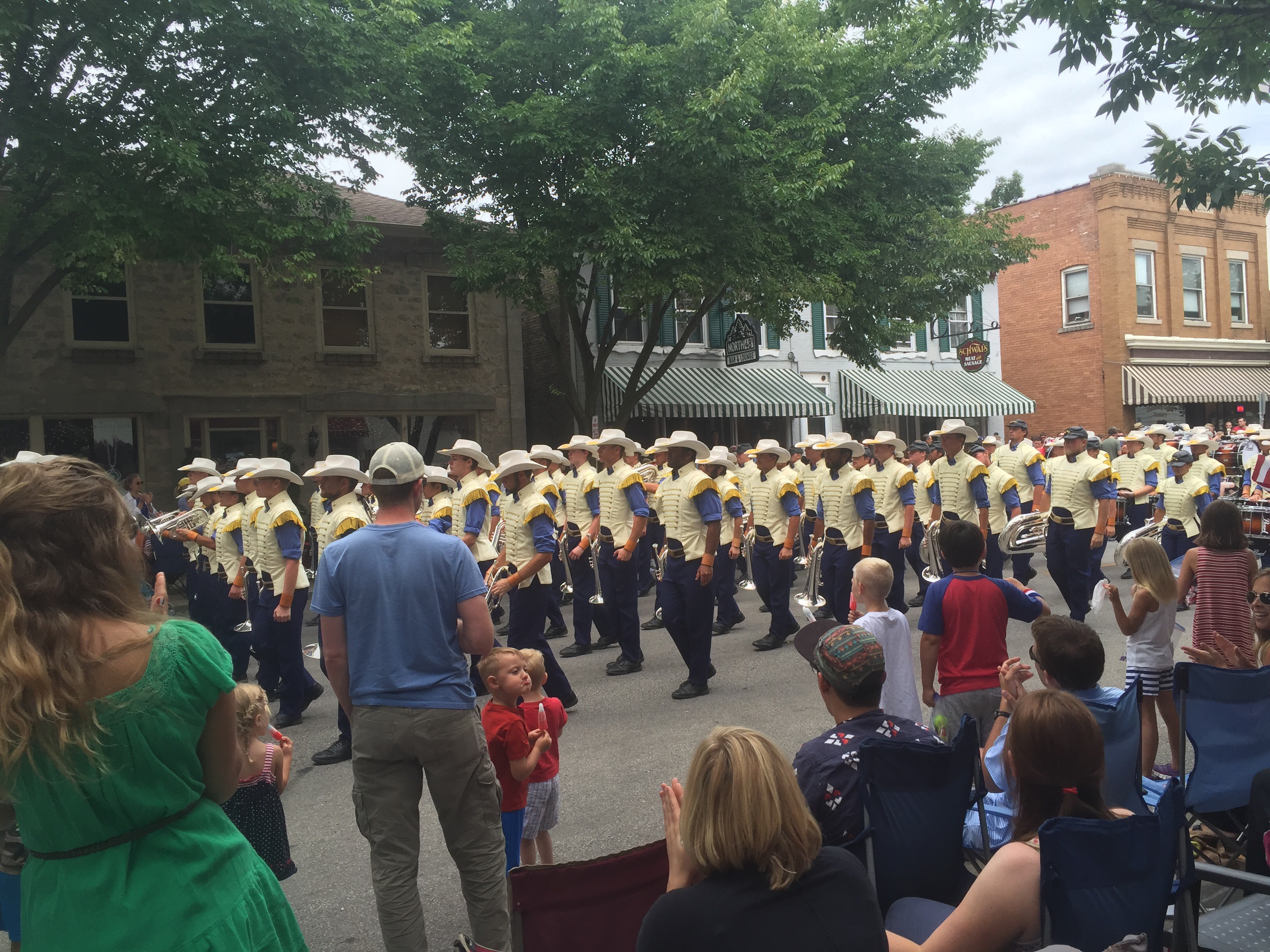
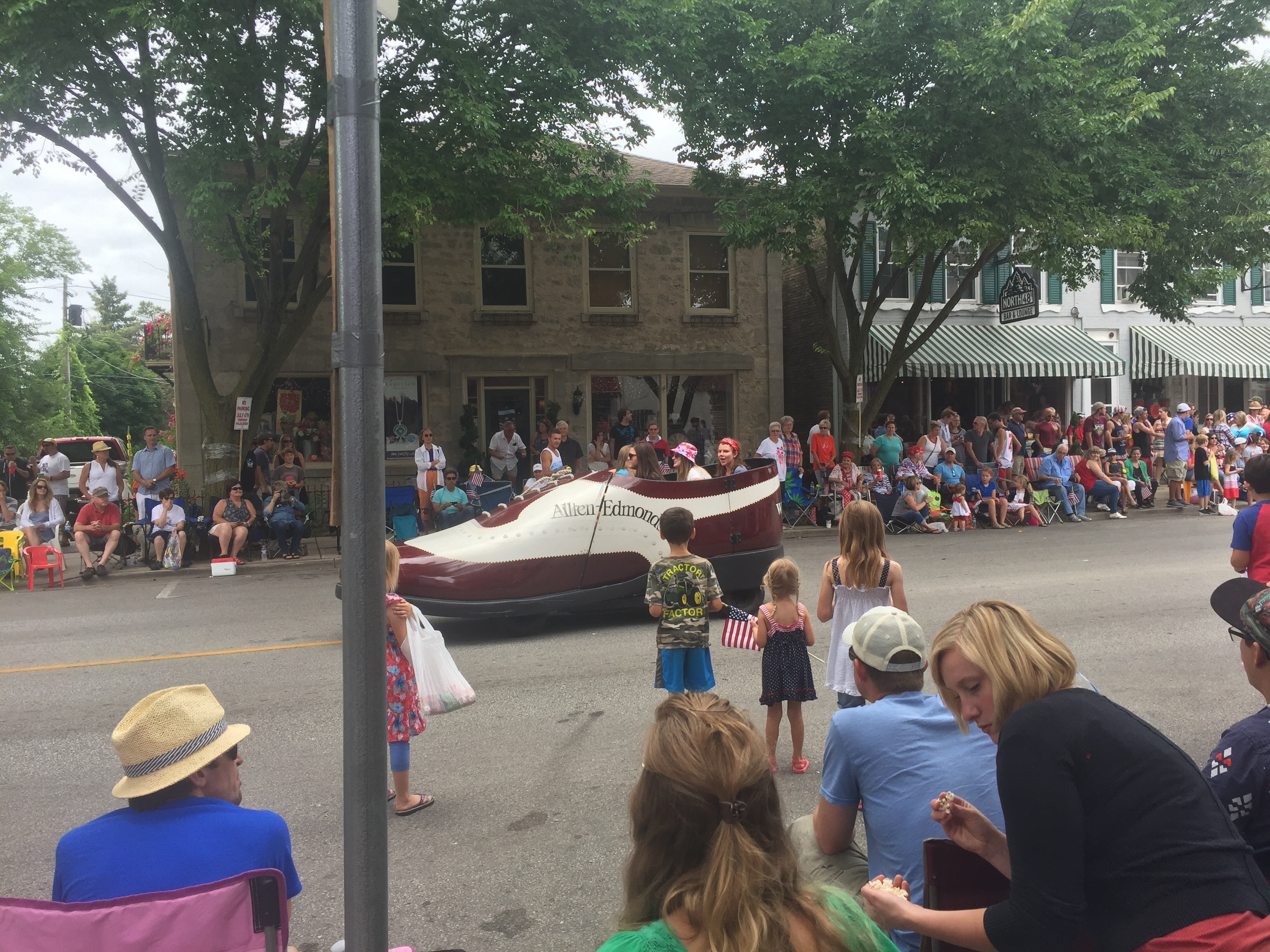
We had a perfect Fourth of July parade with all the proper small town things.

We had veterans of all ages and kinds of service (whose pictures I don’t have because we were all clapping and cheering for them).

We had the volunteer Fire Department marching in crisp blue dress uniforms. ( For whom we also clapped, but I was not wiping away tears so I was able to take pictures.)

We had the vintage fire trucks.

We had the fire department’s dog.

We had the vintage tractors.

Lots of them.

We had the Giant Pink Metal Pig.

As one does.

We had the Boy Scouts.

We had the horses.

And the goats.

And the politicians with goats.

We had the marching bands.

And the giant shoe.

And, of course, we had the obligatory singing dog.


A splendid time was had by all.

From This Time Forward Forever More

John Adams Letter

Because we are working people who have to get up early, we will celebrate the Fourth of July at our lake cottage tonight. That’s ok, because the Declaration of Independence wasn’t actually ratified on the 4th anyway, but on the 2nd.

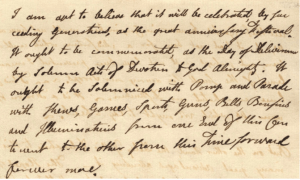
It was my favorite founding father, John Adams, whose idea it was that we should celebrate with fireworks. In a letter to his wife, Abigail, he wrote:

But the Day is past. The Second Day of July 1776, will be the most memorable Epocha, in the History of America.…

I am apt to believe that it will be celebrated, by succeeding Generations, as the great anniversary Festival. It ought to be commemorated, as the Day of Deliverance by solemn Acts of Devotion to God Almighty. It ought to be solemnized with Pomp and Parade, with Shews, Games, Sports, Guns, Bells, Bonfires and Illuminations from one End of this Continent to the other from this Time forward forever more.

We will all take turns reading the Declaration of Independence while our neighbors arrange for a spectacular private fireworks display.

It’s a day to celebrate.

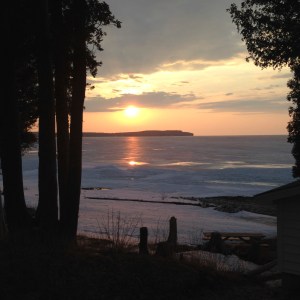
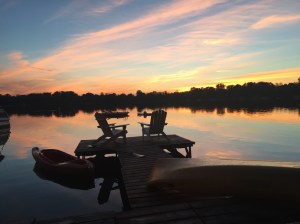
Lake sunset before the fourth

The Calm of the Lake before Fireworks Armageddon


Small Bursts of Grief

It’s a perfect summer day, and we were walking back to the cottage after a swim.  I asked my husband: Do you ever find, right in the middle of a normal day, that you feel a sudden burst of grief for your parents?

He didn’t even look back. “Well, it is Father’s Day.”

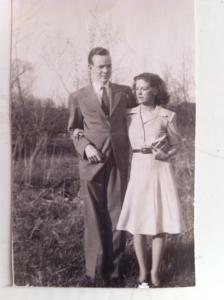
My father, Hugh Riordan, and my mother, Ethel, while they were dating.

My father, Hugh Riordan, and my mother, Ethel, while they were dating.

 What follows is the eulogy I delivered at my father’s graveside. My dad never lived to see me as an author, but I know he would have been proud of me. That’s what fathers do.

I miss him every day.

It may seem a little strange to find a Brooklyn boy here in a remote country churchyard. Daddy was a man of sophisticated tastes, well-travelled in the world. As a boy, his mother took him every Saturday to the Metropolitan Opera. In his early years, he rode the subway every day to school. But there was always a rural thread in his life. Brooklyn was farm country in the 1920’s, and he spent his summers in Mill Rift, Pennsylvania, a small town with rushing falls and gentle mountains, and several vacations he worked on a farm.

I have always been proud of Daddy. Proud of his intellect, his accomplishments, and his dignity. I have never known anyone else like him; he knew the answer to every question, he could fix anything, he remembered everything. His interests ranged from science to poetry and music. He is literally the only person I ever met who read Einstein for fun. When he was recovering from his first major illness, we knew his brain was undamaged when he commented on the Monet hanging across from his bed.

He was a brilliant engineer, whose inventions advanced technology, saved lives, and helped in the defense of his country. Above all, he was a man of impeccable integrity. That is a rare thing.

I am indebted to him not just for his love and support of me throughout some of my more wretched moments, but for the gifts he gave me. Almost everything I love in life, I learned from him. From Daddy, I learned to love music and literature, to care about reason and rational thinking, to value education and languages, to be a patriot, and to love freedom, and perhaps most important, I learned my insane passion for dogs. I guess we all did.

When Brian and I were talking this morning, he reminded me that for all Dad’s affection for his Mercedes Benz–a car he cherished, coddled, and fiercely protected from the rest of the family–he drove it into a ditch and wrecked it to avoid hitting a groundhog on the road. He was not a demonstrative man, but he was tender-hearted. He loved to be hugged, and beneath his quiet mask he was extraordinarily affectionate.

Of all the places he had lived, he loved Wisconsin best. I think it was partly because the German culture seemed familiar to him, like the households of his German grandfather and uncle, and partly because he admired the simple integrity of the people here. He liked farmland and the animals, and he saw cities as places that corrupted lives and culture. For all his accomplishments and education, he had no pretense or snobbery. He was a good man who lived a simple, honest life. And it seems exactly right that he should rest here, among settlers and veterans, underneath tall trees.

My father, H. E. Riordan, and his favorite dog.

My father and his favorite dog, Rudy.


What Writers Do When They Should Be Writing. A List

Screen Shot 2014-03-02 at 3.02.09 PM

  1. Decide to take dogs for walk.
  2. Look for sunglasses in purse.
  3. Go outside to see if sunglasses are on porch.
  4. Talk to neighbors for two hours over fence.
  5. Look for sunglasses on bedside table.
  6. Pick up t-shirt on bedroom floor.
  7. Notice box of new beach towels in guest room.
  8. Put away  new beach towels.
  9. Look for sunglasses in car.
  10. Make grocery list.
  11. Recharge computer.
  12. Check e-mail. Nothing from anyone.
  13. Look for sunglasses in tote bag.
  14. Wonder if sunglasses are still at bookstore from last night.
  15. Call bookstore.
  16. Wonder if sunglasses are at restaurant from last night.
  17. Call restaurant.
  18. Look for sunglasses in car again, focusing under seats.
  19. Talk to friend on phone.
  20. Look at plot map. Notice holes in plot.
  21. Ponder death.
  22. Empty purse on floor looking for sunglasses. Find emptied bottle of zinc tablets in bottom.
  23. Clean out purse. Pick off lint from zinc tablets. Return to bottle.
  24. Accidentally call book store from last week. Chat with proprietor.
  25. Decide to write blog post.
  26. Look for sunglasses in car again, focusing on trunk.
  27. Stare at blog screen.
  28. Send irritable e-mail to online company who keep sending surveys that flash at you when you’re trying to think.
  29. Look for sunglasses in tote bag again.
  30. Find two day old NY Times in tote bag.
  31. Do crossword puzzle in NY Times.
  32. Walk path from car to door, hoping to find sunglasses in grass.
  33. Rub tummy of Dog One.
  34. Stare at blog screen.
  35. Rub tummy of Dog Two.
  36. Look for sunglasses in different tote bag. Find sunglasses.
  37. Resolve to carry fewer tote bags.
  38. Don’t write a single thing all morning.
  39. Decide it’s too hot to take dogs for walk. Swimming would be better.
  40. Look for sunglasses.