We traveled for the holiday, and while it is always good to see family, it is also good to be at home in your own bed, and then waking to watch the sun rise, with the silhouettes of deer and turkeys in the woods, and the sweet soft breathing of big dogs nearby.
When I had a day job my Sundays were filled with dread. On Monday mornings I would stand at the big windows of my bedroom looking out at the beauties of the woods and sky, feeling bereft at having to leave for the demands of the classroom or office.
Now my schedule is mostly my own. And because I have always hated that Sunday feeling, I try to never schedule anything on a Monday. I write in the mornings, and reserve afternoons for appointments, errands, exercise, and domestic tasks. Lately, however, in what seems to be some kind of mechanical conspiracy, we have been on a breaking-down appliance spree, so my autonomy has been interrupted by lengthy bouts of dishwashing and repairmen who schedule their appearances in five hour appointment windows. Today, I have nothing planned except writing, walking the dogs, and making beef stew. There will also be a long, fragrant bath. A perfect day. I hope.
But we never know, do we? Our expectations of perfection are mostly disappointed, and since disappointment is a form of ingratitude, it would be graceless not to appreciate the imperfect blessings of our real lives, no?
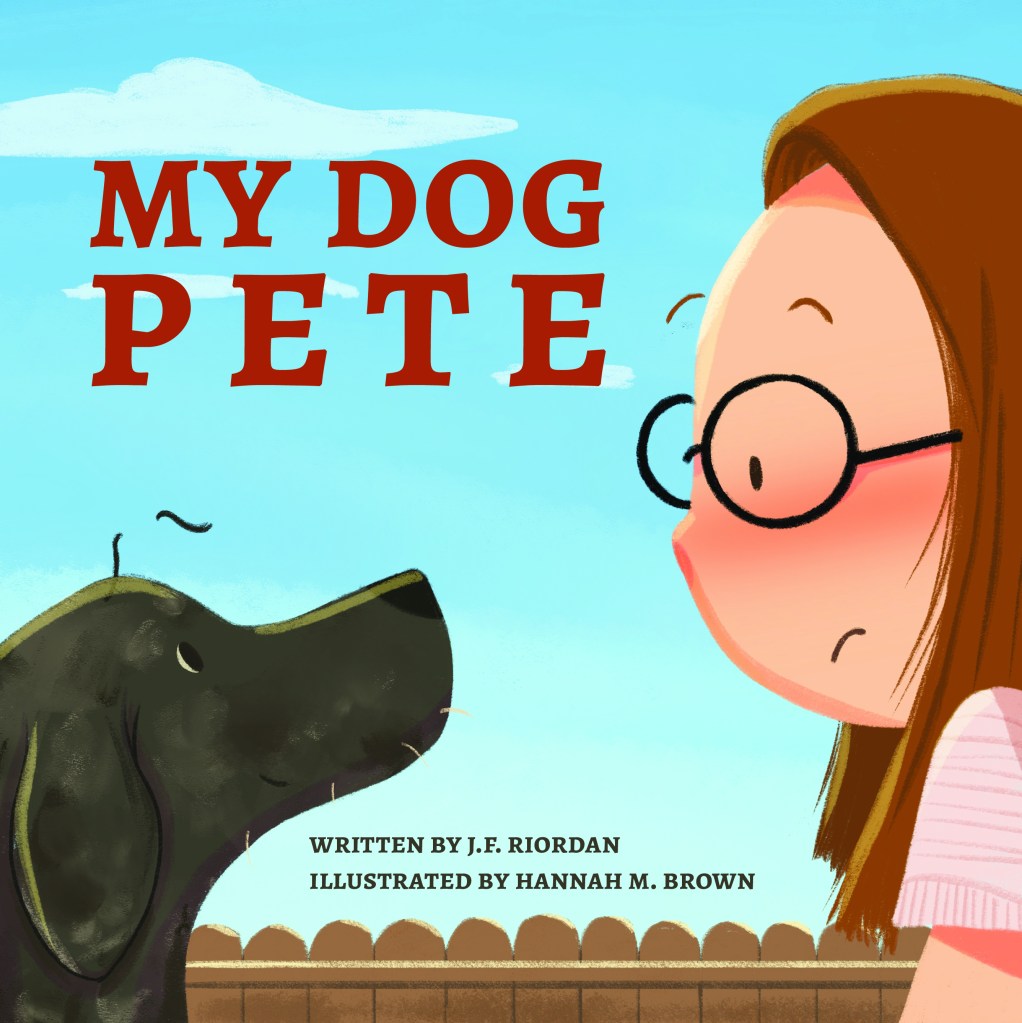
And this brings me to My Dog Pete, the children’s book I finally got around to publishing this year after more than a decade of leaving it to languish in a file in my office.
My husband, who is a man of deep insights, recently pointed out to me that the book contains the philosophy of a happy life. I heard this with some surprise, because I was only telling a story, not trying to convey a moral. In the book, a little girl wants a perfect, golden dog who will be handsome and admired. Instead, she gets a mixed-breed, mischievous shelter dog who was probably abused, leaps as gracefully as a gazelle, and smells a little funny. She doesn’t want him. But–spoiler alert–against all her heartfelt preferences, she falls in love with him.
So often in life, when things don’t live up to our expectations, we are frustrated and disappointed. And yet, most of the time, what we get–even though it isn’t perfect–is still something good, and we are lucky to have it.
We must notice the good things we are so blessed to have. Ingratitude is a sin, and in most theologies perfectionism is, too, because it is a focus on self-will and the ego. And also because for most of the world, sadness and misery is a normal day. So now, when one of us doesn’t get exactly what we hoped for or expected, we say to one another: “I wanted a golden dog.” And we remember to relax into the reality of imperfection that is still filled with many beautiful things; many blessings.
After all, in real life we didn’t expect it, but we got Pete. And we wouldn’t have changed him for any other dog in the world.
Hoping you had a Happy Thanksgiving.
Pete, in one of his (many) stubborn moments.My Dog Pete is available exclusively at Amazon.
A friend and I went to a local greenhouse to make Christmas decorations with greenery and red trimmings in big outdoor pots. It was a lot of fun, and felt like the beginning of something both old and newly sweet. In the spring and summer, the seven greenhouses overflow with plants and flowers, but now everything smells like balsam and spices, and there are poinsettias, and garland, and wreaths, and hanging balls made with evergreens and sparkly things. It struck me sharply how much we need the presence of green things amid the darkness and cold of winter.
The family who own the nursery are fifth generation in the business, and the current manager told us of her great-grandfather who had been buried alive in World War I, and survived in an air pocket, eating the shoelaces of a dead comrade. He came home to his wife who had been told he was dead. Together, they began nurturing growing things, which seems both beautiful and significant.
In my family we have keepsakes: furniture, Persian rugs, silver, an ancient Bible, paintings and photos. And we have common threads, too: a love of learning, of literature and art, a passion for freedom and an expectation of basic decency. But I think about what it must be like to be upholding the family’s work in such a particular way, with all the significance and restrictions, resentments and pride that must come into the mix. All the generations–male and female–were represented at the nursery; they all seemed skilled and cheerful: laughing while disagreeing about the right way to place the boughs in a planter, teasing one another, singing along with the corny Christmas music, putting floral stakes and tape on pine cones and big shiny ornaments, and helping us create the right shape for our arrangements. They worked well together.
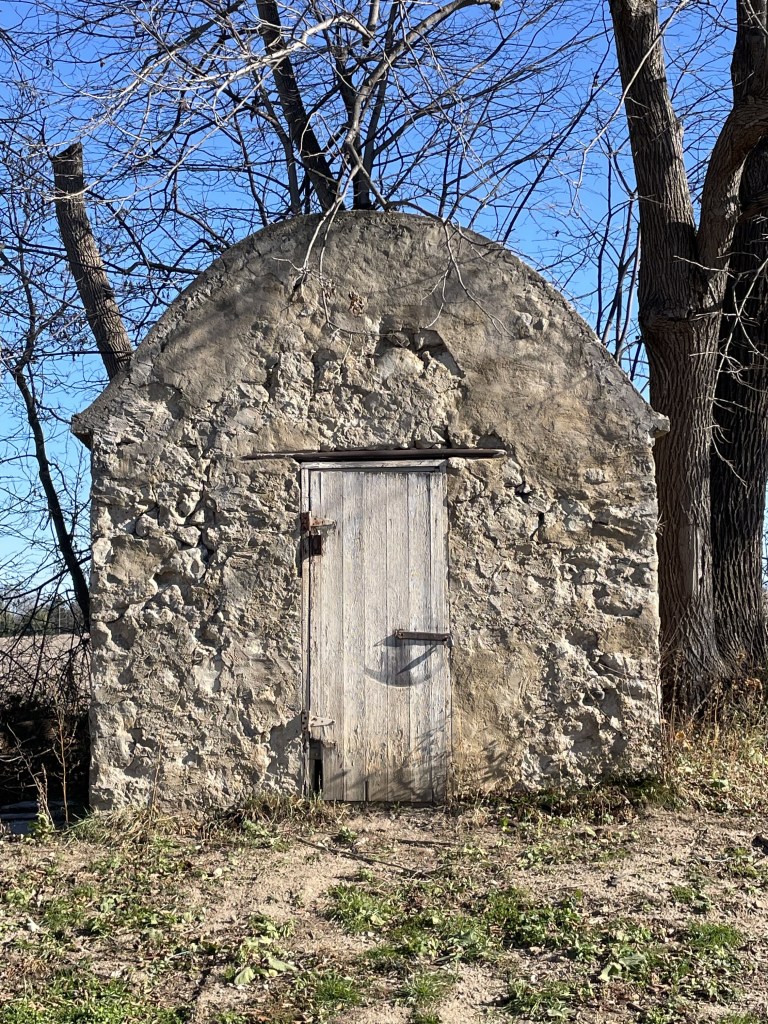
As we were leaving, we stopped to look at this old stone building next to the gravel parking lot. It was a poignant reminder of a family’s history.
Writing bad poetry is a pastime shared with youth and age. I will spare you mine, but intense emotion always draws it out of me, and I hide it as if it were an addiction to drink or pornography. I am so grateful that Auggie is home. And he is back. This is not redundant.
His stitches are out; the cone is off; his obsession with balls is unabated; he is romping nearly at full speed, and he seems to have a new appreciation for home, and bed, and snuggles. He is insatiably hungry; all I do is feed him. I don’t even need to tempt him. He is healing and his body needs to rebuild.
We almost lost him more than once, and we are so grateful to have him back, whole in every meaningful sense of the word, and sound. But he seems to have muted just the smallest bit, noticeable only to those who know him, and suddenly he is no longer young and immortal, but middle-aged and vulnerable like the rest of us.
We took him in for a check-up and sat studying the veterinary wall chart on dog sizes and lifespans. At six, Auggie is now well into middle age, and his life may be more than half over. His family have lived to twelve and fourteen. While that makes me vulnerable to hope, those ages are not common for big dogs, and Auggie is a lean 112 pounds. Mortality lingers in the background for all of us, but dogs have those first sparkling years, and then the slow sadness creeps in too quickly.
I used to scoff at people who said they couldn’t endure the pain of losing another dog. Now, I’m starting to get it.
But meanwhile, here they both are: vibrant, restless, and ready to run. I’d better go.
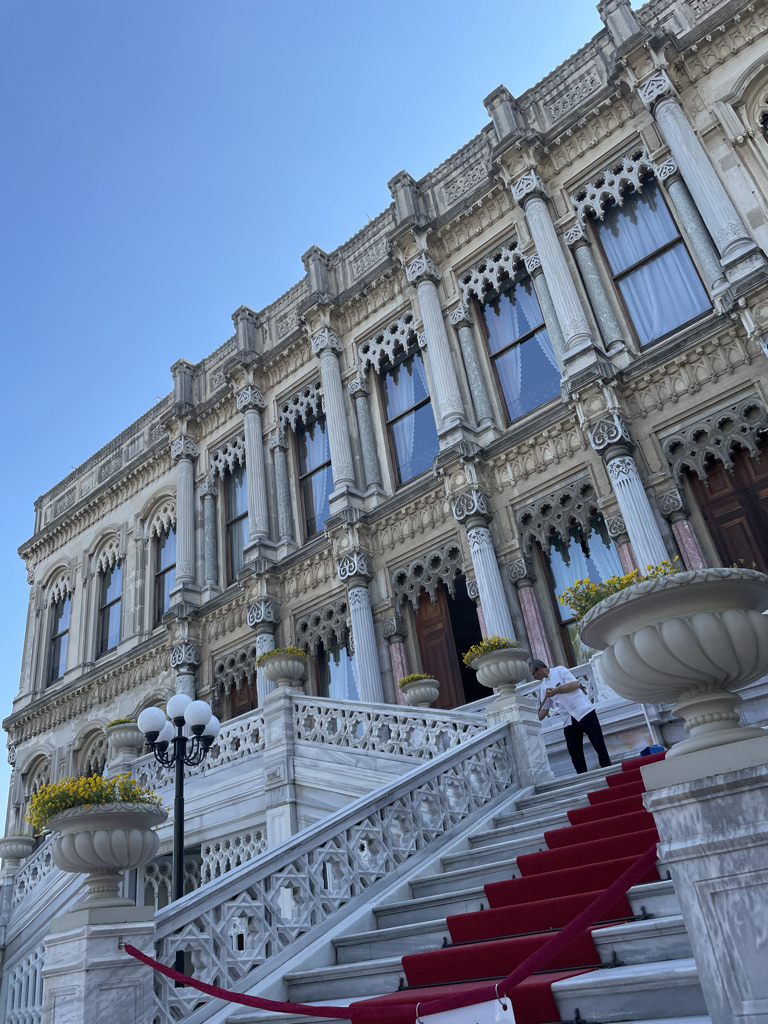
(From my talk as officiant at their wedding in Istanbul)
Anyone can fall in love. And most of us who have been married will acknowledge that it helps if love is the first requirement. The ancient vows that Sahar and Jeff are about to make confirm it: We promise first “to love”.
But, as we here make a commitment to support Sahar and Jeff in their marriage, we understand that love is not enough. I want to say “mere” love, although that would be at odds with every philosophy and theology in the world. But love can be a fleeting emotion. That’s why when we experience real love, most civilizations suggest that we add something more. We want to vow that our commitment is forever, and that we mean more than only how we feel.
Love, Honor, Comfort, and Keep. They are ancient poetic words, and they bear testament to an essential truth: Marriage is hard.
It would seem at first thought that in the commitment that they are making today, the challenges Sahar and Jeff face will be accelerated by their different cultural heritages. But this is only a detail. Because in many ways every marriage is a melding of cultures…of family…of values…of male and female.
Our work, as married people, is to accept the alien nature of the other. And, come to think of it, isn’t that the work of us all?
Because the fundamental requirements of all human relationships are those we practice first at home, and so, the relationship of husband and wife reflects our relationship with the whole world. That is not a coincidence.
We start with the imperative to love, with all that it entails, but there are also these other requirements:
Honor.
Comfort.
Keep.
Together, they form a hierarchy, with each of these actions dependent upon the other.
Honoring…it means we don’t hold one another in contempt…that our familiarity breeds, instead, respect, and generosity, and patience, and understanding.
And we cannot comfort without honoring, because offering comfort requires an essential respect of our beloved’s individual humanity and need.
Comfort requires, too, understanding the value of offering not what we need, but what someone else needs—which is almost never the same thing.
Comfort is an act of solidarity, but also an act of empathy: a moving out of ourselves and our needs, and into the needs of someone else.
If I need solitude, maybe I need to understand that at the same moment my partner needs affection. And the efforts we make to frame the world based on someone else’s needs is key part of marriage, and, indeed, of any relationship.
And “keep”. What does that mean? We keep watch; we keep time; we keep chickens.
But to keep one another….
It’s vigilance, isn’t it. It means we hold one another in esteem, with honor. We comfort. We pay attention. Sometimes at cost to ourselves and our pressing priorities. But…it also means to give shelter. We smoothe paths…we encourage… we understand foibles…we attempt to care, not just for physical, but for emotional requirements.
Come to think of it, it is a bit like chickens.
We nurture.
We protect.
We keep.
Which brings us back to love. These vows are all encompassed in the act of loving; they are the recipe for all human relationships: To Love, Honor, Comfort, and Keep.
It is more than a philosophy. It is an action; an endeavor; our daily work. And it is a challenge.
A healthy marriage—the keeping of these vows—requires fierce dedication, determination, and commitment, all entered into in the endeavor of love.
Sometimes blindly, sometimes fervently. But deliberately, reverently, joyfully, and not just with our whole hearts, but with every fiber of our beings.
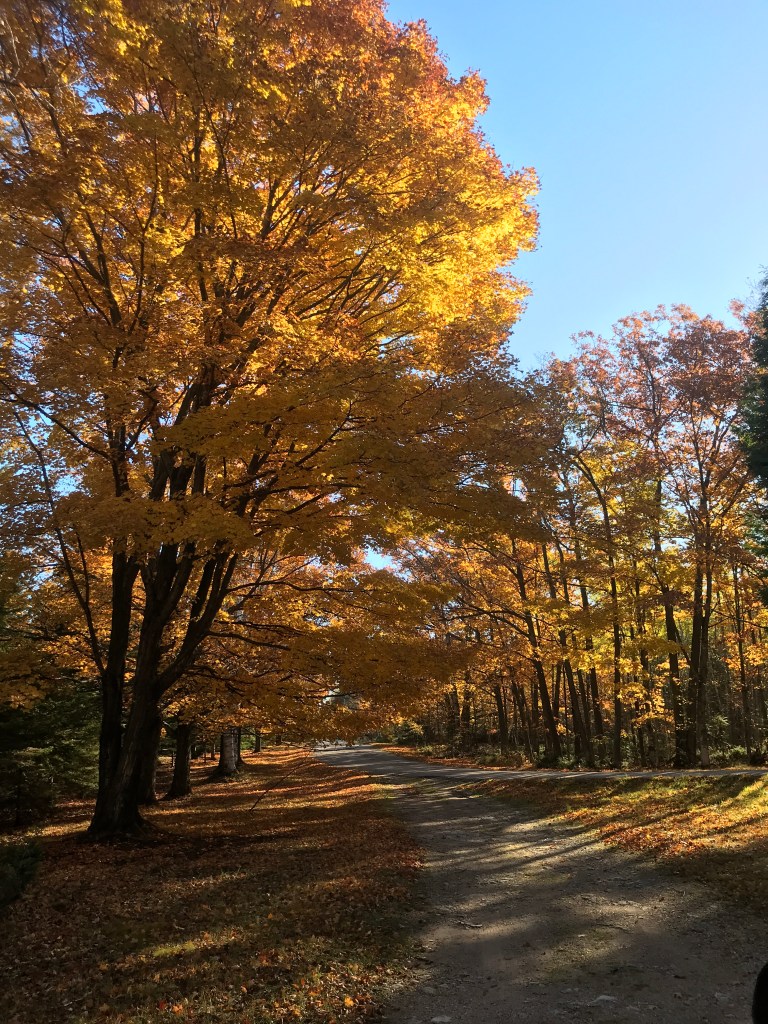
Fall is late this year. It is already mid-October, but for the first time the woods have a tinge of gold, just beginning, and the sunlight’s yellow is intensified when it shines through the trees. These are the kinds of days I count as finite in my life. All our days are finite, of course, but some seem to belong in a category as different as a gemstone to a handsome pebble.
Life hasn’t seemed, really, to have returned to normal for us. The contagion levels are still high where we live, so although we have tentatively dined outdoors a few times—and enjoyed it thoroughly—the cold weather will end that small bit of normality. The world feels smaller.
In pre-COVID times, I would go now to the Island. It is one of the places where the golden light of fall permeates everything. The long, empty roads mean I can walk for miles without seeing a car, and the dogs, who return to me instantly when I call, can run off-leash. We wander through golden lanes, and my brain, usually obsessedly plotting and exhausted by the extraction of writing, is distracted by the resonating vibrancy of the color. I remember these walks repeatedly, and return to them in my dreams, and in my books. They are, I think, how I would spend eternity, if I could.
But we are mistaken if the wet days, the bleak and dreary ones, are not treasured, too. My dogs, who love to swim, but hate the rain, nevertheless run joyfully through wet weeds and brush, shaking themselves with vigor when they come in, smelling of mud. Dogs have a capacity for appreciation that my ideal self would try to emulate, but I am not a dog, and can’t seem to achieve their purity of mind.
My joy ebbs and flows with the seasons. I have never fully understood spring, with its mud, its dirty snowpiles, its cold rains, and its disappointed hopes. For me, joy comes when fall it is at its peak, and even still later, with the stark, purple cold of winter. Once the leaves and crops are stripped away the sculptural shapes of the trees and the shape of the earth is revealed, and the light pours down, undiffused. The world seems a brighter, clearer, purer place. That cold clarity purifies me.
In our mortality, I wonder whether there is, too, a clarity that comes as we can, at last, see the end. There is no need for the extraneous, just the focus of comfort, where we can; of love, if we are blessed with it; and the firm hope that when the seasons pass, the essence of what we are will always be.
The house we rented in Maine is very old and very large. It has history. Perched on a small hill above the lake, it has sprawling porches, front and back, and lovely views. There’s a spacious kitchen, a laundry room, and five roomy bedrooms with four baths. There’s a massive stone fireplace in the living room. But it does not have wi-fi, and the cell signal is only one elusive bar, which seems to flit from room to room like a butterfly, and then disappear.
It has been a long time since I have left my phone sitting on the night stand, turned off, and walked away for the day. I feel released from electronic bondage. The impulse, in an idle moment, to look down at the phone is gradually being replaced by a willingness to look up, to think, to let my brain idle. That’s how writing happens.
I had become increasingly aware of the way my phone had taken over my life. I am continually scrolling through my messages. There’s not a scene that passes before my eyes that doesn’t make me reach for the camera. There’s not a drive that isn’t accompanied by a podcast. It’s too much. It’s too many voices. It’s too much externality. And none of those things are good for a writer.
This week I wrote in the mornings. I hung around with my family. We did a complicated puzzle. I sat on the dock and dangled my feet, and thought about things. I jumped into the cold lake. I cuddled children. I drank cocktails. I went to bed with a book.
It was a kind of detox, and it has put me on the path to getting my brain back.
The temptations to return to my old habits will be strong, and I imagine there will be a gradual regression toward over-use. But I have a plan to keep it in check, and at the moment, it doesn’t even seem appealing to go back to my old ways.
It is a balmy, beautiful August morning. I sit drinking coffee by the lake, the dogs around me. Elderly Pete basks peacefully in the sun. Auggie snorts impatiently, waiting for me to engage with his ball-playing, and young Eli has left his watch post at the end of the dock to lie next to my chair. A lawn mower purrs in the distance. A door slams. Fish jump. Ducks quack and splash. Squirrels chatter. Birds call. A bull frog grumps.
All should be well.
But across the world chaos reigns. Death, destruction, fear, murder, torture, rape, and slavery threaten. People climb onto departing airplanes, clinging to the wings, in desperate fear of what is to come. The planes depart, and the bodies can be seen hurtling to earth, prey to the most horrific final fears as they fall.
An American flag flutters in the breeze across the lake.
Here, there is comfort in powerlessness. With no recourse but to drink my coffee, I can stay comfortable. I can’t fix Afghanistan. I can’t save a single person. Lucky me.
I am ashamed.
And yet…and yet…this day, this calm, this comfort, this stroke of fate that brought me here, to have been born in a free state, in a liberal democracy…this is fortune. And to leave it unnoticed, to ignore it, not to savor it, is the very definition of sin.
I envy my dogs in their innocence.
There are no clouds in the sky, but there is a cloud over this day.
Yesterday was a spring day of transient weather, but during an episode of sunshine (and between chastising Eli for chasing the neighbor’s dog) I took photos of the wild flowers blooming: blood root, violets, bluebells, and trout lilies. Later before bed, I opened up the photos from one year ago, to see if there were any fun reminiscences of 14 month old Eli’s puppy antics, and there were photos of the same flowers, exactly on time, blooming one year ago. When we had a snow storm a week or so ago, I opened my photos to find the storms of years past. Same patterns, to the day.
My mornings are usually the same. I wake in the dark, pour myself coffee, and wander into either my office or our cozy library to write. My writing is usually more productive in my office, but my ability to observe the morning rituals of the woods is better in the library, and this is where I usually end up. As the dogs settle into their customary places, I drink coffee and write. I like seeing how the tilt of the earth changes the location of the sunrise behind the trees, and I gauge the time of year by its place along the long horizon visible from the ridge where our house sits. With the leaves not yet out, the sparkle of the lake down the hill forces me to move my chair so I can see, but in a week or so, the lake will have disappeared behind the foliage.
I can see the turkeys flying down from their roosts, the deer browsing, the plump raccoons waddling up their trees to bed. On a sullen morning like this, there is no burst of sunlight, only a gradual undarkening. On sunny days, the mists rise from the valley in a haze of purple. For the dogs, the scenes of life outside the windows are riveting, too. I like watching the rhythms of life, the interplay of the different creatures who wander in and out of one another’s paths, and the sameness of it—with only small variations to account for the seasons—is reassuring.
At this time of year, in a ritual I now understand, the turkeys are dividing themselves from the large winter flock into smaller family groups. The males parade up and down before the females in full regalia—spectacularly beautiful and with great pomp—making a mechanical thrumming sound like enormous insects—I think by vibrating a set of feathers that skim the ground like a 19th century train’s cow catcher. The females scurry back and forth, cackling, in some kind of hierarchical battle with one another. In the end, it is unclear to me who choses whom, but there will be five or six adults in each final group, and they will pair off to start families. Every morning there will be fewer and fewer remaining from the main flock, until they have melted into the woods for summer. We won’t see much of them again until fall, when they come together again. Finding a nesting hen is extremely difficult, but they nest on the ground, and stay in place from the moment the eggs are laid until they hatch, with no apparent help from the males—although I suspect they keep watch nearby in military readiness to fend off attackers. Turkeys are fierce.
The deer, who do their pairing in the late fall, are already heavily pregnant and browsing hungrily, as are the raccoons, whose cumbersome travels up and down very tall trees make me hold my breath in suspense. I recall one spring watching the antics of a raccoon family, as five or six babies, chirring excitedly, popped out from the hole in their hollow tree, while their mother frantically clung to the tree with her back legs and used her front paws to stuff them back in like someone trying to close a drawer filled with too many socks. No sooner would she get one in, than two or three more siblings would pop out from another hole further down and swarm the tree trunk. They would fall with quite terrifying thumps to the ground, and call wildly for their mother. Then, while she made a laborious trip down to take them by the scruff of the neck to carry back up, more would fall like hail from the den above, while the sound of their frightened and excited calls came from above and below. She would try to carry two at a time: bringing one up a few feet, leaving it to cling to the trunk, returning to the ground to retrieve another, like a relay, while the first one promptly fell past her head with another resonant thunk. The cycle of babies was unceasing as they continued popping out, swarming, and falling with more thunks as is if they were in a cartoon. Mama’s increasingly desperate attempts to gather them up and stuff them back in were as futile as they were comically pathetic. This went on for more than an hour, and I can only imagine how tiring it is to be a mother raccoon. It’s remarkable how much noise a baby raccoon can make when it falls, and even more remarkable that they seem utterly unfazed—which is more than I can say for their mother.
It pleases me to understand these patterns, perhaps because it makes me feel a part of the cycles of the earth. Later, less charming cycles will begin: the annual infestation of deer flies who torment dogs and humans equally with wicked bites, the mosquitoes, the unceasing battle against invasive garlic mustard and buckthorn plants, and one peculiar festival we have come to refer to as “personal fly season”, when a walk down the driveway invariably includes one—and no more—fly to accompany each individual, buzzing and landing on our heads. They don’t bite, but their relentlessness is exasperating, buzzing with a particular emphasis on entangling themselves in hair and crawling on ears. A hat is essential, and preferably a handheld electronic bug zapper, which sizzles satisfactorily when it encounters the enemy. Success makes no difference, since a new assistant ineluctably appears to take the place of its fried colleague.
It is usually at this moment that summer in the woods ceases to charm, and we gather everybody together and decamp to the lake. There, we will inevitably find a different cohort of creatures with their own summer patterns, and we will begin our own. It is a modest place, a rickety cottage with only the water as an amenity, but that is amenity enough. There will be the pleasures of a quiet summer morning on the dock, drinking coffee with a blanket tucked around our toes, of wet dogs and floating, of visits from friends and family, of cocktails at sunset.
There are also the millions of wet towels to drag home to wash, dishes and pans to wash in the tannic water, muddy feet from wet dogs, and the back and forth of various necessities from one household to the other. It’s joyful at the beginning, but by fall I will be tired of the discomfort and upheaval, and ready to settle in at home again. Even as I anticipate the joys of summer, I am already excited at the prospect of the beauties of fall, and its own patterns of renewal.
When we return to the woods, the deer, unmolested by barking dogs, will have browsed the hostas and lilies to the ground, the raccoon babies will have grown and wandered off on their own, the turkeys will be returning to gather their clans together for the winter. And the sun, whose slow track across the horizon will have continued unobserved by me, will be rising far to the south as the days continue to shorten.
My city friends wonder how I can live without the museums, theater, restaurants, and vibrancy of the city. But I wonder how anyone could live without this vibrant scene of the earth, the animals, and their own dramas.
I have lived in the city and felt my soul shriveling among the pressures of a life removed from nature. Here, I breathe, and my soul drifts out among those of the animals and trees, their calls and their battles, and I know I belong, too.
As I write, the horizon brightens, and I hear the last sleepy calls of the great horned owls conversing with one another. The dogs sit up, alert to the presence of the deer in the dark, the turkeys thrum and cackle, the sun hits the water of the lake, and I settle into myself, content, and glad to be alive.
It is extreme early morning, and I have risen to sit in my chair by the fire. It is not a place for lounging, but for writing, because I discovered a while ago that I need the fire, and the view, and the companionable lickings and scratchings of the dogs to feel most at ease, and best able to write. But lately, it is not a productive place. My computer glares its ugly light at me, probably contributing to the addled state of my brain.
I am becalmed, unmoored, directionless, my rudder stayed. No words come.
Writing for me is normally a joyful process. The words spin a music in my head, and I record them. I know from experience that showing up to this place at this time is the only way to prod myself to create. But now, nothing is working.
I have written advice to other writers. “Just show up,” I wrote. “Write anything,” I wrote. “The muse will appear,” I wrote. But so far, my own advice has been useless.
My usual methods of procrastination are well known to me and to my husband. I paint a room. I organize my office. I cook. But these methods of avoidance are now habits, and a day spent in routine housework seems like a good day. But it’s not.
My brain feels addled, shallow, inadequate, like the gushing rain from the gutter that doesn’t nourish the ground, but spills over, ripping out plants, washing away the soil. Four books I want to write spin annoyingly around on the fringes of my thoughts, skipping away, avoiding my grasp. Is it the usual process? Or has something gone terribly wrong?
I try to pray. I try to meditate. I struggle to read. But always there is this random, unsatisfying, disjointed flutter of thoughts. No ribbon of continuity, just jagged lightning strikes of nothing very much. My brain flickers from thing to thing without any process.
I am not particularly interested in conversation. What used to be daily calls to friends have sputtered into sporadic text messages, without context, or any continuity. Lightning strikes brought to relationships.
In this pandemic, time is a limitless illusion, and therefore time does not seem precious. Long-term projects I could be doing: exercising, playing the piano, training the dog, painting a room, are all things I can do tomorrow.
I nap. Sometimes they are long, delicious naps, from which I usually awake with anxiety at the waste of a day.
I plan to read today. Long, engrossed, serious reading. I need to concentrate on something else. I keep hoping that turning away from screens and to words—my own and anybody else’s—will flip the switch.
But then I think of all the unplanned, unsuspected things that feed a writer’s mind: the sudden whisp of fragrance, the overheard snippet of conversation, the glimpse of light, or the flash of bird wing. These are the food for the inner world that comes out later in the scent of a character, her thoughts, or a description of a scene. I never know when something I’ve lived will come out in my books. But what if I’m no longer really living? What feeds the writing, then?
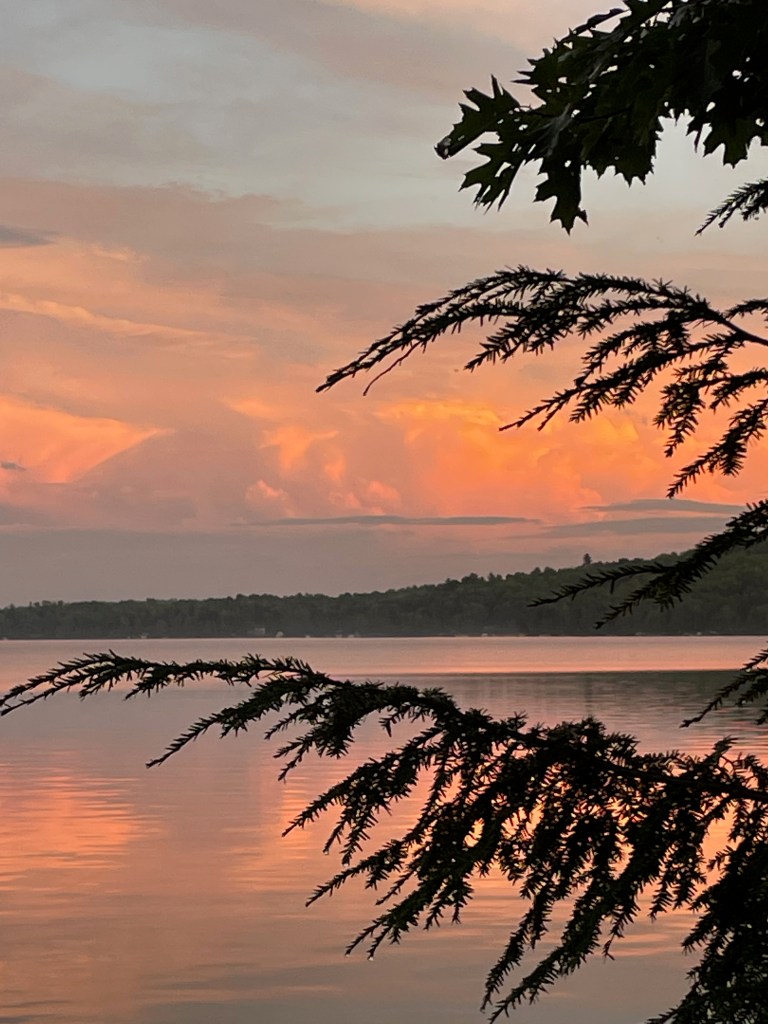
I walked outside in the unusually warm February sunshine this morning, and the dogs, startled by this break in routine, joyfully came along. I heard birdsong, and road sounds, and the slow dripping of melting snow in the eaves. Last night in the dusk, the sky was rose pink from the departed sun, and I heard, for the first time in months, the bells ringing vespers at the seminary nearby, and the soft chirp of flying ducks. The moon, almost full, rose and cast shadows on the snow. These are all markers for me, but they are not experiences of the sort I use most. I realize how much the natural world is my backdrop, the inner voice, but not the experience. Not the story line. And this surprises me, because I always thought it was.
In this long pandemic sojourn from the world, I have not been unhappy. I have felt calm, somnolent, and wrapped in solitude, almost like a fairy tale character set to sleep while the world passes. Cloistered, but not lonely. But in order to write, I need something more than being hidden behind a fortress wall. I know, beneath the melting snow, the bulbs have put down their roots, the trees are beginning to send their sap from their roots. I can only hope that somewhere my writing heart is stirring, too. But so far, hope is all there is.
We’ll hazard a guess that, at least once in your life, you’ve fantasized about packing up your life and moving to (what feels like) a different world—an idyllic small town, a bustling metropolis, a remote windswept isle… In J. F. Riordan’s sparkling North of the Tension line series, a writer does just that, moving from Chicago to a sparsely populated island in Door County, Wisconsin. Her ensuing small-town adventures are presented with enormous heart throughout this delightful series. Today in the Bluestocking Salon, Bas Bleu sat down (virtually, no masks required!) with novelist J. F. Riordan to learn more about why she chose Door County as her setting, how opera helped shape her novelist’s voice, and what effects the COVID-19 pandemic has had on her writing. Continue reading →




 J.F. Riordan